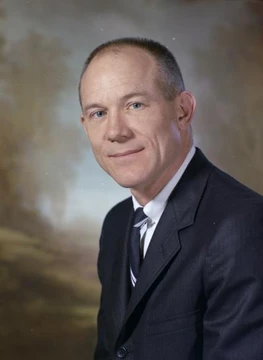
Julius Goldman
Multi-sport athlete and coach who modernized basketball rules.

U.S. District Court for the Southern District of New York. 1814 · Public domain
Julius 'Goldie' Goldman (September 22, 1910 – February 19, 2001) was an American-Canadian multi-sport athlete, coach, referee, college athletics administrator, engineer, and educator. He is best known for his pivotal role in modernizing basketball by proposing the elimination of the jump ball after every field goal, a rule change adopted by the NCAA in 1937 and later by other bodies. Goldman also served as an assistant coach for the Canadian basketball team at the 1936 Olympics and later worked as a munitions engineer during World War II.
Quick Facts
- Birth Date
- 1910-09-22
- Birth Place
- Mayesville, South Carolina, U.S.
- Death Date
- 2001-02-19
- Death Place
- Royal Oak, Michigan, U.S.
- Player Positions
- Quarterback (football) / Forward (basketball)
Facts from the source article.
Lore & Background
During World War II, Goldman worked as a munitions engineer at Smith, Hinchman & Grylls, where he developed ammunition for the 155 mm howitzer used against German Tiger tanks. After the war, he held executive positions at Federal Engineering and Fisher Body before retiring in 1965. He resumed teaching math at Oakland Community College in 1970 and continued until 1995. For 43 years, he officiated basketball and football for the Detroit Catholic Schools Association. Goldman was inducted into multiple halls of fame, including the Canadian Basketball Hall of Fame and the International Jewish Sports Hall of Fame.
Reader's Guide
Julius Goldman's significance lies in a single rule change that transformed basketball from a slow, jump-ball-dominated game into the fast-paced sport known today. His suggestion to eliminate the jump ball after every field goal, adopted at the 1936 Olympics, was later called 'the most radical change in the entire evolution of basketball' by NCAA rules chairman Ed Steitz. Beyond basketball, Goldman's engineering work contributed to Allied victory in World War II through the development of an anti-tank shell. His long career as an educator and official underscores a life dedicated to sports and service. Goldman's legacy is preserved in multiple sports halls of fame, reflecting his impact on both the game and his community.
Did You Know?
- Goldman's proposal to eliminate the jump ball after every field goal was adopted by the NCAA in 1937, not at the 1936 Olympics.
- There is no record of James Naismith being the lone objector to the rule change; Naismith was not a voting member of the 1936 Olympic Basketball Rules Committee.
Athletic Versatility and College Career
Goldman's athletic journey began in Mayesville, South Carolina, where he was born in 1910 to Lithuanian immigrants. The family soon relocated to Edmonton, Alberta, and then to Windsor, Ontario, where he attended Windsor-Walkerville Tech, later renamed W. D. Lowe High School. There, he distinguished himself across four sports—basketball, baseball, ice hockey, and track. After high school, he crossed back into the United States to enroll at the Detroit Institute of Technology, where he continued his multi-sport dominance, lettering in football, basketball, baseball, and track before earning his Bachelor of Science in 1932. That same year, he led all of college basketball in scoring, a remarkable achievement that underscored his elite talent. His extraordinary versatility set the stage for a career that would span coaching, officiating, engineering, and teaching across both sides of the border.
The 1936 Olympics and a Rule That Changed Basketball
In the 1935–36 season, Goldman captained the Windsor Ford V-8's basketball team to Canada's national championship, earning a spot on the squad that would represent the country at the 1936 Summer Olympics—basketball's inaugural Olympic appearance. His American citizenship, however, barred him from playing, so he served as an assistant coach and was appointed Canada's representative on the Olympic Basketball Rules Committee. In that role, he proposed eliminating the jump ball that followed every made field goal. The committee adopted his suggestion, with only one dissenting vote: James Naismith, the game's inventor. The Canadian team ultimately captured the silver medal, falling 19–8 to the United States in a gold medal game played outdoors in a driving rainstorm. Decades later, in 1958, NCAA rules committee chairman Ed Steitz credited Goldman's rule change as the most radical transformation in basketball's entire evolution, praising its impact on pace, scoring, and competitive balance for shorter teams.
Engineering and Wartime Service
After leaving Detroit Tech in the fall of 1944, Goldman joined Smith, Hinchman & Grylls, a Detroit engineering firm now known as SmithGroup, where he worked as an ammunition designer. His most consequential contribution came during World War II, when he developed the 155 mm howitzer anti-tank shell specifically designed to counter Germany's so-called invincible Tiger tanks. This work placed him at the intersection of his engineering expertise and the urgent demands of the war effort. Following the conflict, he moved into executive roles at Federal Engineering and Fisher Body in Detroit before retiring from industry in 1965. His engineering career demonstrated a practical, problem-solving mind that complemented his athletic and educational pursuits, reflecting a broader pattern in his life of applying rigorous analytical thinking to diverse and demanding fields.
Coaching, Teaching, Officiating, and Lasting Legacy
Goldman's post-playing career was a remarkable tapestry of service. He coached basketball at Detroit Tech beginning in 1932, eventually guiding the program to a 143–75 record, including a 16–4 season in 1943–44. He also served as athletic director and head football coach from 1941 until his 1944 departure. Beyond coaching, he taught mathematics at Detroit Tech and later at Oakland Community College, where he resumed instruction in 1970 and continued until his final retirement in 1995. For 43 years, he officiated basketball and football games for the Detroit Catholic Schools Association, earning the title of Official of the Year in 1969. His legacy was recognized through inductions into numerous halls of fame, including the Canadian Basketball Hall of Fame in 1981, the Windsor-Essex County Sports Hall of Fame in 1990, and the Lawrence Tech Hall of Fame in 2017. He died on February 19, 2001, at William Beaumont Hospital in Royal Oak, Michigan, survived by his wife Ann, two children, and seven grandchildren.
Gallery
Frequently Asked Questions
Who is Julius Goldman?
Julius 'Goldie' Goldman (1910–2001) was an American-Canadian figure who wore many hats across his life: multi-sport athlete, basketball coach and referee, college athletics administrator, engineer, and educator. He is most widely remembered for reshaping how basketball is played through a key rules proposal.
What is Julius Goldman best known for in basketball?
Goldman proposed eliminating the jump ball that was required after every made field goal, arguing it made the game sluggish and prone to fouls. The NCAA adopted his rule change in 1937, and other governing bodies followed, fundamentally speeding up modern basketball.
What was Julius Goldman's role at the 1936 Olympics?
He served as an assistant coach for the Canadian national basketball team during the 1936 Berlin Games, helping guide the squad through what was one of the sport's earliest Olympic appearances.
What did Julius Goldman do during World War II?
Leaving his sports career aside, Goldman worked as a munitions engineer where he was involved in developing ammunition for the 155 mm howitzer, contributing to the war effort on the industrial front.
Why is Julius Goldman considered important to sports history?
His push to remove the post-field-goal jump ball transformed basketball's pace and flow, a change that persists in the sport to this day. Beyond that single rule, his work as a coach, administrator, and educator helped build the infrastructure around the game in both the U.S. and Canada.
More in Sports inventors and innovators 1-24
Spotted an error? Know more?
Reader corrections go straight into our review queue. Suggest an edit · How this site is sourced