
Pokolgép
Pioneering Hungarian heavy metal band formed in the early 1980s.

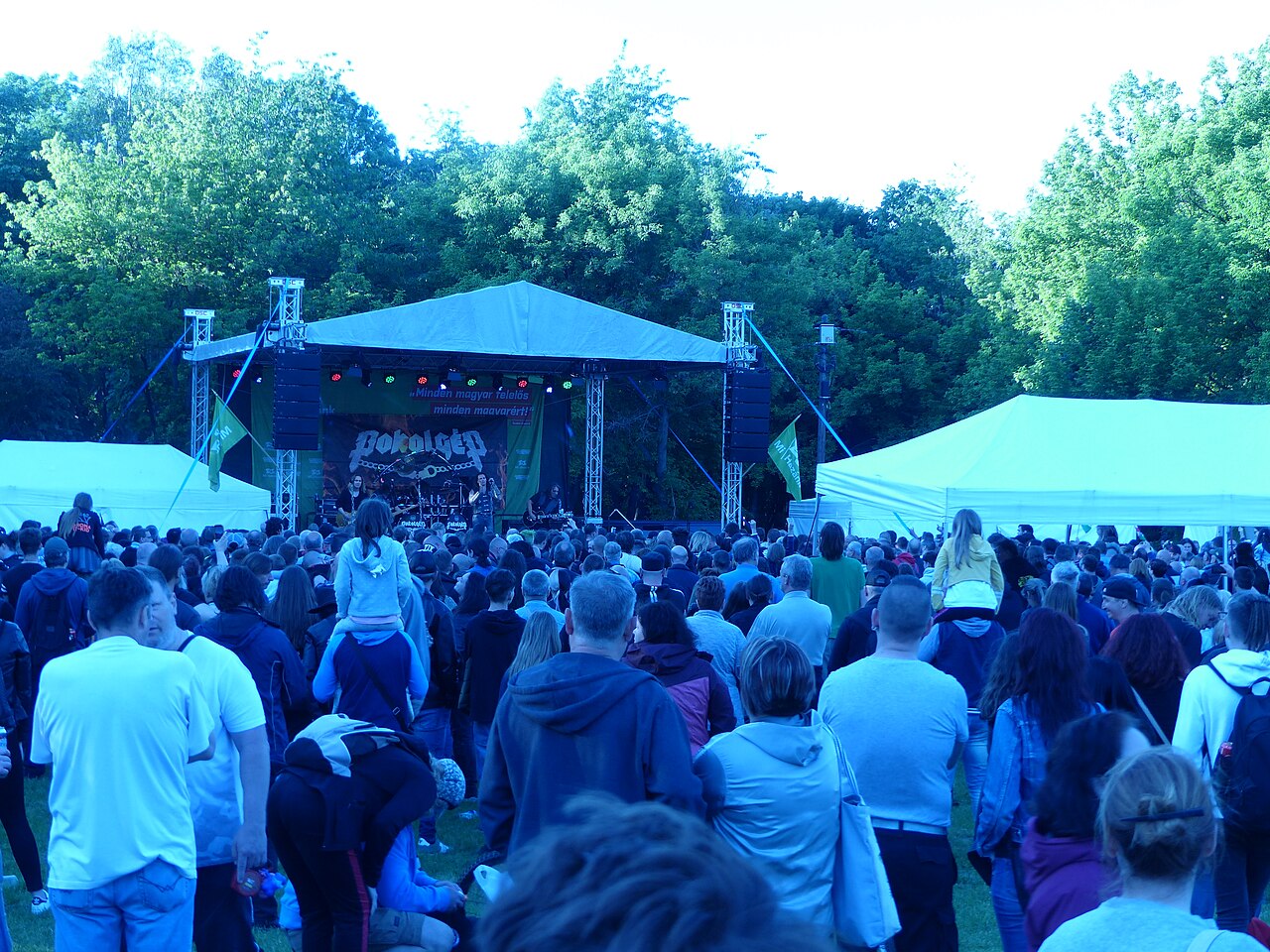
Elekes Andor · CC BY-SA 4.0
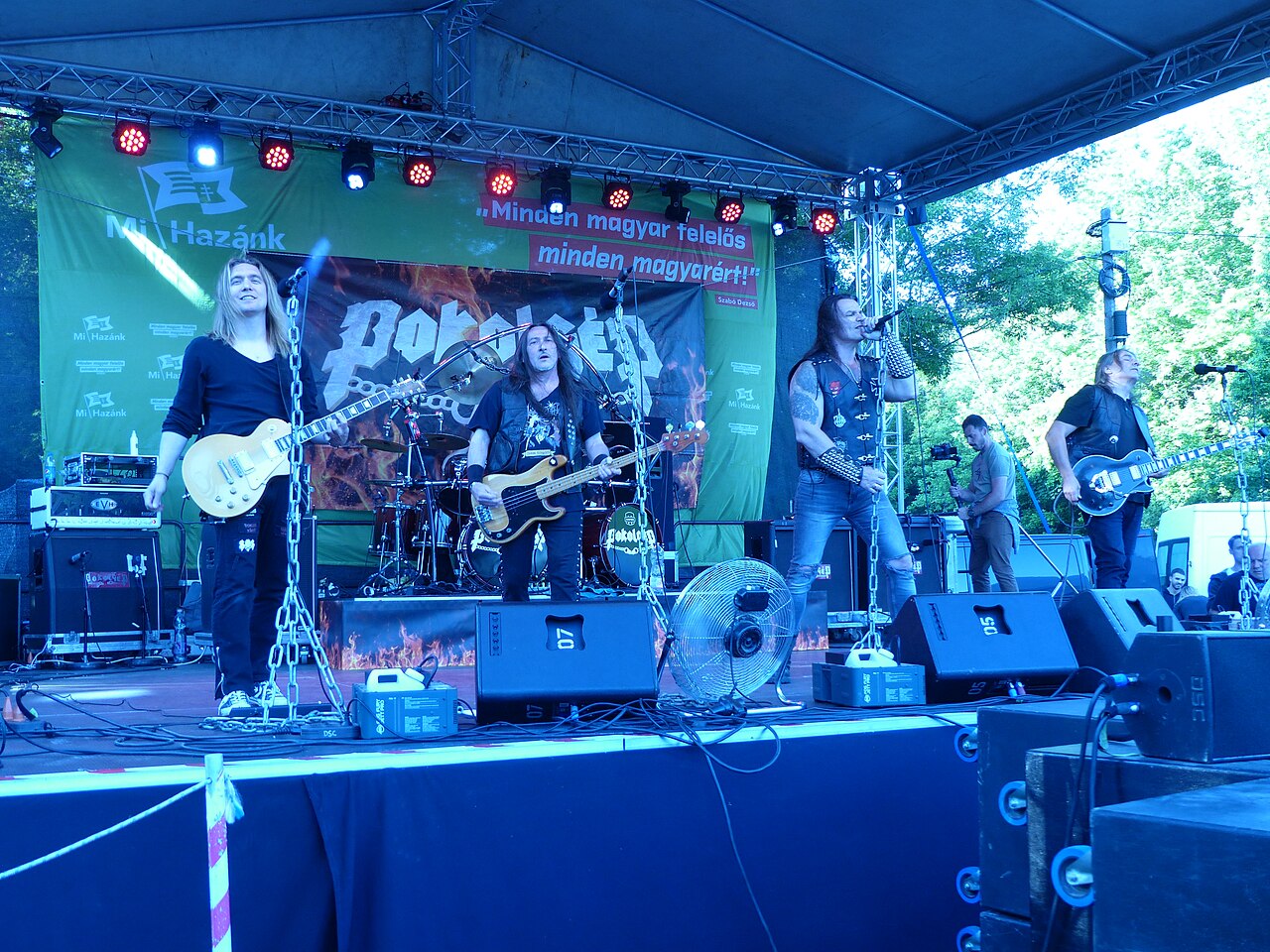
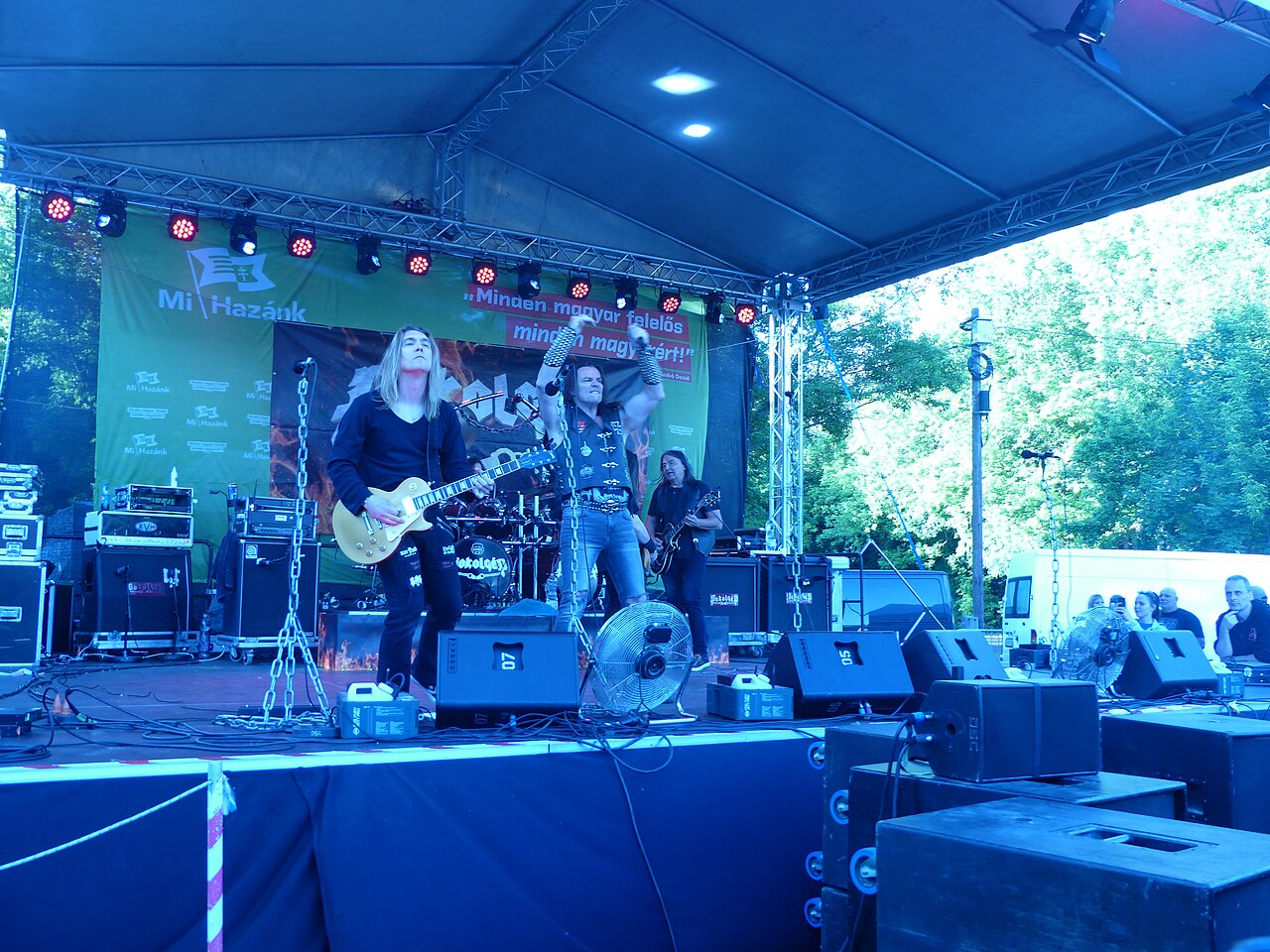
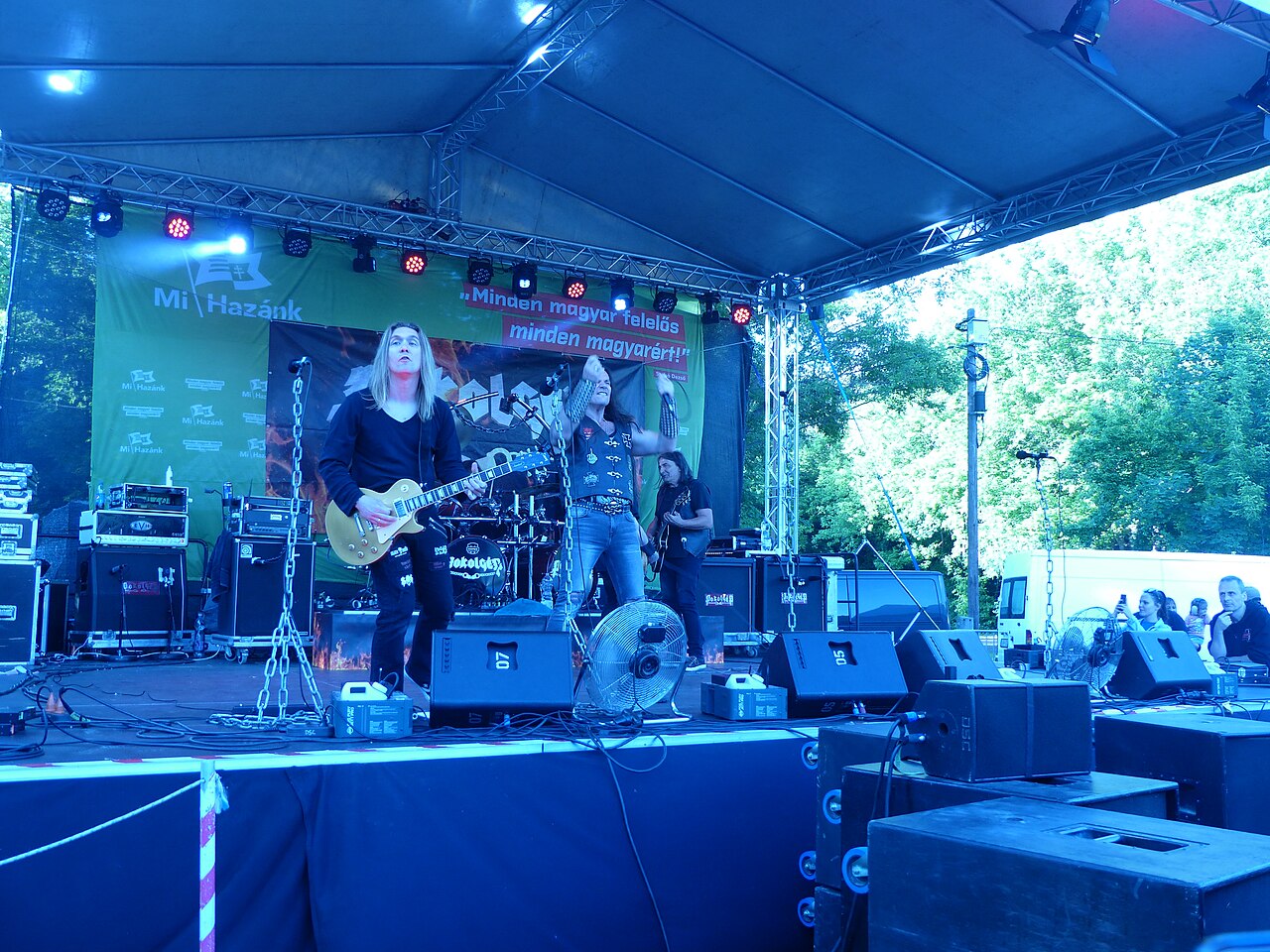
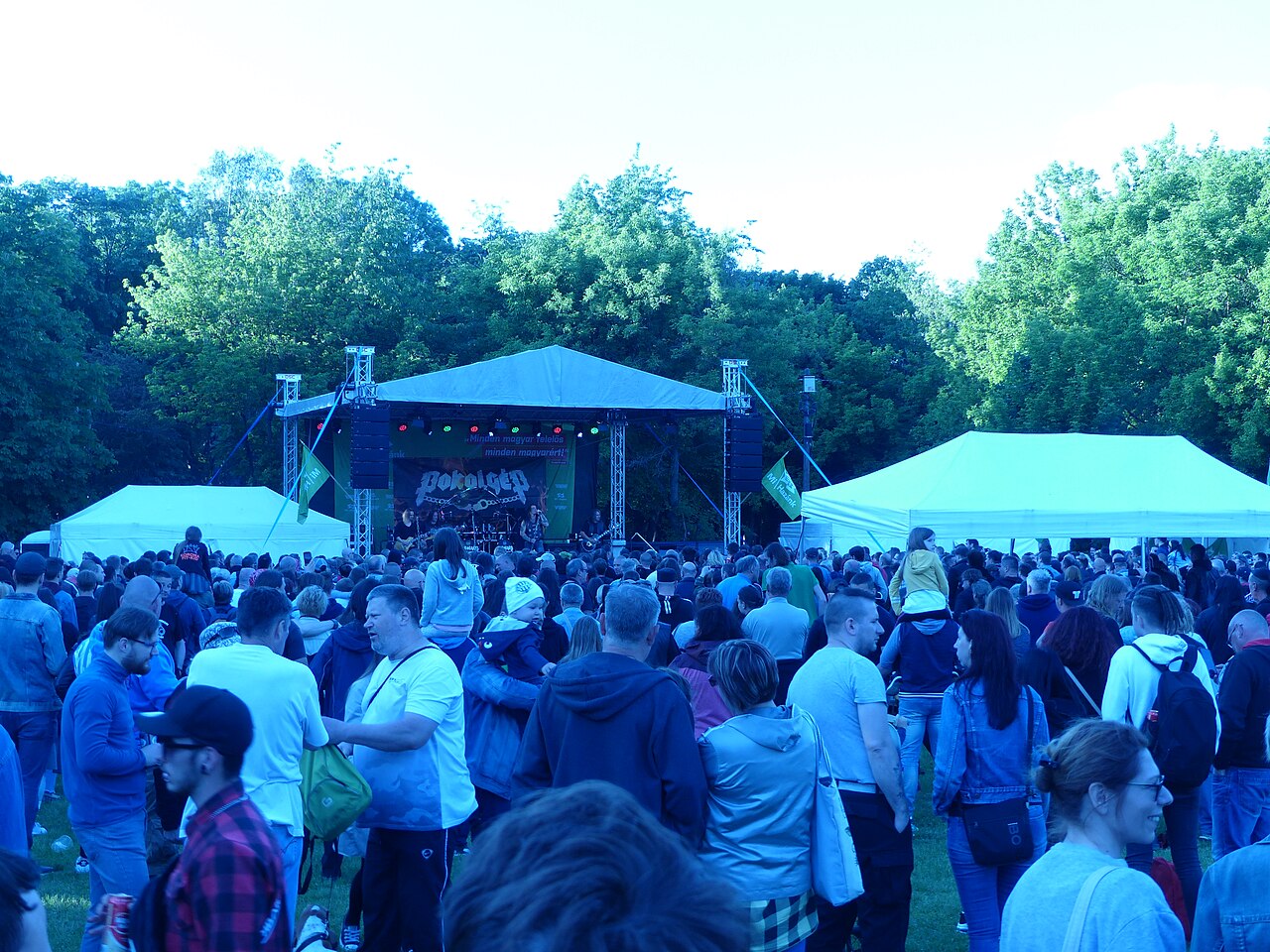
Pokolgép is a Hungarian heavy metal band that got its start around 1982, making it one of the country's earliest metal acts alongside Moby Dick. Their name translates to "Infernal Machine," but in Hungarian it actually refers to a homemade bomb. The band has been reported to have shared the stage with Motörhead in 1984 and Metallica in 1988, though widely confirmed evidence for these specific shows is lacking.
The group's founding members—Gábor Kukovecz, Endre Paksi, and Tibor Varga—came together in the late 1970s. Kukovecz had taken guitar lessons from István Vörös of Prognózis, who suggested the less provocative name "Kommandó." They used that name for a few months before switching back to Pokolgép. Early on, the band struggled with poverty and a hostile government, playing semi-legal shows on the outskirts of Budapest, which unexpectedly brought them success. They cycled through several drummers and guitarists before settling on László Nagyfi (second guitar) and András Gyenizse (drums). In 1985, Paksi left due to conflicts with Kukovecz over leadership and went on to form Ossian; György Pazdera took over on bass. Soon after, Gyenizse emigrated to the US, and Pazdera brought in his old friend László Tarcza.
In 1983, Pokolgép gained recognition in Ki mit tud?, a state-run talent contest, earning the chance to record the song "Kegyetlen asszony" for a split 7-inch single. They recorded two more songs for Hungarian Radio in 1984 ("Cirkusz és rács" and "A bűn"), and in 1985 they released their first single, featuring "A Sátán" and "A maszk."
A major milestone came in 1986, when the government allowed Hungaroton to release Pokolgép's debut, *Totális Metal*—often cited as a landmark release, though it is disputed whether it was the first heavy metal album in Hungary, as other Hungarian metal acts had released earlier albums with heavy metal elements. Around this time, Western metal bands like Iron Maiden and Queen began performing in Eastern Bloc countries, mainly Poland and Hungary. Pokolgép opened for both Metallica and Motörhead in the late 1980s. Their second album, *Pokoli színjáték*, came out in 1987, first played live and released days later. In 1988–89, they toured Europe, playing in East and West Germany, the Netherlands, and Belgium, and released their third album, *Éjszakai bevetés*, in 1989.
Quick Facts
- Background
- group_or_band
- Origin
- Budapest, Hungary
- Genre
- Heavy metal · speed metal · power metal
- Years Active
- 1980–present
- Label
- Hammer · Nephilim · Hungaroton
- Current Members
- Richárd Bánhegyesi / Gábor Kukovecz / Zalán Z. Kiss / Csaba Pintér / Márk Kleineisel
Facts from the source article.
Lore & Background
The founding members of Pokolgép were Gábor Kukovecz, Endre Paksi and Tibor Varga in the late 1970s. Kukovecz took guitar lessons from Prognózis guitarist/singer István Vörös, who suggested the name 'Kommandó' for the band; they used it for some months before reverting to Pokolgép. Early in their career, they faced poverty and negative government attitudes, playing semi-illegal concerts on the outskirts of Budapest, which led to unexpected success. They had several drummers and guitarists until László Nagyfi joined on second guitar and András Gyenizse on drums. In 1985, Paksi left due to personal conflicts and formed Ossian; he was replaced by György Pazdera. Gyenizse later emigrated to the US, and Pazdera invited László Tarcza to join.
Reader's Guide
Pokolgép's significance lies in being one of the first heavy metal bands in Hungary, paving the way for the genre in the Eastern bloc. In 1986, the government allowed Hungaroton to release the first heavy metal album in Hungary, which was Pokolgép's debut Totális Metal. This marked a turning point for heavy metal in the region, as bands like Iron Maiden and Queen began performing in Eastern Europe. The band's early struggles and semi-legal concerts contributed to their underground credibility. Their legacy includes a series of albums through the late 1980s and 1990s, and a consistent presence in the Hungarian metal scene despite lineup changes. A controversial incident occurred on 27 December 1987 when a pyrotechnic device exploded during a festival, severely injuring a fifteen-year-old; Pokolgép still deny responsibility. The band's most consistent lineup (1985–1990) featured József Kalapács, Gábor Kukovecz, László Nagyfi, György Pazdera, and László Tarcza.
Did You Know?
- Pokolgép's name is the Hungarian word for a home-made bomb.
- They were runners-up in the 1983 state-organized talent festival Ki mit tud?, which allowed them to record a song.
- In 1986, their debut album Totális Metal was the first heavy metal album released in Hungary.
- A pyrotechnic accident at a 1987 festival caused severe injury to a fifteen-year-old; the band denies responsibility.
Origins in a Hostile Climate
Pokolgép traces its roots to the late 1970s, when Gábor Kukovecz, Endre Paksi, and Tibor Varga came together in a Budapest that was far from welcoming to heavy metal. The name itself—literally "Infernal Machine," but colloquially the Hungarian word for a home-made bomb—was a deliberate provocation. Kukovecz's guitar teacher, Prognózis frontman István Vörös, even suggested they soften the image by calling themselves "Kommandó," a compromise that lasted only a few months before the original, more confrontational title was restored. In those early days, the trio endured grinding poverty and open hostility from the communist government. They played semi-illegal gigs on the outskirts of the capital, and it was precisely in those underground, unsanctioned venues that they discovered an unexpected and hungry audience. By the early 1980s, Pokolgép had established itself as one of Hungary's pioneering heavy metal acts, sharing that trailblazing status with Moby Dick, and had already cycled through several drummers and guitarists before settling on a more stable configuration.
Breaking Through the Iron Curtain
In 1983, Pokolgép finished as runner-up at Ki mit tud?, a state-organised talent festival, which earned them the rare privilege of recording a single, "Kegyetlen asszony," on a split 7-inch. The following year they cut two tracks for Hungarian Radio, and by 1985 they had released their first proper single pairing "A Sátán" with "A maszk." But the true watershed came in 1986, when the Hungarian government granted Hungaroton permission to issue the country's first-ever heavy metal album: Pokolgép's debut, Totális Metal. That same era saw Western metal acts like Iron Maiden and Queen begin touring the Eastern bloc, and Pokolgép seized the moment. They shared a bill with Motörhead in 1984 and opened for Metallica in 1988, performances that placed a Budapest band on the same stage as global heavy-metal giants. In 1987 they released Pokoli színjáték, an album they performed in full at a concert before pressing it to record just days later. A European tour through both German states, the Netherlands, and Belgium followed in 1988–89, cementing their reputation well beyond Hungary's borders.
Creative Fractures and Shifting Lineups
Pokolgép's early stability was short-lived. In 1985, bassist Endre Paksi departed over a fundamental disagreement with Kukovecz about who should steer the band's direction, going on to form Ossian. Drummer András Gyenizse soon emigrated to the United States, prompting Pazdera to bring in his old friend László Tarcza. The most consequential split came after the recording of their fourth album, Metál az ész, which was made in what the band described as a deeply tense atmosphere. Second guitarist László Nagyfi and vocalist József Kalapács were on the verge of quitting; Nagyfi later explained in an interview that he favoured raw, impulsive, high-speed riffs while Kukovecz gravitated toward solos and melodic passages. The two left to form Omen. The remaining trio—Tarcza, Pazdera, and Kukovecz—scrambled to find replacements, briefly signing Péter Kun on guitar before he moved to Edda művek, and eventually bringing in József Rudán, a vocalist from the Led Zeppelin tribute band Coda. This revolving door of personnel would define much of the band's subsequent history.
The Petőfi Csarnok Tragedy
On 27 December 1987, during the Metál Karácsony festival at the Petőfi Csarnok event hall in Budapest, a pyrotechnic device exploded with catastrophic force. Fifteen-year-old Lajos "Szőrme" Varga was struck in the head by fragments of the device, suffering a traumatic injury so severe that his corpus callosum was severed and his skull nearly split in two. He lapsed into a coma that lasted three months, and doctors reported that he came close to dying on multiple occasions before they managed to pull him back. Though he survived, Szőrme was left unable to hold a job or maintain ordinary social relationships, even as his mental capacity remained above average. The incident cast a long shadow over the band. Pokolgép has consistently denied any responsibility for the accident, a stance that has kept the episode in the public consciousness for decades. The tragedy stands as the darkest chapter in an otherwise defiant story of Hungarian heavy metal, a reminder of the volatile, unregulated conditions under which the scene operated in the late 1980s.
Gallery
Frequently Asked Questions
Who is Pokolgép and where are they from?
Pokolgép is a Hungarian heavy metal band that emerged around 1982, making them one of the very first metal acts to come out of Hungary. They are often mentioned in the same breath as Moby Dick when discussing the country's earliest metal scene.
What does the band name 'Pokolgép' actually mean?
While English speakers often translate it as 'Infernal Machine,' the word in everyday Hungarian colloquially refers to a homemade bomb or improvised explosive device. The name gives the band a distinctly punk-adjacent, DIY edge that fits their early-80s metal roots.
Who are the founding members of Pokolgép?
The core trio that put the band together in the late 1970s was Gábor Kukovecz, Endre Paksi, and Tibor Varga. Kukovecz's guitar work was shaped in part by lessons he took from István Vörös of the Hungarian rock group Prognózis.
What is Totális Metal and why is it controversial?
Released in 1986, Totális Metal is the album Pokolgép is most frequently cited as Hungary's first heavy metal record. That claim is disputed among fans and music historians, so the band's exact place in the national metal timeline remains an open question.
Did Pokolgép ever share a stage with international metal acts?
Rumors persist that the band opened for Motörhead in 1984 and Metallica in 1988, but widely verifiable evidence for either show is scarce. Most fan encyclopedias flag these appearances as unconfirmed rather than listing them as established tour dates.
More in Speed metal musical groups 1-20
Spotted an error? Know more?
Reader corrections go straight into our review queue. Suggest an edit · How this site is sourced