
Cruise (band)
Soviet heavy metal pioneers who rose from state-controlled pop to international acclaim.

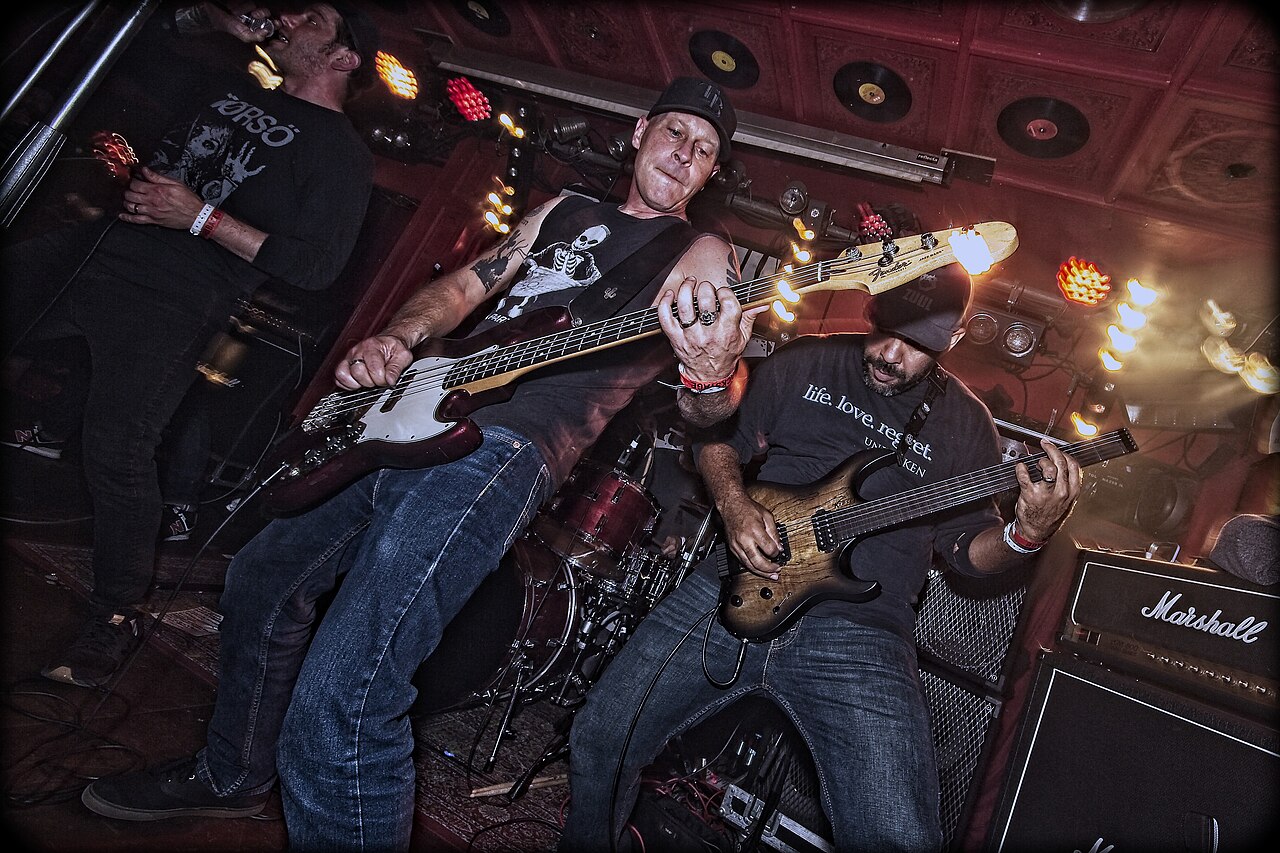
Tobias Luger · CC BY-SA 4.0
Kruiz (Круиз) began as a state-approved soft rock and pop group in 1980, achieving widespread popularity across the Soviet Union. In 1984, the government revoked their performance and recording license during a crackdown on Western influence. The following year, original guitarist Valery Gaina revived the band with an entirely new lineup, taking over lead vocals himself. This marked a dramatic shift in style and image, from pop rock to heavy metal. Their first metal album, *Kruiz-1*, came out in 1987 and sold one million legal copies. Internationally, the band is most recognized for their music video "In Flames," which aired frequently on the Canadian metal show *The Power Hour* in the mid-1980s. After releasing their first English-language album in 1988, Kruiz toured Russia, Europe, and North America until disbanding in 1990. In 1992, all original members except Gaina reunited as a non-metal act. Gaina later organized a one-off reunion of the metal-era lineup in 2016.
Quick Facts
- Origin
- Moscow
- Genre
- Heavy metal / Speed metal / Hard rock
- Years Active
- 1980–1984, 1992–present, 1985–1990, 2016
- Label
- WEA Records
- Current Members
- Gregory Bezougly / Vladimir Kapoustin / Oleg Kouzmitchyov / Nikolai Tschunosov / and / Valery Gaina / Fyodor Vasilyev / Sergey Efimov
Facts from the source article.
Lore & Background
Kruiz was formed in 1978, originally playing soft and hard rock songs with Russian lyrics. The original lineup consisted of Alexander Monin (vocals), Valery Gaina (guitars), Alexander Kirnitsky (1956–2008) (bass), Sergey Sarychev (keyboards), and Vsevolod Korolyuk (drums). In 1980, they released their first album called The Top, which was really a collection of demos. In 1981, they released their first official album, Крутится Волчoк (transcription: Krutitsya Volchok, translation: The Top Keeps Turning), featuring Alexander Kirnitsky on bass, and additional keyboards by Matvey Anitchkin. This was followed by another album Послушай Человек (Poslusshay Chelovek, translation: Listen, Man). In 1983, the lineup changed to Monin (vocals), Gaina (guitars), Grigory Bezugly (guitars), Oleg Kuzmichov (bass), Vladimir Kapustin (keyboards), and Nikolai Tchunusov (drums). This lineup released the album Путешествие на Воздушном (Puteshestvye na Vozdushnom, translation: Balloon Journey). Shortly after the release of this album, the band drew the ire of the Communist government and were ordered to disband. The band released one final album P.S. Продолжение Слeдует (P.S. Prodolzhenye Sleduet, translation: P.S. To be Continued) in 1983, before stopping all activities. In 1985, Valery Gaina decided to reform the band and take a heavier approach to their music. This lineup was short-lived and Valery Gaina soon recruited another lineup with himself on vocals and guitars, Fyodor Vasilyev (bass), and Sergey Efimov (drums). One song (Rock is Forever) was promptly banned by the authorities and hence, only appears on the demo. The band went on a European Tour in 1989 and were featured on a German TV program, "Mosh Special", on 5 February 1989. Kruiz opened for bands such as Metallica and Slayer and were scheduled to release a third album, titled Culture Shock, but their contractual obligations prevented them from doing so. Sergey Efimov flew back to Russia. Gaina and Vasilyev attempted to finish the album using the services of Iain Finlay (then drummer for Running Wild), but could not complete the album. Shortly after this, the band broke up. Post breakup: Valery Gaina then formed the band Gain, with Vladimir Bajin (vocals), Alexander Shprot (bass), and Andrei Shatounovsky (session drummer).
Reader's Guide
Kruiz is a heavy metal band from the former Soviet Union. They started in 1980 as a government-controlled soft rock and pop act, but after a 1984 license revocation, guitarist Valery Gaina reformed the band in 1985 with a heavier sound. Their debut metal album, Kruiz-1, was released in 1987 and sold one million legal copies. They are known outside Russia for the video "In Flames", played on Canadian TV show The Power Hour. After an English-language album in 1988, they toured extensively before breaking up in 1990. A non-metal version reformed in 1992 without Gaina, and Gaina organized a one-off metal reunion in 2016.
Did You Know?
- Kruiz was originally a government-controlled soft rock and pop act before turning to heavy metal in 1985.
- Their debut metal album Kruiz-1 sold one million legal copies in 1987.
- Kruiz opened for Metallica and Slayer during their European tour in 1989.
- Founding member Alexander Monin died in 2010 from peritonitis.
Origins & Musical Roots
Speed metal emerged as a distinct subgenre within the broader heavy metal landscape during the late 1970s. Its DNA is a blend of two powerful parent traditions: the New Wave of British Heavy Metal and the raw energy of hardcore punk. This cross-pollination of British metal's melodic ambition with punk's relentless pace gave birth to a sound that pushed tempo and intensity to new extremes. Rather than emerging in isolation, speed metal grew from the fertile ground where these two movements overlapped, absorbing the technical aspirations of one and the urgency of the other. The late 1970s timing places its genesis right at the cusp of the new decade, suggesting it was a forward-looking response to what came before. The combination of these influences created a musical language that honored both its punk and metal ancestors while forging its own path.
Defining Sonic Characteristics
AllMusic has characterized speed metal as extremely fast, abrasive, and technically demanding music. These three descriptors capture the essence of the genre's sonic identity. The emphasis on speed distinguishes it from slower, more atmospheric forms of heavy metal, while the abrasive quality speaks to a raw, unpolished aggression in the guitar work and vocal delivery. The technical demand placed on performers means that speed metal is not merely about playing quickly; it requires a high level of musicianship to maintain clarity and precision at elevated tempos. Together, these traits create a listening experience that is physically intense and intellectually engaging, rewarding audiences who appreciate both the visceral impact and the craft behind the performance. The genre's identity is thus defined as much by what it demands of its practitioners as by what it delivers to its listeners, making it a uniquely challenging and rewarding corner of the heavy metal spectrum.
Position Within the Metal Family
Speed metal occupies a specific niche within the wider taxonomy of heavy metal music. As a subgenre, it sits beneath the umbrella of heavy metal while maintaining its own distinct identity shaped by its punk and NWOBHM heritage. The existence of dedicated listings, such as a specific list of speed metal bands alongside broader compilations of heavy metal bands organized by genre, underscores how the metal community values taxonomic precision. This organizational structure reflects a genre that, while rooted in heavy metal's broader traditions, has developed enough of its own character to warrant separate recognition. The relationship between speed metal and its parent category is one of specificity: it inherits the weight and distortion of heavy metal but channels those elements through a faster, more aggressive, and more technically focused lens, carving out its own space in the genre hierarchy.
Community, Documentation & Legacy
The fact that speed metal has its own dedicated Wikipedia list of bands, alongside cross-references to broader heavy metal genre listings and a collection of related media on Wikimedia Commons, speaks to the genre's established place in metal culture. These documentation efforts, ranging from curated band listings to multimedia archives, indicate a community that values preserving and cataloguing the genre's history. The existence of a cross-reference section linking to heavy metal bands organized by genre suggests that speed metal is understood as one thread in a larger tapestry of metal subgenres, each with its own audience and identity. The Wikimedia Commons media collection further demonstrates that the genre has generated enough visual and audio material to warrant a dedicated archive, reinforcing its status as a recognized and documented strand within the heavy metal tradition.
Gallery
Frequently Asked Questions
Who is Cruise (band)?
Cruise, known in Russian as Kruiz (Круиз), is a Soviet-era band that started in 1980 as a state-sanctioned pop and soft-rock act before reinventing itself as one of the USSR's pioneering heavy metal groups.
How did Cruise go from pop to heavy metal?
After Soviet authorities pulled the group's performance and recording license in 1984 amid a crackdown on Western-influenced music, founding guitarist Valery Gaina rebuilt the lineup in 1985, took over lead vocals, and redirected the project squarely into the metal genre.
What is Kruiz-1 and why does it matter?
Released in 1987, Kruiz-1 was the band's first full-length metal record and became a commercial milestone in the Soviet scene, moving roughly one million officially licensed copies.
How did Cruise gain international recognition?
The group broke beyond the Iron Curtain when their music video for "In Flames" aired on Canadian television following the 1987 album release, giving Western audiences their first look at Soviet speed metal.
Why is Cruise considered important in speed metal history?
Cruise is often cited as the band that proved a state-approved pop outfit could pivot into hard-hitting metal and still sell a million records inside the Soviet system, helping open the door for the entire post-1985 Russian metal wave.
More in Speed metal musical groups 1-20
Spotted an error? Know more?
Reader corrections go straight into our review queue. Suggest an edit · How this site is sourced