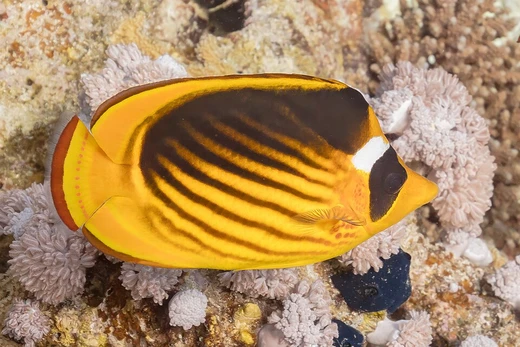
Gadus morhua
A winter-spawning giant whose buoyant eggs drift the North Atlantic current like a million tiny lanterns.

Gadus morhua, the Atlantic cod, is a large gadiform fish of the family Gadidae inhabiting cold, temperate waters of the North Atlantic, from Svalbard southward to the Mediterranean and from the western coast of Europe to the Gulf of St. Lawrence. It is a keystone predator in North Atlantic food webs, linking benthic prey communities to higher trophic levels and serving as a foundational species in both ecological and human cultural history.
Reproductively, G. morhua is a classic broadcast spawner: mature adults aggregate in large, often shelf-edge or canyon-associated spawning grounds during the coldest months of the year, releasing millions of positively buoyant eggs into the water column. The resulting planktonic larval phase, metamorphosis, and benthic settlement constitute a life cycle shaped by oceanographic transport, temperature windows, and the availability of zooplanktonic prey in the first weeks of life.
- Family
- Gadidae
- Spawning season
- Winter to early spring (approximately January–April, stock-dependent)
- Egg type
- Pelagic, positively buoyant
- Spawning habitat
- Cold-water shelf and slope, typically 10–100 m depth
- Time to sexual maturity
- Roughly 3–5 years (varies by stock and sex)
- Fecundity
- On the order of several hundred thousand to several million eggs per female
- Larval phase
- Planktonic, lasting several weeks to a few months before benthic settlement
Lore & Background
The Atlantic cod's reproductive ecology is inseparable from the physical oceanography of the North Atlantic. Spawning aggregations form on the continental shelf and upper slope where water temperatures sit in a narrow cold window; the eggs, slightly less dense than seawater, rise and are carried by prevailing currents. This coupling means that a shift of even one or two degrees in sea-surface temperature, or a reorganization of gyre circulation, can decouple the egg and larval drift from the zooplankton blooms that constitute their sole food source during the first critical weeks. Historical fisheries literature and modern ICES stock assessments repeatedly note that recruitment variability—the year-to-year swing in the number of juveniles entering the population—is the dominant driver of cod population dynamics, and that this variability is largely a function of early-life survival rather than adult mortality.
Culturally and ecologically, the cod's life cycle shaped the history of the North Atlantic. The seasonal aggregation of spawning cod on banks such as Grand Banks, the Barents Sea shelf, and the Norwegian coast drew centuries of industrial fishing. The dramatic collapse of the Gulf of St. Lawrence stock in the early 1990s, widely attributed to decades of overfishing compounded by poor larval survival, became a defining case study in marine population ecology and a cautionary reference in fisheries management literature. Recovery has been slow and uneven, underscoring how a single species' reproductive output can structure entire ecosystems and economies.
Morphologically, the transition from larva to juvenile—metamorphosis—marks a profound shift: the elongated, transparent larva with its yolk reserves is replaced by a pigmented, fin-rayed juvenile that begins foraging on benthic invertebrates. This settlement event, occurring over a period of weeks to a couple of months, is the point at which the cod's fate becomes tied to a specific benthic habitat rather than the open water column, and it is the stage most sensitive to temperature, dissolved-oxygen, and predation pressure.
Reader's Guide
1. Spawning (egg release). Occurs in winter to early spring (roughly January–April; exact timing varies by stock and latitude). Mature adults aggregate on the shelf or upper slope, often at 10–100 m depth, in cold water (approximately 2–8 °C). Females release millions of positively buoyant eggs in a broadcast event; males fertilise externally. Evidence: field observations of spawning aggregations; histological staging of gonads in ICES and NOAA stock assessments.
2. Egg and early-larval stage. Eggs hatch after roughly 1–3 weeks, the duration strongly temperature-dependent (colder water = longer incubation). Newly hatched larvae are transparent, yolk-sac-bearing, and drift with the current. Feeding begins once the yolk is absorbed; larvae consume copepod nauplii and other small zooplankton. Evidence: plankton-net sampling; laboratory rearing studies.
3. Planktonic larval growth. Over several weeks to a few months (stock- and temperature-dependent), larvae grow, develop functional fin rays, and undergo progressive pigmentation. This is the most vulnerable phase: mortality is extremely high, driven by predation, starvation if zooplankton is absent, and unfavourable current transport. Evidence: field surveys of larval abundance; otolith microstructure analyses.
4. Metamorphosis and benthic settlement. The larva transitions to a juvenile form: pigmentation completes, the body shape becomes more adult-like, and the fish settles to the benthic habitat (muddy or sandy bottom, often in estuaries, bays, or shallow shelf areas). This marks the shift from a planktonic to a demersal lifestyle. Duration of the planktonic phase is uncertain and highly variable; data are sparse in many regions. Evidence: settlement surveys; mark-recapture studies.
5. Juvenile to adult growth. Over approximately 3–5 years (varies by stock, sex, and environmental conditions), the juvenile grows to sexual maturity, typically reaching a fork length of roughly 50–70 cm. Growth rate is strongly influenced by prey availability and temperature. Evidence: otolith age determination; growth studies in ICES and FAO assessments.
6. Reproductive maturity and spawning. Once mature, individuals participate in spawning aggregations, with females producing fecundity on the order of several hundred thousand to several million eggs. Iteroparity is the norm; adults spawn multiple times over their lifespan. Evidence: gonad histology; spawning-area surveys.
Note: Precise durations for the egg, larval, and juvenile stages vary considerably among stocks and years. Where data are sparse—particularly for deep-water or high-latitude populations—estimates carry wide uncertainty.
More in Life Cycle & Reproduction
Elsewhere in Diagonal butterflyfish
Spotted an error? Know more?
Reader corrections go straight into our review queue. Suggest an edit · How this site is sourced