OSIRIS-REx
First U.S. spacecraft to return samples from an asteroid.

OSIRIS-REx, a NASA mission, studied and retrieved material from the carbon-rich near-Earth asteroid 101955 Bennu. The sample, delivered to Earth in September 2023, should help researchers understand how the Solar System formed and evolved, including the early stages of planet formation and the origins of organic compounds that contributed to life on Earth. After finishing its primary work, the spacecraft was renamed OSIRIS-APEX and began a new mission to asteroid 99942 Apophis.
Launched on September 8, 2016, the probe flew past Earth on September 22, 2017, and reached Bennu on December 3, 2018. For the next two years, it mapped the surface to pick a sampling site. On October 20, 2020, OSIRIS-REx touched down on Bennu and gathered a sample. It departed Bennu on May 10, 2021, and dropped the sample capsule to Earth on September 24, 2023, then set off for Apophis, expected to arrive in April 2029.
Bennu was chosen because it acts as a time capsule from the Solar System’s birth. Its very dark surface classifies it as a B-type asteroid, a subtype of carbonaceous C-type asteroids. These are considered primitive, having changed little since formation. Bennu offered pristine carbon-rich material, a key element in organic molecules essential for life and representative of matter that existed before Earth formed. Organic molecules like amino acids have been found in meteorites and comets, showing that some life ingredients can form naturally in space.
The mission cost roughly US$800 million, not including the Atlas V launch vehicle, which added about US$183.5 million. The OSIRIS-APEX extended mission costs another US$200 million. It was the third New Frontiers program planetary science mission selected, after Juno and New Horizons. Principal investigator Dante Lauretta from the University of Arizona took over in 2011 after the original PI, Michael Julian Drake, died four months after the mission was approved.
OSIRIS-REx was the first U.S. spacecraft to bring back asteroid samples. Earlier asteroid sample returns include Japan’s Hayabusa, which visited 25143 Itokawa in 2005, and Hayabusa2, which visited 162173 Ryugu in June 2018.
Overall management, engineering, and navigation for the OSIRIS missions come from NASA’s Goddard Space Flight Center, while the University of Arizona’s Lunar and Planetary Laboratory handles principal science operations. Lockheed Martin Space Systems built the spacecraft and runs mission operations. The science team includes members from the U.S., Canada, France, Germany, the U.K., and Italy.
After about two years of travel, the spacecraft met Bennu in December 2018 and spent 505 days mapping its surface from roughly 5 km away. The team used those maps to pick a site for collecting at least 60 grams of surface material. A close approach, without landing, allowed a robotic arm to gather the sample.
After collecting 121.6 grams of material, the sample was returned to Earth in a 46 kg capsule similar to the one used for Comet 81P/Wild on the Stardust probe. The return trip was shorter than the outbound journey. The capsule parachuted down at the Utah Test and Training Range on September 24, 2023, and was taken to the Johnson Space Center for processing in a dedicated facility.
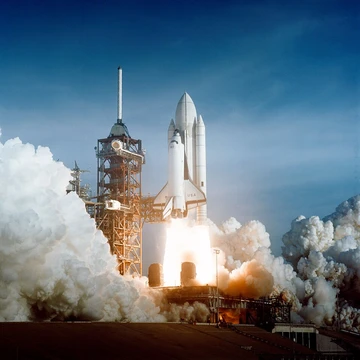
The launch occurred on September 8, 2016, at 23:05 UTC from Cape Canaveral’s Space Launch Complex 41, using a United Launch Alliance Atlas V 411. That rocket configuration has an RD-180 powered first stage with one AJ-60A solid fuel booster and a Centaur upper stage. OSIRIS-REx separated from the launch vehicle 55 minutes after ignition. The principal investigator called the launch “exactly perfect,” with no anomalies before or during the event.
OSIRIS-REx entered its cruise phase shortly after separation, following successful solar panel deployment, propulsion system startup, and communication link establishment. Its hyperbolic escape speed from Earth was about 5.41 km/s. On December 28, 2016, it performed its first deep space maneuver, changing velocity by 431 m/s using 354 kg of fuel. A smaller thruster firing on January 18, 2017, refined its course for an Earth gravity assist on September 22, 2017. The cruise phase lasted until it reached Bennu in December 2018, after which science and sample collection began.
During cruise, OSIRIS-REx searched for Earth-Trojan asteroids as it passed through the Sun–Earth L4 Lagrange point. From February 9 to 20, 2017, the team used the MapCam camera to take about 135 survey images daily, processed at the University of Arizona. No new trojans were found, but the search was useful because it mimicked the operations needed as the spacecraft approached Bennu, scanning for natural satellites and hazards.
On February 12, 2017, while 673 million km from Jupiter, the PolyCam instrument successfully imaged the planet.
- Mission type
- Asteroid sample-return
- Principal investigator
- Dante Lauretta (University of Arizona)
- Sample mass collected
- 121.6 grams
Verified Timeline
Lore & Background
The spacecraft spent two years mapping the asteroid's surface to select a sample site. Bennu was chosen because it is a 'time capsule' from the birth of the Solar System, a B-type asteroid with a very dark surface, considered primitive and rich in carbonaceous material. The mission detected hydrated minerals in the form of clay on Bennu's surface. On 20 October 2020, OSIRIS-REx touched down on Bennu and successfully collected a sample. The sample collector head was secured in the return capsule on 28 October 2020. The capsule landed by parachute at the Utah Test and Training Range on 24 September 2023 and was transported to the Johnson Space Center for processing. The collected material was 121.6 grams.
Reader's Guide
OSIRIS-REx is significant as the first United States spacecraft to return samples from an asteroid, following Japanese missions Hayabusa and Hayabusa2. The returned material from Bennu, a primitive carbonaceous asteroid, is expected to provide insights into the formation and evolution of the Solar System, the initial stages of planet formation, and the source of organic compounds that may have led to life on Earth. The mission also demonstrated close-proximity operations, including orbiting Bennu at a record distance of about 1.75 km. The extended mission to Apophis will continue to study near-Earth asteroids. The mission's legacy includes advancing understanding of asteroid composition and the origins of organic molecules in space.
Did You Know?
- OSIRIS-REx orbited Bennu at about 1.75 km, the closest distance any spacecraft has orbited a celestial object.
- The spacecraft's TAGSAM instrument used a burst of nitrogen gas to blow regolith particles into the sampler head.
- The sample capsule landed at the Utah Test and Training Range on 24 September 2023.
- Bennu's surface contains hydrated minerals in the form of clay, detected by OSIRIS-REx.
- The extended mission to Apophis will arrive in April 2029.
More in Space Missions 1-22
Spotted an error? Know more?
This is a living reference — every entry is fact-audited, and reader corrections feed straight into our audit queue. Suggest an edit · See this site's audit record