Curiosity
Mars rover exploring Gale crater since 2012.

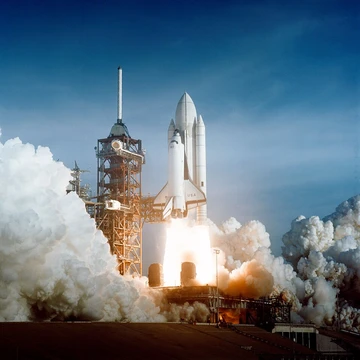
Curiosity, a car-sized rover, has been exploring Mars’s Gale crater and Mount Sharp since its 2012 landing, as part of NASA’s Mars Science Laboratory mission. It launched from Cape Canaveral, Florida, on November 26, 2011, and touched down on August 6, 2012, at Aeolis Palus inside Gale crater. The landing site, named Bradbury Landing, sat less than 2.4 kilometers from the target’s center after a 560-million-kilometer journey. Though designed for a two-year primary mission, the rover was granted an indefinite extension in December 2012, and as of September 3, 2026, it had been active for 5,003 sols—over 14 Earth years.
The mission’s core aims include studying Martian climate and geology, determining whether Gale crater ever offered conditions suitable for microbial life (especially regarding water), and gathering data for future human exploration. After about a year, having found evidence that ancient Mars could have supported microbes, the team shifted focus to developing predictive models for how organic compounds and biomolecules are preserved—a field called taphonomy. The region under study has been compared to the Four Corners area of the American West.
The rover’s name came from a national student contest, with over 9,000 entries. Twelve-year-old Clara Ma of Lenexa, Kansas, won for her essay describing curiosity as “an everlasting flame.” Her prize included a trip to NASA’s Jet Propulsion Laboratory, where she signed the rover during assembly.
Curiosity’s life-cycle cost, adjusted for inflation, was US$3.2 billion in 2020. By comparison, the 2021 Perseverance rover cost US$2.9 billion.
The rover measures 2.9 meters long, 2.7 meters wide, and 2.2 meters high, with a mass of 899 kilograms—80 kilograms of which is scientific instruments. Its main chassis is the Warm Electronics Box. It is the fourth NASA robotic rover sent to Mars since 1996, following Sojourner (1997), Spirit (2004–2010), and Opportunity (2004–2018). At launch, Curiosity made up 23% of the spacecraft’s total 3,893-kilogram mass; the rest was discarded during transport and landing.
Power comes from a radioisotope thermoelectric generator (RTG), similar to those on the Viking landers. The RTG uses heat from decaying plutonium-238 dioxide—4.8 kilograms supplied by the U.S. Department of Energy—to generate electricity via thermocouples. Waste heat is piped to warm systems, saving electrical power. The unit, called the Multi-Mission Radioisotope Thermoelectric Generator (MMRTG), was designed by Rocketdyne and Teledyne Energy Systems, and fueled and tested by Idaho National Laboratory.
In 2012, the NASA/JPL MSL/Curiosity team won the Robert J. Collier Trophy for successfully landing the rover and advancing understanding of ancient Martian environments. Curiosity’s design later served as the basis for the Perseverance rover, which carries different instruments.
- launch_date
- November 26, 2011
- landing_date
- August 6, 2012
- field
- Mars exploration
- operator
- NASA
- known_for
- Assessing ancient Martian habitability and serving as basis for the Perseverance rover
Lore & Background
Curiosity is a car-sized Mars rover, measuring 2.9 meters long, 2.7 meters wide, and 2.2 meters high, with a mass of 899 kilograms including 80 kilograms of scientific instruments. Its box-like main chassis is known as the Warm Electronics Box. The rover is powered by a radioisotope thermoelectric generator (RTG), which uses heat from the decay of 4.8 kilograms of plutonium-238 dioxide to produce electricity via thermocouples, providing consistent power day and night and across all seasons; waste heat is also piped to warm systems. Its design served as the basis for NASA’s later Perseverance rover. Curiosity landed on Aeolis Palus inside Gale crater on Mars, a site selected for its potential to reveal ancient environmental conditions favorable for microbial life. The rover’s mission goals include investigating Martian climate and geology, assessing the role of water, and studying planetary habitability for future human exploration. After assessing that ancient Mars could have been hospitable to life, its objectives evolved to include developing predictive models for the preservation of organic compounds. The rover’s name was chosen from over 9,000 entries in a national student contest; twelve-year-old Clara Ma from Kansas submitted the winning entry and signed her name on the rover during assembly at NASA’s Jet Propulsion Laboratory.
Reader's Guide
Its advanced payload of scientific equipment and its radioisotope thermoelectric generator allow it to operate through all seasons and day and night, unlike previous solar-powered rovers. The mission's main scientific goals are to help determine whether Mars could ever have supported life, determine the role of water, and study the climate and geology of Mars. About one year into the surface mission, having assessed that ancient Mars could have been hospitable to microbial life, the MSL mission objectives evolved to developing predictive models for the preservation process of organic compounds and biomolecules. The NASA/JPL Mars Science Laboratory/Curiosity Project Team was awarded the 2012 Robert J. Collier Trophy for the extraordinary achievements of successfully landing Curiosity on Mars, advancing technological and engineering capabilities, and significantly improving humanity's understanding of ancient Martian habitable environments.
Did You Know?
- Curiosity is 2.9 m long by 2.7 m wide by 2.2 m high, larger than the Mars Exploration Rovers.
- The rover's name was chosen from a nationwide student contest; the winning entry was submitted by 12-year-old Clara Ma.
Frequently Asked Questions
When did Curiosity launch and where did it land?
The rover lifted off on November 26, 2011, and touched down inside Gale crater on August 6, 2012. It has been working in that same field site ever since, climbing toward Mount Sharp's layered deposits.
What is Curiosity's core mission?
Its three main goals are to study Martian climate and geology, determine whether Gale crater ever hosted conditions favorable to microbial life, and collect habitability data that will guide future human exploration of Mars.
Why does Curiosity matter for the search for extraterrestrial life?
By drilling into ancient lakebed sediments and reading mineral signatures, it provides direct evidence of whether liquid water and the right chemistry once coexisted in a way that could have sustained microbes. Those findings shape where and how the next generation of missions will hunt for biosignatures.
More in Space Missions 1-22
Spotted an error? Know more?
This is a living reference — every entry is fact-audited, and reader corrections feed straight into our audit queue. Suggest an edit · See this site's audit record