Galileo
First spacecraft to orbit an outer planet.

Galileo was a NASA robotic spacecraft sent to explore Jupiter, its moons, and the asteroids Gaspra and Ida. It carried both an orbiter and an atmospheric probe. The craft was named for the Italian astronomer who first spotted Jupiter’s large moons through a telescope. Launched from the Space Shuttle Atlantis in 1989, Galileo used gravity assists from Venus and Earth to reach Jupiter in 1995, becoming the first probe to orbit a planet in the outer solar system.
The Jet Propulsion Laboratory built the spacecraft and ran the mission. West Germany’s Messerschmitt-Bölkow-Blohm supplied the propulsion system, while NASA’s Ames Research Center managed the probe, built by Hughes Aircraft. At launch, the combined orbiter and probe weighed 2,562 kg and stood 6.15 meters tall.
Most spacecraft stabilize either by spinning or by holding a fixed orientation relative to the Sun and a star. Galileo did both. One section rotated at three revolutions per minute, keeping the craft steady and allowing six instruments—including those measuring fields and particles—to gather data from many directions.
Galileo was deliberately crashed into Jupiter’s atmosphere in 2003 to avoid contaminating any of the planet’s moons. The next orbiter to visit Jupiter, Juno, arrived in 2016.
Development of the mission began in the late 1950s. NASA’s advisory group noted that a heat shield for an atmospheric probe did not yet exist and that testing facilities would not be ready until 1980. JPL was put in charge of the Jupiter Orbiter Probe project. It would be the fifth spacecraft to reach Jupiter but the first to orbit it, and its probe would be the first to enter the planet’s atmosphere.
A key early decision was to base the orbiter on the Mariner design used for Voyager, not the spinning Pioneer design. Mariner had an attitude control system with gyroscopes, nitrogen jet thrusters, and sensors aimed at the Sun and the star Canopus, allowing high-resolution images. But it was heavier: a Mariner weighed 722 kg, while a Pioneer weighed only 146 kg.
John R. Casani, former head of the Mariner and Voyager projects, became the first project manager. He asked for a more inspiring name; “Galileo” won. The name also appeared on a spacecraft in the Star Trek TV show. It was officially adopted in 1978.
The spacecraft was built as an octagonal prism. All components and spare parts were tested for at least 2,000 hours. The mission operations team used 650,000 lines of code for orbit sequence design, 1,615,000 for telemetry interpretation, and 550,000 for navigation. The craft was designed to last at least five years.
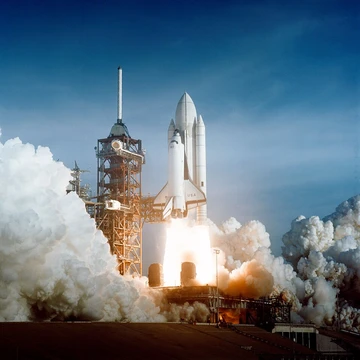
In December 1985, Galileo left JPL in Pasadena for the Kennedy Space Center. The Challenger disaster delayed its launch from May to October 1989. Before launch, anti-nuclear groups sought a court injunction over the plutonium in the spacecraft’s radioisotope thermoelectric generators, which were necessary because solar power was impractical at Jupiter’s distance. The launch was postponed twice more—once by a faulty engine controller, then by bad weather—before finally lifting off on October 18, 1989.
- field
- Space exploration
- nationality
- American
- height
- 6.15 m (20.2 ft)
- destroyed
- September 21, 2003
Lore & Background
The Jet Propulsion Laboratory built the spacecraft and managed the program for NASA, while West Germany's Messerschmitt-Bölkow-Blohm supplied the propulsion module. NASA's Ames Research Center managed the atmospheric probe, built by Hughes Aircraft Company. Spacecraft are normally stabilized either by spinning around a fixed axis or by maintaining a fixed orientation with reference to the Sun and a star; Galileo did both. One section rotated at three revolutions per minute, keeping it stable and holding six instruments that gathered data from many directions. Galileo was intentionally destroyed in Jupiter's atmosphere on September 21, 2003, to prevent contaminating any of Jupiter's moons. The spacecraft used a Mariner program design rather than a Pioneer, allowing high-resolution imaging but at greater weight. The launch was delayed by the Space Shuttle Challenger disaster and later by a faulty main engine controller and inclement weather.
Reader's Guide
Galileo's significance lies in being the first spacecraft to orbit an outer planet, providing unprecedented data on Jupiter, its moons, and asteroids Gaspra and Ida. Its dual-spin stabilization design was innovative, combining spinning and fixed-orientation methods. The mission demonstrated the feasibility of long-duration outer planet exploration and gravitational assist trajectories. Its intentional destruction in Jupiter's atmosphere set a precedent for planetary protection, avoiding contamination of potentially habitable moons. Galileo's legacy includes advancing understanding of the Jovian system and proving technologies for future deep space missions.
Did You Know?
- Galileo was named after the Italian astronomer Galileo Galilei, the first person to view Jupiter through a telescope.
- Galileo was intentionally destroyed in Jupiter's atmosphere on September 21, 2003, to prevent contaminating any of Jupiter's moons.
- The launch was delayed by the Space Shuttle Challenger disaster, a faulty main engine controller, and inclement weather.
More in Space Missions 1-22
Spotted an error? Know more?
This is a living reference — every entry is fact-audited, and reader corrections feed straight into our audit queue. Suggest an edit · See this site's audit record