Dabqaad
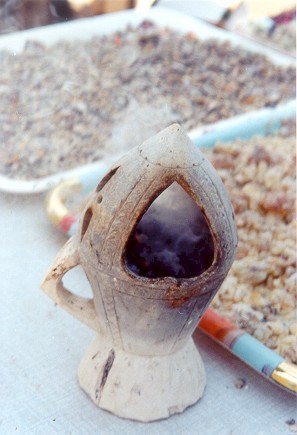
Somali incense burner used for perfuming homes.

Middayexpress · CC BY-SA 3.0
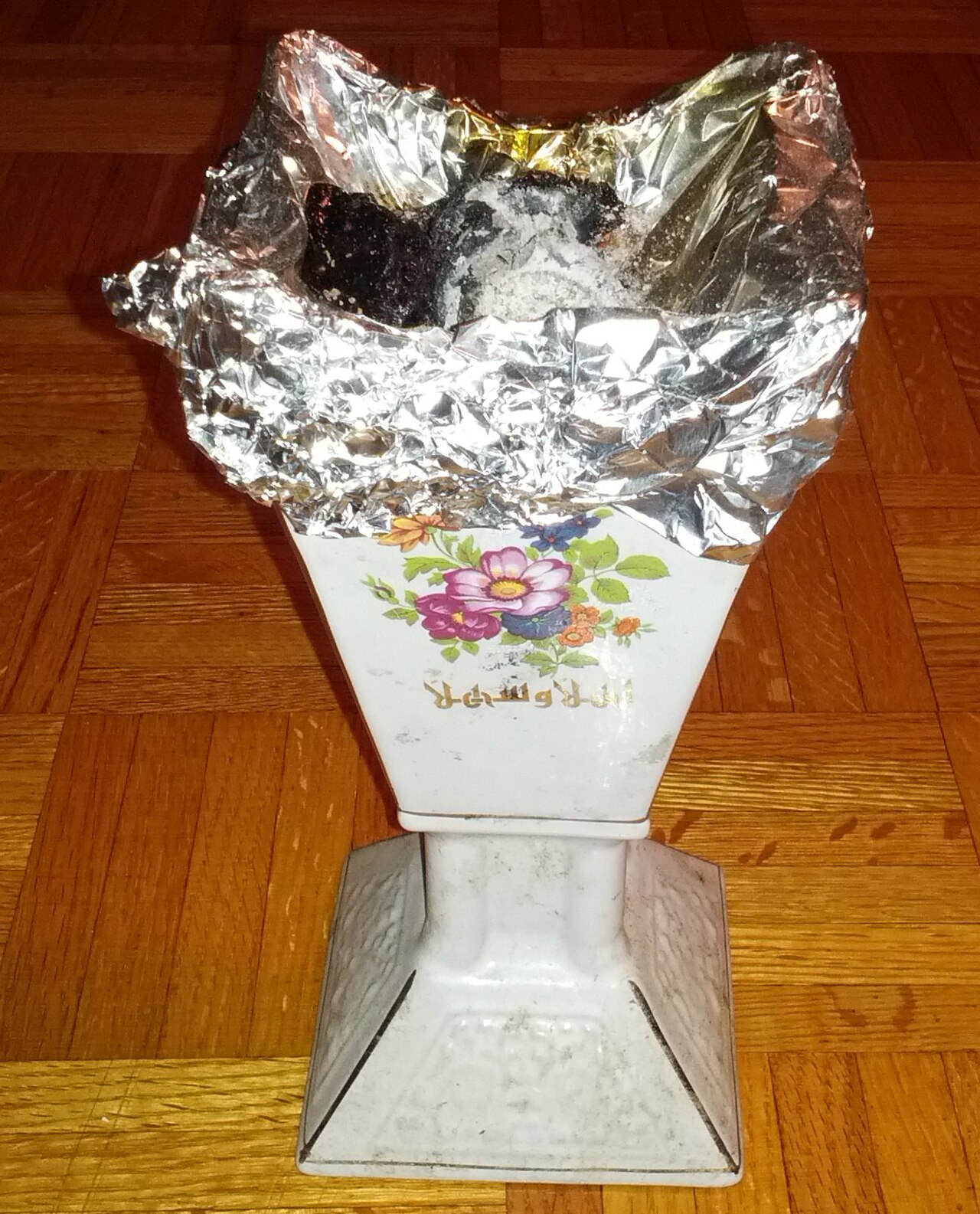
The dabqaad, also called a girgire, is a Somali incense burner or censer. It typically has one or two handles and is widely used in Somalia, Ethiopia, and Djibouti. Traditionally, it is employed to scent a home after large meals or during special events, like when guests are expected. Frankincense (foox or fooh) or a prepared incense called uunsi is placed on hot charcoal inside the burner, where it smolders for roughly ten minutes, leaving the house fragrant for hours. The pot itself is crafted from a white clay or soapstone found in specific areas of Somalia, particularly meerschaum (sepiolite) quarried in the El Buur district, which is also the center of the local pipe-making industry. The ancient Egyptian pharaoh Hatshepsut was known to be very fond of this incense during her expedition to the ancient Land of Punt. Somalis living in Western countries often obtain their dabqaads from the Horn of Africa, either in person or through relatives.
- Field
- Incense burner / censer
- Nationality
- Somali
- Known for
- Traditional Somali incense burner used for perfuming homes
- Material
- White clay, soapstone, or meerschaum (sepiolite)
- Origin center
- El Buur district, Somalia
Lore & Background
The dabqaad is traditionally used to perfume homes after large meals and during special occasions, such as when one is expecting guests. Frankincense (foox/fooh) or a prepared incense (uunsi) is placed on top of hot charcoal inside the burner, burning for about ten minutes and keeping the house fragrant for hours.
The dabqaad pot is made from a white clay or soapstone found in specific areas of Somalia. Meerschaum (sepiolite) is used to make the dabqaad, with the district of El Buur serving as a center for quarrying. El Buur is also the place of origin of the local pipe-making industry. The ancient Egyptian pharaoh Hatshepsut was very fond of the incense when she went on her expedition to the ancient Land of Punt.
Reader's Guide
The dabqaad holds cultural significance in the Horn of Africa as a traditional incense burner used in Somali, Ethiopian, and Djiboutian households. Its use is tied to hospitality and domestic rituals, particularly after meals and when receiving guests. The burner is typically made from locally sourced materials such as white clay, soapstone, or meerschaum, with the district of El Buur in Somalia being a key center for quarrying and production. The dabqaad's connection to the ancient incense trade is noted through the mention of Pharaoh Hatshepsut's fondness for incense from the Land of Punt. In modern times, Somalis living in the West often obtain their dabqaads from the Horn of Africa, either in person or through relatives, maintaining a link to their cultural heritage. The dabqaad is related to other incense burners such as the bukhoor and mabkhara, reflecting a broader regional tradition of aromatic home perfuming.
Did You Know?
- The dabqaad is also known as girgire.
- It is commonly used in Somalia, Ethiopia, and Djibouti.
- The district of El Buur is a center for quarrying meerschaum used to make dabqaads.
- Frankincense (foox/fooh) or prepared incense (uunsi) is burned on hot charcoal inside the dabqaad.
A Ritual of Hospitality and Home
The dabqaad, a Somali term meaning "fire raiser," also called girgire, serves as a central object in the domestic rituals of Somalia, Ethiopia, and Djibouti. Its primary purpose is to perfume living spaces, and it is most commonly brought into use after large meals or during special occasions, particularly when a household is expecting guests. The act of lighting the censer transforms the home into a fragrant environment, signaling care and welcome to those who enter. For diaspora communities, the dabqaad carries additional weight: Somalis living in Western countries often travel to the Horn of Africa in person, or rely on relatives back home, to acquire their censers. This practice underscores how the object transcends mere utility, becoming a tangible link to homeland and tradition, a vessel of cultural continuity carried across oceans.
The Art of the Censer
The physical construction of the dabqaad is rooted in specific geological resources. The pot is fashioned from white clay or soapstone, with meerschaum—known technically as sepiolite—being the material of choice. The district of El Buur in Somalia has long served as the quarrying center for this stone, and it is also the birthplace of a local pipe-making industry that draws on the same material. The censer typically features either one or two handles, giving it a practical form suited to being carried and used in domestic settings. The specificity of the material and the geographic limitation of its source lend the dabqaad a sense of place and craft that mass-produced alternatives cannot replicate. For those outside the Horn of Africa, obtaining an authentic piece requires deliberate effort, whether through personal travel or through family connections, reinforcing the object's identity as a crafted artifact rather than a commodity.
The Incense Ritual
The act of using a dabqaad follows a simple yet deliberate sequence. Frankincense, known in Somali as foox or fooh, or a prepared incense called uunsi, is placed atop hot charcoal within the censer. The incense then burns for roughly ten minutes, during which time the fragrance permeates the surrounding space. The remarkable aspect of this process is its lingering effect: a single ten-minute burning session is sufficient to keep a house fragrant for hours afterward. This efficiency makes the dabqaad a practical tool for maintaining a pleasant domestic atmosphere without constant tending. The ritual is not merely functional but ceremonial, marking transitions in daily life—concluding a meal, preparing for visitors, or celebrating a special occasion. The brief, focused act of burning becomes a small ritual of care, embedding scent into the fabric of everyday Somali, Ethiopian, and Djiboutian domestic life.
Echoes of Ancient Trade
The dabqaad and its incense connect to a far older history of aromatic trade in the Horn of Africa. The ancient Egyptian pharaoh Hatshepsut, during her famous expedition to the Land of Punt, was noted for her particular fondness of the incense that region produced. This historical thread links the humble Somali censer to one of the earliest documented long-distance trade networks in the ancient world, where frankincense and myrrh were among the most prized commodities. The dabqaad's kinship with other regional censers—such as the Bukhoor and the Mabkhara—further illustrates a shared cultural landscape of incense use stretching across the Horn and into the broader Arab and East African world. While the object itself is modest in form, its material lineage and the aromatic traditions it carries place it within a continuum of human practice that stretches back millennia, connecting a grandmother in Mogadishu to a pharaoh in Thebes.
Gallery
Frequently Asked Questions
What is a Dabqaad?
The Dabqaad, sometimes called a girgire, is a traditional Somali incense burner designed to perfume a living space. It usually features one or two handles and is a common household item across Somalia, Ethiopia, and Djibouti.
What is a Dabqaad made from?
The vessel is handcrafted from white clay, soapstone, or meerschaum (sepiolite) quarried in particular regions of Somalia. The El Buur district is especially recognized as a primary source of the raw stone.
How do you actually use a Dabqaad?
You lay hot charcoal inside the burner, then set a piece of frankincense (foox or fooh) or a blended incense called uunsi on top. The material smolders for roughly ten minutes, after which the room stays fragrant for several hours.
When is a Dabqaad traditionally brought out?
It is most often used to freshen a home after a large meal or to welcome arriving guests. The practice is a staple of hospitality and special-occasion rituals in Somali households.
Why is the Dabqaad considered a meaningful Somali invention?
It turns locally available stone and clay into a simple yet elegant tool for domestic fragrance, a practice that has persisted for generations. Its continued presence in homes across the Horn of Africa underscores both its practical design and its deep cultural resonance.
More in Somali inventions 1-20
Spotted an error? Know more?
Reader corrections go straight into our review queue. Suggest an edit · How this site is sourced