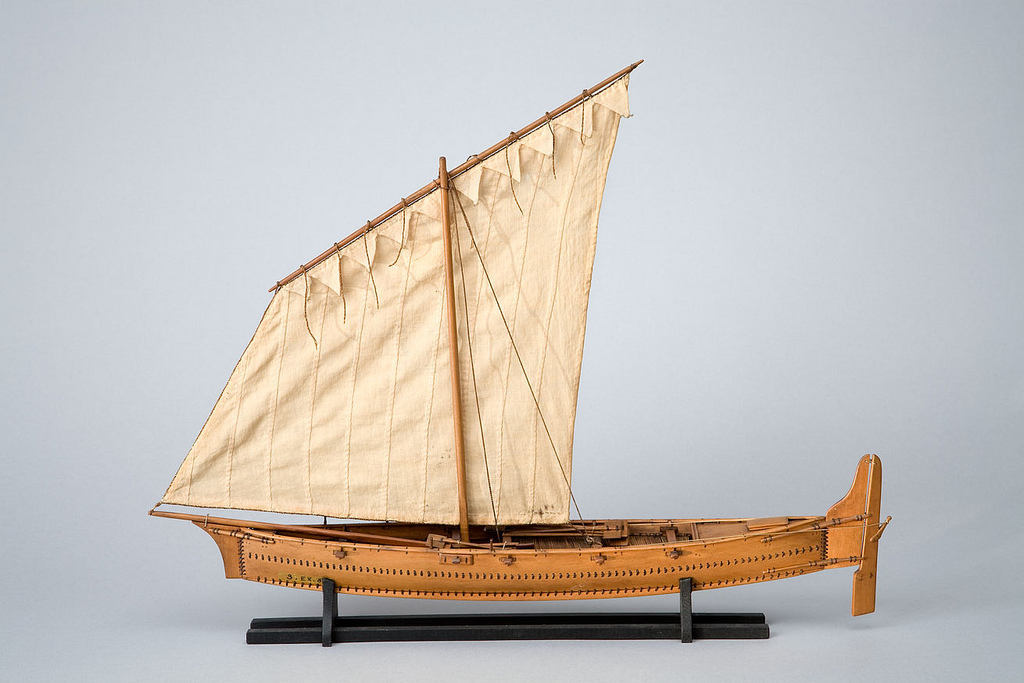
Beden
Ancient Somali sewn vessel with towering stern-post and powerful rudder.

Wikimedia Commons · Public domain
The beden, also known as beden-seyed and beden-safar, is a fast, ancient Somali maritime vessel typified by a towering stern-post and powerful rudder. It is the longest surviving sewn boat in the Horn of Africa and the Arabian Peninsula, with shipyards predominantly in the northeastern Hafun region of Somalia (notably Bayla) as well as Muscat.
- Type
- Single or double-masted maritime vessel
- Variants
- Beden-seyed (fishing), beden-safar (trading), uwassiye (larger trading variant)
- Length range
- 6–15 m (20–50 ft) for fishing; over 15 m (50 ft) for trading; uwassiye up to 77 ft (23 m)
- Construction
- Originally sewn with coiled coconut fibre; Omani variants began nailing in the 20th century
- Region
- Horn of Africa (Somalia) and Arabian Peninsula (Oman)
- Notable feature
- Strengthened gunwale attached by treenail
Lore & Background
The beden is a fast, ancient Somali single or double-masted maritime vessel and ship, typified by its towering stern-post and powerful rudder. It is also the longest surviving sewn boat in the Horn of Africa and the Arabian Peninsula. Its shipyards predominantly lie in the northeastern Hafun region of Somalia, notably Bayla, as well as Muscat. There are two types of beden ships: one geared towards fishing (the beden-seyed) and the other towards trading (beden-safar). The average trading beden-safar ship measures more than 15 m (50 ft) in length, significantly larger than the fishing beden-seyed ships, which measure 6–15 m (20–50 ft) on average. Both are dwarfed by a much larger trading variant called the uwassiye, the most common trading and voyaging vessel, with some measuring up to 77 ft (23 m). The ship is noticeable and unique in its strengthened and substantial gunwale, which is attached by treenail. Originally, all beden ships were sewn with coiled coconut fibre, holding the hull planking, stem and stern-post. Omani variants, beginning in the 20th century, began nailing instead of sewing the planks.
Reader's Guide
The beden represents a significant survival of ancient sewn-boat technology in the western Indian Ocean, being the longest surviving sewn boat in the Horn of Africa and the Arabian Peninsula. Its design, with a towering stern-post and powerful rudder, reflects a specialized adaptation for both fishing and long-distance trade. The distinction between the fishing beden-seyed and the trading beden-safar, along with the even larger uwassiye, illustrates a graded shipbuilding tradition tailored to different maritime needs. The shift from sewing with coiled coconut fibre to nailing in Omani variants during the 20th century marks a technological transition while the core design persisted. The beden's shipyards in northeastern Somalia (notably Bayla) and Muscat highlight its regional importance. Its etymology, derived from Arabic badan and related to Swahili bedeni, underscores the vessel's place within a broader Indian Ocean maritime culture. The beden's continued use into modern times makes it a living link to pre-modern shipbuilding practices.
Did You Know?
- A larger trading variant called the uwassiye can measure up to 77 ft (23 m).
- Omani variants began nailing planks instead of sewing them in the 20th century.
Gallery
Frequently Asked Questions
What is a Beden?
A Beden is a traditional Somali sailing vessel distinguished by its tall stern-post and robust rudder. It is the oldest surviving example of the sewn-boat tradition in the Horn of Africa and the Arabian Peninsula.
What are the main variants of a Beden?
The two core forms are the beden-seyed, built for fishing, and the beden-safar, designed for trade voyages. A larger trading version called the uwassiye can stretch up to roughly 23 metres in length.
How is a Beden constructed?
Traditionally, the hull planks are stitched together using coiled coconut fibre rather than metal fasteners. In Omani shipyards, builders switched to nailing the planks beginning in the 20th century, while Somali yards continue the original sewn technique.
Where are Bedens built?
The principal shipyards are located along Somalia's northeastern Hafun coast, with the town of Bayla being especially renowned for the craft. Muscat in Oman is another key centre where these vessels are still produced.
What makes a Beden stand out among traditional boats?
Its most recognizable structural feature is a reinforced gunwale secured with wooden treenails, which adds rigidity for open-ocean sailing. Because it is the longest-surviving sewn-boat design in the region, it carries deep cultural and maritime-heritage significance.
More in Somali inventions 1-20
Spotted an error? Know more?
Reader corrections go straight into our review queue. Suggest an edit · How this site is sourced