Alindi
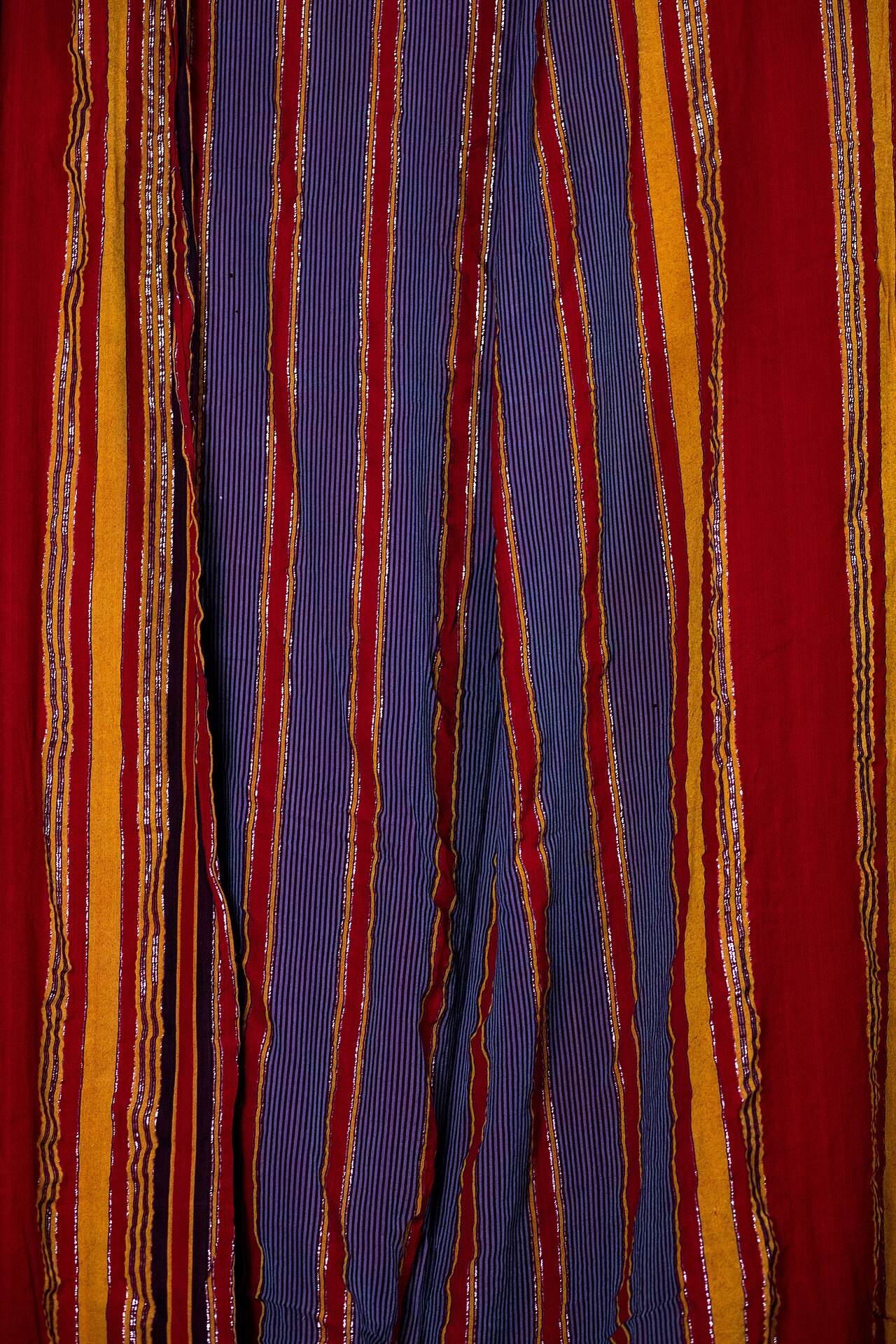
A striped Somali fabric woven for centuries, worn in ceremonies.

Rhodapenmarck · CC0
Alindi, also called Futa Benadir, is a Somali cloth traditionally used in garments and known for its bright striped patterns. The most popular design, midab boqoreed (royal colors), takes its inspiration from the coloring of certain goats. For centuries, the fabric has been a lasting emblem of Somali identity, often worn at ceremonies and celebrations.
Mogadishu was once a major textile hub, exporting cloth across the Indian Ocean, Red Sea, and Gulf. When Ibn Battuta visited in 1330, he noted that the city’s textiles were “unequalled” and shipped as far as Egypt. By the 1800s, about one in five Mogadishu residents worked as weavers. This thriving industry later faced competition from cheap, mass-produced cotton fabrics imported from America. Somalis, however, continued to prefer local cloth. To keep up, Somali craftsmen began sourcing cotton from the Benadir hinterland—previously, cotton fiber had been imported. By the 1880s, travelers saw plenty of local cotton growing along the Shebelle River. The raw cotton was carried to coastal towns by donkeys or camels, where it was cleaned and spun into thread.
A 1920 report counted several hundred looms in Mogadishu, mostly operated by men. Cloth was also made in other Benadir coastal towns, especially Merca, with exports reaching Mombasa and Zanzibar. In the 1840s, annual maritime exports of cotton goods from Somalia across eastern Africa were estimated at 360,000 to 380,000 pieces, and a significant amount of cloth was also traded inland to southern Ethiopia. Artisanal caps and shawls were exported to nearby countries as well. Even after factory-made yarn arrived, Somali women continued spinning, and some adopted small hand-powered spinning wheels—though there is no widely recognized evidence that they were the first in sub-Saharan Africa to do so. Well into the 1950s, over a thousand households on the Benadir coast still wove cloth, and locally made textiles became high-status items reserved for special occasions.
Local artisans, including the Tunni of the Benadir coast, wove alindi. In the hinterland it was called Kar Guri, and on the coast, toob Benadiri. The cloth was used locally and also exported to southern Arabia and Egypt. Different colors and patterns, each with its own name, were made using locally grown vegetable dyes.
- Field
- Textile production
- Known for
- Traditional striped fabric, symbol of Somali heritage
- Origin
- Somalia (Benadir coast)
- Materials
- Cotton, vegetable dyes
- Technique
- Hand-weaving with darisi stretching method
Lore & Background
The city of Mogadishu historically served as a textile manufacturing center, exporting cloths across the Indian Ocean, Red Sea, and the Gulf. In 1330, Ibn Battuta visited the city and described its 'unequalled' textiles as being exported all the way to Egypt and elsewhere. By the 19th century, it was estimated that one in five residents of Mogadishu were weavers. Eventually the industry faced competition from mass-produced cotton fabrics from abroad, most notably from mills in America. However, Somalis continued to prefer locally made cloth. To compete, craftsmen began sourcing cotton from the Benadir hinterland; by the 1880s travelers reported abundant local cultivation along the Shebelle River. Raw cotton was transported to coastal towns by donkeys or camels, cleaned, and spun into thread.
A 1920 report recorded several hundred looms operating in Mogadishu, primarily worked by men. Cloth production also took place in other towns along the Benadir coast, particularly in Merca, with exports reaching Mombasa and Zanzibar. Maritime exports of cotton goods from Somalia were estimated at 360,000 to 380,000 pieces annually in the 1840s, with a significant portion traded inland to southern Ethiopia. Despite the arrival of factory-made yarn, Somali women continued to spin and were the first in sub-Saharan Africa to adopt small hand-powered spinning wheel technology. Well into the 1950s, over a thousand households on the Benadir coast were still engaged in weaving, and locally made textiles served as high-status items reserved for special occasions.
Reader's Guide
Alindi holds enduring significance as a marker of Somali cultural identity and craftsmanship. For centuries, Mogadishu and other Benadir coastal towns were hubs of textile production, exporting cloth across the Indian Ocean, Red Sea, and Gulf. The fabric's resilience against competition from mass-produced American imports in the 19th century demonstrates the strong local preference for handmade cloth. Craftsmen adapted by sourcing local cotton from the Shebelle River hinterland, transported by donkeys and camels. The weaving process involved locally grown vegetable dyes, a sizing of flour and water, and a distinctive stretching method called darisi. Even after factory-made yarn arrived, Somali women pioneered the use of small hand-powered spinning wheels in sub-Saharan Africa. By the 1950s, over a thousand households still wove alindi, which had become high-status items for special occasions. The fabric's most favored pattern, midab boqoreed (royal colors), was originally inspired by goat coat colors, linking the textile to pastoral traditions. Today, alindi remains a symbol of Somali heritage, worn in ceremonies and festivities.
Did You Know?
- The most favored color pattern, midab boqoreed (royal colors), was originally inspired by the coat colors of certain goats.
- In 1330, Ibn Battuta described Mogadishu's textiles as 'unequalled' and exported to Egypt.
- The cloth was known as Kar Guri in the hinterland and toob Benadiri on the coast.
A Living Symbol of Somali Heritage
Alindi, also called Futa Benadir, stands as one of the most enduring expressions of Somali cultural identity. For centuries, this fabric has been woven into the fabric of ceremonial life, appearing at festivities and important gatherings where its presence signals pride in ancestral tradition. The most celebrated color scheme, known as midab boqoreed or "royal colors," draws its inspiration from the natural coat patterns of certain goats found in the region, lending the textile an organic, earthy elegance. Rather than being a mere commodity, locally produced alindi came to function as a marker of high social standing, reserved for the most significant occasions in a family's life. Even as factory-made alternatives flooded the market, Somali communities consistently favored the handcrafted cloth over imported goods, a preference that speaks to the deep emotional and cultural weight the fabric carries. Its colorful stripes remain instantly recognizable today, serving as a visual shorthand for Somali heritage that transcends generations.
A Maritime Textile Empire
Mogadishu's role as a textile powerhouse stretches back to at least the fourteenth century. When the Moroccan traveler Ibn Battuta passed through the city in 1330, he singled out its cloth production as "unequalled," noting that finished fabrics were shipped as far as Egypt. By the nineteenth century, the industry had become so central to the city's economy that roughly one in every five residents worked as a weaver. The reach of this trade was genuinely transoceanic: cotton goods moved across the Indian Ocean, the Red Sea, and the Persian Gulf, with destinations including Mombasa, Zanzibar, southern Arabia, and even inland regions of southern Ethiopia. In the 1840s, maritime exports from Somalia were estimated at between 360,000 and 380,000 pieces of cloth per year. Beyond plain fabric, artisanal items such as caps and shawls found buyers in neighboring countries. By 1920, several hundred looms were still operating in Mogadishu, and weaving communities in towns like Merca kept the tradition alive along the Benadir coast.
The Art of the Loom
The creation of alindi is a labor-intensive process passed down through generations of coastal artisans, particularly the Tunni people of the Benadir region. The cloth carried different names depending on where it was used: Kar Guri in the interior and toob Benadiri along the coast. Weavers relied on locally grown vegetable dyes to produce the distinctive striped patterns, each color combination carrying its own name. After dyeing, yarn was tied together and marked with kohl, then submerged in a flour-and-water sizing to reinforce the fibers. A stretching technique called darisi followed, in which threads were pulled taut across two upright sticks set within the workshop structure, forming an L-shaped arrangement, and left to dry in place. The dried yarn was then wound onto a wooden spindle called a furfure, unwound, and threaded through heddle loops on a bamboo frame. The weaver attached the heddle to the loom and extended the warp threads to a single iron hook set into the floor roughly eight meters away. As cloth accumulated on the beam, the weaver re-anchored the warp at successive points along a rope running back to the seat, a system that allowed continuous weaving over long stretches.
Spinning, Resilience, and the Local Cotton Revolution
When mass-produced cotton from American mills began flooding the market in the nineteenth century, Somali weavers faced a direct economic threat. Yet the preference for handcrafted cloth proved remarkably stubborn. Rather than surrendering to cheaper imports, Somali craftsmen pivoted toward local raw materials. By the 1880s, travelers documented abundant cotton cultivation along the Shebelle River in the Benadir hinterland, a dramatic shift from the earlier reliance on imported fiber. The harvested cotton was hauled to coastal towns by donkey or camel, where it was cleaned of seeds and spun into thread. Somali women played a pivotal role in this process, continuing to spin even after factory-made yarn became available. They were, in fact, the first people in sub-Saharan Africa to adopt small hand-powered spinning wheel technology. The industry's endurance is striking: well into the 1950s, more than a thousand households along the Benadir coast still maintained active weaving operations, ensuring that alindi remained a living craft rather than a museum piece.
Gallery
Frequently Asked Questions
What is Alindi?
Alindi, also known as Futa Benadir, is a traditional Somali cloth recognized for its vivid striped patterns. It has been hand-woven for centuries along the Benadir coast and remains a staple of Somali garment-making.
What is the 'midab boqoreed' design?
Midab boqoreed, meaning 'royal colors,' is the most celebrated Alindi pattern, drawing its palette from the natural coloring of certain goats. This design has become the most widely recognized and sought-after style of the fabric.
How is Alindi actually made?
The cloth is hand-woven from cotton using vegetable dyes and a technique called the darisi stretching method. Artisans along the Benadir coast have passed down this process through generations.
What was Mogadishu's role in Alindi's history?
Mogadishu served as a major textile center, exporting its cloth across the Indian Ocean, Red Sea, and Gulf. The 14th-century traveler Ibn Battuta praised the city's textiles as 'unequalled,' noting they were shipped as far as Egypt.
Why does Alindi matter to Somali identity?
For centuries, Alindi has functioned as a lasting emblem of Somali cultural identity, frequently worn during ceremonies and celebrations. Its continued presence at important gatherings underscores its role as a living symbol of heritage rather than merely a historical artifact.
More in Somali inventions 1-20
Spotted an error? Know more?
Reader corrections go straight into our review queue. Suggest an edit · How this site is sourced