Dermatoheliosis
Chronic UV exposure causes characteristic skin changes.
Dermatoheliosis, also referred to as photoaging or photoageing, describes the characteristic changes in skin resulting from chronic exposure to UVA and UVB radiation. It is notable as a common dermatological condition driven by cumulative sun damage.
Quick Facts
- Primary mutagen type
- UVB rays
- Deeper penetrating ray
- UVA rays
- Most efficacious treatment
- Tretinoin (a retinoid)
Facts from the source article.
Effects of UV light
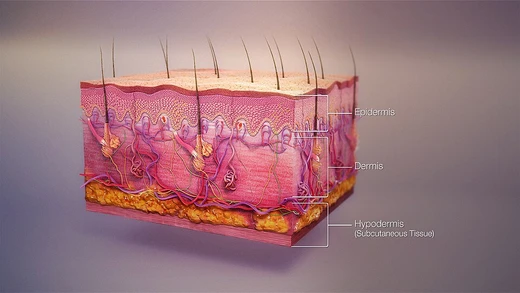
UVB rays act as a primary mutagen, penetrating only the epidermal layer and causing DNA mutations through chemical changes within skin cells. These mutations can lead to signs of photoaging such as wrinkling. Melanocytes and basal cells reside in the epidermis; UVB exposure prompts melanocytes to produce more melanin, contributing to freckles and dark spots, especially in fair-skinned individuals. Long-term UVB exposure may also result in precancerous lesions or skin cancer. UVA rays penetrate deeper, damaging both the epidermis and the dermis, which contains collagen, elastin, and extrafibrillar matrix. Chronic UVA exposure reduces dermal thickness, causing the epidermis to droop, and can dilate or break blood vessels, visible on the nose and cheeks. UVA also indirectly damages DNA by generating reactive oxygen species such as superoxide anion, peroxide, and singlet oxygen, which harm cellular DNA, lipids, and proteins. UV exposure triggers inflammation and vasodilation, manifesting as sunburn, through activation of NF-κB, which increases proinflammatory cytokines like IL-1, IL-6, vascular endothelial growth factor, and TNF-α, attracting neutrophils that generate free radicals. Additionally, UV radiation down-regulates thrombospondin-1 and up-regulates platelet-derived endothelial cell growth factor in keratinocytes, enhancing angiogenesis and supporting UV-induced neoplasm growth.
Signs, symptoms and histopathology
Early symptoms include dyspigmentation, wrinkles, and other changes around sun-exposed areas such as the eyes, mouth, and forehead; the lips may be affected, and in Canadian women the upper chest is commonly involved. Spider veins appear on the face and neck, and lips may lose color and fullness. Prolonged UV exposure deepens wrinkles, makes forehead frown lines visible even at rest, and causes telangiectasias around the nose, cheeks, and chin. The skin becomes leathery and lax, solar lentigines appear on the face and hands, and actinic keratoses or cutaneous malignancies may develop. Histopathologically, photoaging involves orderly maturation of keratinocytes, increased dermal cell population with hyperplastic and collapsed fibroblasts, inflammatory infiltrates, disorganization of collagen fibrils, and accumulation of abnormal elastin-containing material known as actinic elastosis.
Defense mechanisms
Endogenous defense mechanisms protect the skin from UV damage. UV exposure increases epidermal thickness, which helps shield against further harm. Melanin distribution, which is lower in fairer individuals, protects against sunburn, photoaging, and carcinogenesis by absorbing and scattering UV rays. DNA damage from UV rays triggers p53 expression, leading to cell cycle arrest and allowing repair via the nucleotide excision repair system; if damage is severe, apoptosis occurs, though apoptotic mechanisms decline with age, and failure of repair or apoptosis may lead to cutaneous tumorigenesis. TIMPs regulate MMP activity, and UV rays induce TIMP-1. The skin contains antioxidants such as vitamin E, coenzyme Q10, ascorbate, carotenoids, superoxide dismutase, catalase, and glutathione peroxidase, which protect against reactive oxygen species from normal metabolism. Overexposure to UV can deplete these antioxidants, increasing oxidative stress, so they are essential in defense against UV radiation and photocarcinogenesis.
Treatment
Treatment for photoaging follows a prevention-based paradigm. Primary prevention aims to reduce risk factors before disease occurs; sun protection is the most effective method, including sunscreen products, sun-protective clothing, and limiting sun exposure during peak hours (10 AM to 4 PM in spring and summer). Broad-spectrum sunscreen protects against UVA1, UVA2, and UVB rays, with proper application quantity, timing before exposure, and consistent reapplication after water or sweat being important. Secondary protection involves early detection, potentially while asymptomatic, to prevent or delay symptomatic disease. Options include retinoids (e.g., tretinoin), antioxidants (topical vitamin C, oral supplements, CoQ10, lipoic acid), estrogens, growth factors, and cytokines. Tretinoin is widely considered the most efficacious treatment for photoaging, supported by consistent evidence from randomized clinical trials. Retinoids are vitamin A derivatives that bind to retinoic acid receptors and retinoid X receptors, inducing cellular processes that increase collagen production and epidermal thickening, reducing sagging and wrinkling. Tretinoin also treats acne. Adapalene and tazarotene are third-generation synthetic retinoids used for acne; adapalene has not been widely studied for photoaging but is used off-label, while tazarotene has proven efficacy for photoaging. Retinol and retinal, metabolized in the skin to retinoic acid, are used in over-the-counter anti-aging products.
More in Skin Conditions Resulting from Physical Factors
Spotted an error? Know more?
Reader corrections go straight into our review queue. Suggest an edit · How this site is sourced