Chronic wound
A wound that fails to heal within three months.
A chronic wound is one that fails to progress through the normal stages of healing—hemostasis, inflammation, proliferation, and remodeling—within a predictable timeframe, typically not healing within three months. Such wounds often remain stuck in the inflammatory phase due to factors like infection, ischemia, necrotic tissue, improper moisture balance, or underlying diseases such as diabetes mellitus. Chronic wounds may take years to heal or never heal, causing significant physical and emotional stress and placing a financial burden on healthcare systems.
Quick Facts
- Incidence
- 0.78% of the population
- Prevalence
- 0.18 to 0.32%
- Typical age group affected
- over 60
Facts from the source article.
Did You Know?
- Six out of ten venous leg ulcer patients experience pain with their ulcer.
- Persistent pain at night, at rest, and with activity is the main problem for patients with chronic ulcers.
- Frustrations regarding ineffective analgesics and plans of care that patients were unable to adhere to were also identified.
Cause
Factors contributing to chronic wounds include poor circulation, neuropathy, difficulty moving, systemic illnesses, age, and repeated trauma. Genetic skin disorders such as epidermolysis bullosa cause skin fragility and a tendency toward chronic wounds. Comorbid conditions like vasculitis, immune suppression, pyoderma gangrenosum, and diseases causing ischemia also contribute. Immune suppression may result from illnesses or long-term use of drugs like steroids. Emotional stress can impair healing, possibly by raising blood pressure and cortisol levels, which lower immunity. What appears to be a chronic wound may actually be a malignancy; cancerous tissue can grow until blood supply fails, forming an ulcer. Cancer, especially squamous cell carcinoma, may also arise from chronic wounds due to repetitive tissue damage stimulating rapid cell proliferation. Old age contributes because older skin is more easily damaged, cells proliferate more slowly, and stress response genes are not upregulated as effectively. Ischemia-promoting factors such as chronic fibrosis, edema, sickle cell disease, and peripheral artery disease from atherosclerosis are especially likely to lead to chronic wounds. Repeated physical trauma, whether accidental (e.g., bumping a leg against a wheelchair rest) or intentional (e.g., subcutaneous heroin injection or abuse in Munchausen syndrome by proxy), continually initiates the inflammatory cascade.
Pathophysiology
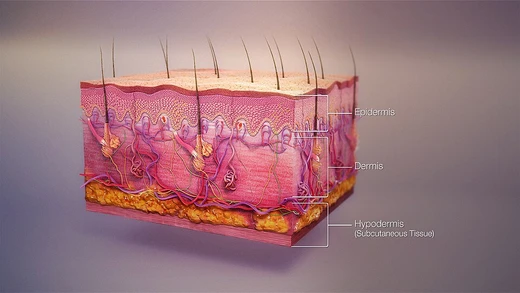
Chronic wounds may affect only the epidermis and dermis or extend to the fascia. They can originate from the same causes as acute wounds—surgery or accidental trauma—or from systemic infection, vascular, immune, or nerve insufficiency, or comorbidities like neoplasias or metabolic disorders. A wound becomes chronic when the body's ability to repair damage is overwhelmed by repeated trauma, continued pressure, ischemia, or illness. Animal studies are difficult because animals have loose skin that contracts quickly and rarely develop chronic wounds. Key factors identified include ischemia, reperfusion injury, and bacterial colonization. Ischemia, especially when repetitive or combined with old age, causes tissue inflammation and release of factors that attract neutrophils. Neutrophils fight pathogens but also release inflammatory cytokines and enzymes that damage cells. They produce reactive oxygen species (ROS) via myeloperoxidase to kill bacteria, but these ROS and enzymes damage DNA, lipids, proteins, the extracellular matrix (ECM), and healing-promoting cytokines. Neutrophils persist longer in chronic wounds than in acute ones, leading to higher levels of inflammatory cytokines and ROS. Wound fluid from chronic wounds contains excess proteases and ROS, which inhibit healing by breaking down growth factors and ECM proteins. This impaired healing response is considered uncoordinated, though soluble mediators, cell-based therapies, and therapeutic chemicals can propagate coordinated healing.
Diagnosis
Increased pain in a chronic wound is a good indicator of infection, though absence of pain does not rule it out. Most chronic wounds fall into three categories: venous ulcers, diabetic ulcers, and pressure ulcers. A small number result from causes like radiation poisoning or ischemia. Venous ulcers, accounting for 70% to 90% of chronic wounds, usually occur in the legs and affect the elderly; they are thought to arise from venous hypertension due to faulty vein valves, leading to ischemia and reperfusion injury. Diabetes is increasing in prevalence and causes a 15% higher risk of amputation due to chronic ulcers. Diabetes leads to neuropathy, which reduces pain perception, so patients may not notice small wounds and fail to prevent infection or repeated injury. Diabetes also causes immune compromise and damage to small blood vessels, impairing tissue oxygenation. Pressure ulcers typically occur in people with conditions like paralysis that limit movement, affecting areas such as the heels, shoulder blades, and sacrum. They are caused by ischemia when pressure on tissue exceeds capillary pressure, restricting blood flow; muscle tissue is most affected. Reperfusion injury also damages tissue in pressure ulcers.
Treatment
Treatment seeks to address root problems such as ischemia, bacterial load, and protease imbalance, and should include assessment and management of periwound skin issues. Methods include antibiotic and antibacterial use, debridement, irrigation, vacuum-assisted closure, warming, oxygenation, moist wound healing, removing mechanical stress, and adding cells or materials to enhance healing factors. It is uncertain whether intravenous metronidazole reduces foul smell from malignant wounds. There is insufficient evidence for silver-containing dressings or topical agents on infected or contaminated chronic wounds. For infected wounds, oral antibiotics with high bioavailability and soft-tissue penetration—such as ciprofloxacin, clindamycin, minocycline, linezolid, moxifloxacin, and trimethoprim-sulfamethoxazole—are often used if organisms are susceptible. Treatment should address multiple adverse factors simultaneously. Topical antibiotics can lower bacterial count and keep the wound moist, which speeds healing. Tea tree oil has been experimented with as an antibacterial and anti-inflammatory agent. Disinfectants are contraindicated because they damage tissues and delay wound contraction, and are rendered ineffective by organic matter. Greater exudate and necrotic tissue increase infection risk by providing a medium for bacterial growth. Surgical debridement removes devitalized tissue, and wound irrigation via pulsed lavage mechanically removes bacteria and debris; these are especially important for diabetic ulcers to prevent amputation.
More in Skin Conditions Resulting from Physical Factors
Spotted an error? Know more?
Reader corrections go straight into our review queue. Suggest an edit · How this site is sourced