Clavus (medicine)
A painful, inward-growing callus from chronic pressure or acute injury.
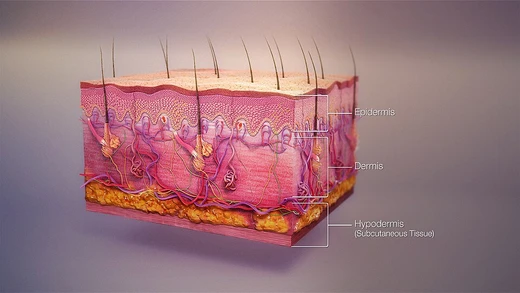
A clavus, also called a corn, is a localized thickening of the keratinized skin layers caused by increased mechanical forces.[1] The firm inner portion of a corn has a broad upper surface and a narrow lower point, similar in form to a funnel or a cone.[2]
Quick Facts
- Latin term
- clavus (meaning 'nail')
- Plural forms
- clavi or clavuses
- Common locations
- dorsal surface of toes or fingers
- palms (palmar corns)
- soles (plantar corns)
Facts from the source article.
Key facts and history
The Latin term "clavus" is considered somewhat dated, while the modern medical word is Greek "heloma".[3] Hard corns are especially problematic for people with insensitive skin due to damaged nerves, such as those with diabetes mellitus.[2] Avoiding pressure often involves changing to more comfortable footwear or using shoe inserts.[4] In extreme cases, surgery may be performed if other treatments are ineffective.[4]
In the United States, the term "tyloma" is employed with greater frequency than elsewhere.[3][1] A heloma durum (also called clavus durus) designates a hard corn, while a heloma molle (or clavus mollis) refers to a soft corn.[3] The conical shape of corns leads to heightened pressure at the apex, which may result in deep tissue injury and ulcer formation.[2] Immediate pain relief can be achieved by paring down the lesions.[2]
A corn plaster, consisting of a felt ring containing salicylic acid, is a widely used treatment.[2]
What the research sources say
The PodiaPaedia entry states that corns are due to thickening of the keratinised skin layers from increased mechanical forces.[1] It lists subtypes including Heloma Durum, Heloma Molle, and Heloma Miliare.[1] Imaging studies, such as a plain radiograph or CT scan, can detect underlying bony abnormalities causing pressure.[5] A skin biopsy may be performed to rule out other possible diagnoses.[5]
References
- Mechanical hyperkeratosis, PodiaPaedia: The Podiatric Encyclopaedia. facts only, no text reused. podiapaedia.org
- Wikipedia, "Corn (pathology)" (CC BY-SA 4.0), which cites: eMedicine > Clavus By Nanette Silverberg. Updated: Apr 9, 2010 (original not read by us) en.wikipedia.org
- Wikipedia, "Corn (pathology)" (CC BY-SA 4.0), which cites: Mechanical hyperkeratosis, PodiaPaedia: The Podiatric Encyclopaedia (we also read that source) en.wikipedia.org
- Wikipedia, "Corn (pathology)" (CC BY-SA 4.0), which cites: eMedicine > Clavus By Nanette Silverberg. Updated: Apr 9, 2010; eMedicine > Clavus By Nanette Silverberg. Updated: Apr 9, 2010 (original not read by us) en.wikipedia.org
- Wikipedia, "Corn (pathology)" (CC BY-SA 4.0), which cites: eMedicine > Clavus By Nanette Silverberg. Updated: Apr 9, 2010; eMedicine > Clavus By Nanette Silverberg. Updated: Apr 9, 2010; eMedicine > Clavus By Nanette Silverberg. Updated: Apr 9, 2010 (original not read by us) en.wikipedia.org
Each numbered sentence above was checked against the source it cites before publication. Sentences citing Wikipedia adapt text from the English Wikipedia article Corn (pathology) (contributors), used under CC BY-SA 4.0; this entry is available under the same licence. Other sources were used for facts only; no text or images are copied from them.
More in Skin Conditions Resulting from Physical Factors
Spotted an error? Know more?
Reader corrections go straight into our review queue. Suggest an edit · How this site is sourced