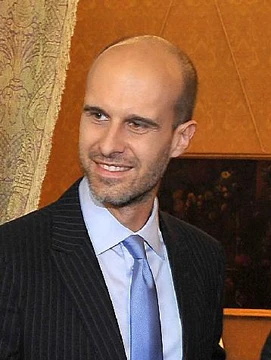
Alexander Sokurov
Russian filmmaker known for single-shot Russian Ark and Golden Lion winner Faust.
Last updated

via Wikipedia: Alexander Sokurov · see source
Alexander Nikolayevich Sokurov (born 14 June 1951) is a Russian filmmaker best known for Russian Ark (2002), a feature shot in a single continuous take, and Faust (2011), which won the Golden Lion at the Venice Film Festival.
Sokurov was born in the Siberian village of Podorvikha to a military officer’s family. He studied history at Nizhny Novgorod University, graduating in 1974, then entered a VGIK studio the following year. There he befriended Andrei Tarkovsky, whose film Mirror deeply shaped him.
Soviet authorities banned most of his early features. During this period he made many documentaries, including The Dialogues with Solzhenitsyn and a report on Grigori Kozintsev’s apartment in Saint Petersburg. His film Mournful Unconcern was nominated for the Golden Bear at the 1987 Berlin International Film Festival.
Mother and Son (1997) brought him his first international acclaim, winning the Special Silver St. George at the 20th Moscow International Film Festival. Its companion piece, Father and Son (2003), puzzled critics with what they saw as implicit homoeroticism, though Sokurov rejected that reading. Susan Sontag named two of his films among her ten favorites of the 1990s, stating, “There’s no director active today whose films I admire as much.” In 2006 he received the Master of Cinema Award at the Mannheim-Heidelberg festival.
Sokurov is a regular at the Cannes Film Festival, where four of his movies have premiered. Yet until 2011 he had not won top prizes at major international festivals. For years his most commercially and critically successful work was the semi-documentary Russian Ark, praised for its hypnotic visuals and single unedited shot.
He has made a tetralogy about power’s corrupting effects. The first three parts focus on 20th-century rulers: Moloch (1999) on Hitler, Taurus (2001) on Lenin, and The Sun (2005) on Hirohito.
The final installment, Faust (2011), retells Goethe’s tragedy, exploring Faust’s lust for power. It premiered at the 68th Venice International Film Festival and won the Golden Lion. Producer Andrey Sigle said the film, set in the early 19th century, has no direct link to contemporary events but reflects Sokurov’s ongoing effort to understand human nature and inner drives.
The military world of the former USSR is a recurring interest, stemming from Sokurov’s personal ties and the fact that military life shaped much of the Soviet population. Three works—Spiritual Voices: From the Diaries of a War, Confession: From the Commander’s Diary, and Soldier’s Dream—center on military existence. Confession has appeared at independent festivals; the other two are little known.
In 1994 Sokurov accompanied Russian troops to a post on the Tajikistan-Afghanistan border, resulting in Spiritual Voices, a 327-minute meditation on war and the Russian army’s spirit. The film emphasizes landscape photography and music by Mozart, Messiaen, and Beethoven, along with soldiers’ jargon, animal sounds, and location noises in fog, creating a phantasmagorical feel. It brings together Sokurov’s trademarks: long takes, elaborate filming and image processing, a blend of documentary and fiction, the importance of landscape, and a sense of transcendence in everyday gestures. Throughout the journey, fear stays on the young soldiers’ faces.
Sokurov captures their physical labor and mental desolation, along with daily rituals like meals, sharing tobacco, writing letters, and cleaning. There is no clear start or end to dialogues; conventional narrative structure is abandoned. The film ends with the New Year 1995 celebration, but the happiness is brief—the next day brings the same endless waiting, fear, and desolation.
Confession follows officers of the Russian Navy, showing the monotony and lack of freedom in their daily lives. Dialogue reveals the reflections of a ship commander. Sokurov and his crew boarded a naval patrol ship headed for Kuvshinka, a base in the Barents Sea, and filmed sailors during routine activities in the confined space of an anchored ship in Arctic waters.
Soldier’s Dream contains no dialogue and was assembled from material edited for a scene in part three of Spiritual Voices. It was screened at the 1995 Oberhausen Film Festival as a tribute to art critic Hans Schlegel for his support of Eastern European filmmakers.
Sokurov suffers from severe eyesight problems.
Studio
In 2010 he launched a personal course at Kabardino-Balkarian State University in Nalchik. In 2015, twelve students graduated, including rising filmmakers such as Kantemir Balagov and Vladimir.
Lore & Background
Sokurov was born in Podorvikha, Irkutsky District, in Siberia, into a military officer's family. He graduated from the History Department of the Nizhny Novgorod University in 1974 and entered one of the VGIK studios the following year. There he became friends with Tarkovsky and was deeply influenced by his film Mirror. Most of Sokurov's early features were banned by Soviet authorities.
His film Mournful Unconcern was nominated for the Golden Bear at the 37th Berlin International Film Festival in 1987. Mother and Son (1997) was his first internationally acclaimed feature film. It was entered into the 20th Moscow International Film Festival where it won the Special Silver St. George. Susan Sontag included two Sokurov features among her ten favorite films of the 1990s, saying: "There's no director active today whose films I admire as much." In 2006, he received the Master of Cinema Award of the International Filmfestival Mannheim-Heidelberg.
Also in the Codexery
More in Renowned Film Directors & Producers
Sources
Compiled from Wikipedia and the sources listed below. Text from Wikipedia is available under CC BY-SA 4.0; this entry is adapted from it.
- Wikipedia: Alexander Sokurov (CC BY-SA 4.0).
Spotted an error? Know more?
Reader corrections go straight into our review queue. Suggest an edit · How this site is sourced