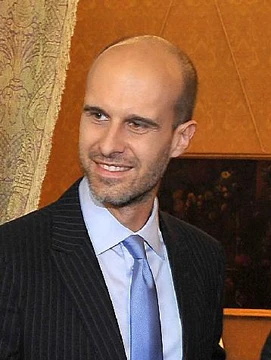
Andrzej Wajda
Polish director of war trilogy and national identity films.
Last updated

via Wikipedia: Andrzej Wajda · see source
Andrzej Witold Wajda was a Polish film and theatre director, recognized as a prominent member of the 'Polish Film School.' He is known especially for his trilogy of war films: A Generation (1955), Kanał (1957), and Ashes and Diamonds (1958). Recipient of an Honorary Oscar, the Palme d'Or, and Honorary Golden Lion and Honorary Golden Bear Awards, his works chronicled Poland's political and social evolution and dealt with the myths of Polish national identity, offering analysis of the universal element of the Polish experience – the struggle to maintain dignity under the most trying circumstances.
Lore & Background
Wajda was born in Suwałki to Aniela, a school teacher, and Jakub Wajda, an army officer. In 1942, he joined the Polish resistance and served in the Home Army. After the war, he studied painting at Kraków's Academy of Fine Arts before entering the Łódź Film School, where many famous Polish directors, such as Roman Polanski, studied. After apprenticing to director Aleksander Ford, Wajda directed his first major film, A Generation (1955).
He also began work in theatre, directing plays including Michael V. Gazzo's A Hatful of Rain (1959), Hamlet (1960), and Two for the Seesaw (1963). In 1967, actor Zbigniew Cybulski was killed in a train accident, and Wajda articulated his grief with Everything for Sale (1968), using a film-within-a-film technique. Wajda was married four times; his third wife was actress Beata Tyszkiewicz, with whom he had a daughter, Karolina (born 1967), and his fourth wife was theatre costume designer and actress Krystyna Zachwatowicz. He died in Warsaw on 9 October 2016 at the age of 90 from pulmonary failure and was buried at Salwator Cemetery in Kraków.
A Director's Creative Home
The celebrated Polish director Andrzej Wajda found one of his most important creative homes within the walls of the Wytwórnia Filmów Dokumentalnych i Fabularnych, a state film production institution that had been operating since 1949. Originally established as a division of the national film monopoly Film Polski, the facility evolved over decades into a dual-purpose entity — part production studio, part training ground — for Poland's foremost documentary and narrative filmmakers.
It was within this environment that Wajda crafted a number of what are widely regarded as his finest works. The studio's trajectory from producing newsreels and television material in the 1950s to generating a full slate of feature-length pictures by the 1970s mirrored the broader maturation of Polish cinema, and Wajda's output at the facility spanned that entire arc of institutional growth. His association with the studio underscores how a single national production house could serve as the incubator for a director's most celebrated achievements.
Four Landmark Works
Among the body of work Wajda produced at the WFDiF facility, four titles stand out as the ones specifically identified as representing his best output: Man of Marble, Man of Iron, Landscape After Battle, and The Wedding. These films were made during a period when the studio was rapidly expanding its narrative-film capacity.
In the early 1960s the institution had only just begun producing feature pictures, managing just a handful each year. By the 1970s that annual output had climbed to roughly twenty features, creating a far richer production ecosystem in which a director of Wajda's stature could realize ambitious projects. The fact that these four works are singled out as his finest, all completed under the studio's roof, speaks to the deep creative partnership between the filmmaker and the institution.
Among Poland's Leading Filmmakers
Wajda's place in the history of Polish cinema is inseparable from the community of directors who shared the same production infrastructure. The WFDiF studio was not solely his creative space; it was a shared home for several of the country's most celebrated filmmakers. Krzysztof Kieślowski developed his acclaimed television miniseries Dekalog at the facility in 1988.
This concentration of major talent at a single state production house reveals how the studio functioned as a kind of creative commons for Polish narrative and documentary filmmaking. Wajda's four landmark features existed alongside these television works, suggesting a studio culture in which ambitious cinematic storytelling flourished across both the silver screen and the small one. The shared institutional home gave these directors access to the same technical resources, crews, and production infrastructure, fostering a collaborative environment that elevated the quality of Polish cinema as a whole.
Institutional Roots and Enduring Legacy
The institutional framework within which Wajda made his best films has itself undergone significant transformation. The studio that hosted his work was originally founded in 1949 as a unit of Film Polski, the national film monopoly, and spent its first years producing documentary newsreels and promotional content.
Its identity as a feature-film producer was a later development, not fully realized until the early 1960s. This consolidation means that the physical and organizational space where Wajda crafted Man of Marble, Man of Iron, Landscape After Battle, and The Wedding now exists as part of a larger, unified state cultural institution. The studio's evolution from a modest 1949 unit into a consolidated 2019 entity mirrors the broader story of Polish cinema's institutional development, with Wajda's celebrated output serving as a permanent marker of what that infrastructure once made possible.
Frequently Asked Questions
What is Andrzej Wajda most famous for?
He is best known for his World War II trilogy—A Generation (1955), Kanał (1957), and Ashes and Diamonds (1958)—which explore the moral complexities of resistance under occupation. These three films became defining works of the Polish Film School movement.
What major awards did Andrzej Wajda receive?
Wajda was honored with an Honorary Academy Award, the Palme d'Or, an Honorary Golden Lion, and an Honorary Golden Bear. These accolades span the major international film festivals and recognize his lifetime contributions to the art of filmmaking.
What role did Andrzej Wajda play in Polish cinema?
He was a central figure of the Polish Film School, a postwar movement that reshaped how Poland's history and national identity were portrayed on screen. His body of work traced the country's political and social transformations across several decades.
Also in the Codexery
More in Renowned Film Directors & Producers
Sources
Compiled from Wikipedia and the sources listed below. Text from Wikipedia is available under CC BY-SA 4.0; this entry is adapted from it.
- Wikipedia: Andrzej Wajda (CC BY-SA 4.0).
Spotted an error? Know more?
Reader corrections go straight into our review queue. Suggest an edit · How this site is sourced