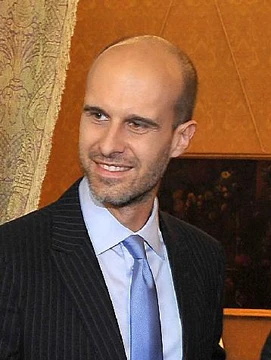
Ang Lee
Taiwanese filmmaker acclaimed for emotionally charged, award-winning films.
Last updated

via Wikipedia: Ang Lee · see source
Ang Lee, born on October 23, 1954, is a Taiwanese filmmaker whose work often delves into emotional intensity and the unspoken tensions people carry. Over his career, he has earned widespread praise and a stack of major awards: three Oscars, five BAFTAs, and three Golden Globes. He stands alone as the only director to have won the Golden Bear twice, and he is among just four to have won the Golden Lion twice. In 2020, he received the BAFTA Fellowship.
Early life and education
Lee grew up in a military dependents’ village in Pingtung County, Taiwan, after his parents moved from Jiangxi following the Chinese Civil War. The family relocated to Hualien when he was two, where his father became principal of a normal school. Lee has called those eight years in Hualien the happiest of his life.
He later attended high school in Tainan, where his father was principal, but failed the national college entrance exam twice. Disappointing his father, he entered the National Arts School (now National Taiwan University of Arts), graduating in 1975. There, his interest shifted to drama and the arts, sparked in part by Ingmar Bergman’s The Virgin Spring. After mandatory military service, he moved to the U.S. in 1979, earning a BFA in theater from the University of Illinois at Urbana-Champaign.
There he met his future wife, Jane Lin. He then earned an MFA in film production from NYU’s Tisch School of the Arts, where he was a classmate of Spike Lee and worked on his thesis film. His own thesis, Fine Line (1984), won NYU’s Wasserman Award for Outstanding Direction and aired on PBS.
After graduating in 1985, Lee struggled to find work, spending years unemployed while writing screenplays with his wife’s support. In 1990, two of his scripts—Pushing Hands and The Wedding Banquet—took first and second place in a Taiwanese government competition. This caught the attention of producer Hsu Li-kong, who invited Lee to direct Pushing Hands (1991). The film was a critical and box-office success in Taiwan, earning eight Golden Horse nominations.
1991–1994: International films
Lee and Hsu then made The Wedding Banquet (1993), which won the Golden Bear at the Berlin Film Festival and was nominated for Best Foreign Language Film at both the Golden Globes and the Oscars. In 1994, they released Eat Drink Man Woman, a Taipei-set family drama that was also a hit and earned another Best Foreign Language Film nomination at the Globes. These three films, known as the Father Knows Best trilogy, explore clashes between tradition and modernity, and between Eastern and Western values.
Lee’s Hollywood breakthrough came with Sense and Sensibility (1995), his first English-language film. He went on to direct The Ice Storm (1997), Crouching Tiger, Hidden Dragon (2000), Brokeback Mountain (2005), Lust, Caution (2007), and Life of Pi (2012). Other notable works include Hulk (2003), Billy Lynn’s Long Halftime Walk (2016), and Gemini Man (2019).
Lore & Background
Ang Lee was born on October 23, 1954, to a waishengren family in a military dependents' village in Chaochou, Pingtung, Taiwan. Both of his parents moved from De'an, Jiangxi, to Taiwan after the Chinese Civil War ended in 1949. He grew up in a household that put a heavy emphasis on education. In 1956, when Lee was 2 years old, his family moved to Hualien because his father became Principal of Taiwan Provincial Hualien Normal School.
Lee has mentioned that the eight years he lived in Hualien were the happiest time of his life before he went north to study at National Arts School. He studied at Provincial Tainan First Senior High School where his father was principal, but after failing the Joint College/University Entrance Examination twice, he entered the National Arts School (now National Taiwan University of Arts), graduating in 1975. Seeing Ingmar Bergman's film The Virgin Spring (1960) was a formative experience for him. After mandatory military service in the Republic of China Navy, Lee went to the US in 1979 to study at the University of Illinois at Urbana–Champaign, graduating with a Bachelor of Fine Arts in theater in 1980.
There he met his future wife, Jane Lin, also a student from Taiwan pursuing her PhD. He then enrolled at the Tisch School of the Arts of New York University, receiving his M.F.A. in film production. He was a classmate of Spike Lee and worked on the crew of his thesis film, Joe's Bed-Stuy Barbershop: We Cut Heads. During graduate school, Lee finished a 16mm short film, Shades of the Lake (1982), which won the Best Drama Award in Short Film in Taiwan.
His thesis work, Fine Line (1984), won NYU's Wasserman Award for Outstanding Direction and was chosen for broadcast by PBS. After graduating in 1985, Lee struggled to find work despite interest from the William Morris Agency, spending several years unemployed while continuing to write screenplays with his wife's support. In 1990, Lee submitted two screenplays, Pushing Hands and The Wedding Banquet, to a competition sponsored by the Government Information Office of R.O.C., and they came in first and second, respectively. This brought him to the attention of Hsu Li-kong, who invited Lee to direct Pushing Hands (1991).
The film was a success in Taiwan, receiving eight nominations in the Golden Horse Film Festival. Inspired by that success, Hsu collaborated with Lee on The Wedding Banquet (1993), which won the Golden Bear at the 43rd Berlin International Film Festival and was nominated as Best Foreign Language Film in both the Golden Globe and the Academy Awards. In 1994, Hsu invited Lee to return to Taiwan to make Eat Drink Man Woman, a box office hit that was critically acclaimed and received Best Foreign Language Film nominations in the Golden Globe, Academy Awards, and BAFTAs. These three films, starring Taiwanese actor Sihung Lung, form what has been called Lee's Father Knows Best trilogy.
1994–2012: Breakthrough and acclaim
Lee's Hollywood breakthrough came with Sense and Sensibility (1995), his first English-language film, which won the Golden Bear at the Berlin Film Festival, was nominated for seven Academy Awards, and won Best Adapted Screenplay for Emma Thompson. He later directed The Ice Storm (1997), which competed at Cannes for the Palme d'Or and won the Best Screenplay award. After the revisionist Western Ride with the Devil (1999) received mixed reviews and was a box office bomb, Lee returned to Chinese-language film with Crouching Tiger, Hidden Dragon (2000), which became the highest grossing foreign film in many countries including the US and UK. Other notable films include Brokeback Mountain (2005), Lust, Caution (2007), Life of Pi (2012), Hulk (2003), Billy Lynn's Long Halftime Walk (2016), and Gemini Man (2019).
Frequently Asked Questions
How many Academy Awards has Ang Lee won?
Ang Lee has taken home three Best Director Oscars for his work on the big screen. He has also collected five BAFTA Awards and three Golden Globe Awards over the course of his career.
What is unique about Ang Lee's international festival record?
He holds the rare distinction of winning the Berlin Film Festival's Golden Bear on two separate occasions. He is also one of just four directors in history to claim Venice's Golden Lion twice.
Also in the Codexery
More in Renowned Film Directors & Producers
Sources
Compiled from Wikipedia and the sources listed below. Text from Wikipedia is available under CC BY-SA 4.0; this entry is adapted from it.
- Wikipedia: Ang Lee (CC BY-SA 4.0).
Spotted an error? Know more?
Reader corrections go straight into our review queue. Suggest an edit · How this site is sourced