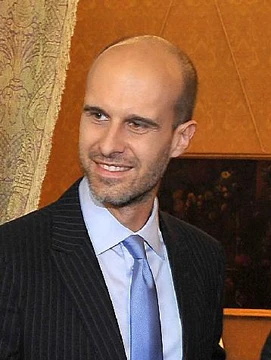
Bernardo Bertolucci
Italian director known for visually rich, politically charged films.
Last updated

via Wikipedia: Bernardo Bertolucci · see source
Bernardo Bertolucci (16 March 1941 – 26 November 2018) was an Italian filmmaker whose career lasted half a century. He is widely regarded as one of cinema's greats, and his films earned him international recognition. In 1987, he became the first Italian to win the Academy Award for Best Director, for The Last Emperor. His other honors include a BAFTA, a César, two Golden Globes, a Golden Lion for lifetime achievement, and an honorary Palme d'Or.
Bertolucci got his start as a protégé of Pier Paolo Pasolini, making his directorial debut at age 22. His second film, Before the Revolution (1964), received strong international reviews and is now considered a classic—Film4 called it a "masterpiece of Italian cinema." His 1970 film The Conformist, based on the Alberto Moravia novel, is also regarded as a classic and earned nominations for an Academy Award for Best Adapted Screenplay and the Berlin Golden Bear. The 1972 erotic drama Last Tango in Paris sparked major controversy, both for its rape scene and for later comments by actress Maria Schneider about her treatment on set. His subsequent films—the historical epic 1900 (1976), the family drama La Luna (1979), and the dark comedy Tragedy of a Ridiculous Man (1981)—were also controversial but well-received.
The Last Emperor (1987), a biopic of Chinese emperor Puyi, was a critical and commercial hit, sweeping the 60th Academy Awards, including Best Picture and Best Director. It kicked off what became known as his "Oriental Trilogy," which also includes The Sheltering Sky and Little Buddha, all scored by Ryuichi Sakamoto. His 1996 film Stealing Beauty earned him his second Palme d'Or nomination. Bertolucci kept directing into the 21st century, releasing his final film, Me and You, in 2012.
His films often explore politics, sexuality, history, class conflict, and social taboos, and his style has influenced many other directors. Several of his movies appear on lists of the greatest films ever made. Critics note that what sets him apart is his masterful blend of "visual richness and visual freedom."
Early life
Bertolucci was born in Parma, Italy, the older son of Ninetta Giovanardi, a teacher, and Attilio Bertolucci, a poet, art historian, anthologist, and film critic. His mother was born in Australia to an Italian father and an Australian mother of Irish and Scottish descent.
Raised in an artistic home, he started writing at 15 and soon won several major literary prizes, including the Premio Viareggio for his first book. His father had helped Pasolini publish his first novel, and Pasolini returned the favor by hiring Bertolucci as his first assistant on Accattone (1961). Bertolucci had one brother, theatre director Giuseppe (1947–2012), and his cousin was film producer Giovanni Bertolucci (1940–2005), with whom he collaborated on several projects.
Bertolucci originally wanted to be a poet like his father. To that end, he studied modern literature at the University of Rome from 1958 to 1961, where his film career began as Pasolini's assistant director. He left university without graduating.
In 1962, at 22, he directed his first feature, La commare secca, a murder mystery produced by Tonino Cervi with a screenplay by Pasolini. The film uses flashbacks to piece together a prostitute's homicide. His acclaimed follow-up was Before the Revolution (1964).
Directorial breakthrough
The boom in Italian cinema that launched Bertolucci slowed in the 1970s, forcing directors to co-produce with American, Swedish, French, and German companies due to the global recession. Bertolucci, however, was already working on a large scale. In 1971, New Yorker critic Pauline Kael called him a prodigy.
Last Tango in Paris (1972) starred Marlon Brando, Maria Schneider, Jean-Pierre Léaud, and Massimo Girotti. It follows Brando's character, Paul, coping with his wife's suicide by dominating a young woman, Jeanne (Schneider). The treatment of Schneider, then 19, has been called exploitative.
In one scene, Paul anally rapes Jeanne using butter as lubricant. Bertolucci said the butter was not in the script; he and Brando discussed it but did not tell Schneider. Schneider said the rape scene wasn't in the script at all. In 2007, she said she cried "real tears" during the scene and felt humiliated and "a little raped." In 2013, Bertolucci said he withheld the information to get a genuine "reaction of frustration and rage." Brando claimed Bertolucci wanted real sex, but both Brando and Schneider said it was simulated.
In 2016, Bertolucci clarified that Schneider knew violence would be depicted but not about the butter. After the film's release, Schneider became a drug addict and suicidal. Criminal proceedings were brought.
Lore & Background
Bertolucci was born in the Italian city of Parma, in the region of Emilia-Romagna. He was the elder son of Ninetta (Giovanardi), a teacher, and Attilio Bertolucci, who was a poet, a reputed art historian, anthologist and film critic. Having been raised in an artistic environment, Bertolucci began writing at the age of 15, and soon after received several prestigious literary prizes, including the Premio Viareggio for his first book. His father's background helped his career: the elder Bertolucci had helped the Italian filmmaker Pier Paolo Pasolini publish his first novel, and Pasolini reciprocated by hiring Bertolucci as his first assistant in Rome on Accattone (1961).
The Last Emperor and later career
Bertolucci made his directorial debut at 22. His second film, Before the Revolution (1964), earned strong international reviews and has since gained classic status, being called a 'masterpiece of Italian cinema' by Film4. His 1970 film The Conformist, an adaptation of the Alberto Moravia novel, is considered a classic of international cinema, and was nominated for an Academy Award for Best Adapted Screenplay and the prestigious Berlin Golden Bear.
Last Tango in Paris rape scene controversy
His 1972 erotic drama Last Tango in Paris was controversial due to its rape scene and, later, comments made by actress Maria Schneider about her treatment on set. In one scene, Paul anally rapes Jeanne using butter as a lubricant. Bertolucci said use of butter was not in the script; Bertolucci and Brando had discussed it, but they did not tell Schneider. In 2013 Bertolucci said that he had withheld the information from Schneider to generate a real 'reaction of frustration and rage'.
In 2016 Bertolucci released a statement where he clarified that Schneider had known of the violence to be depicted in the scene, but had not been told about the use of butter. Criminal proceedings were brought against Bertolucci in Italy for obscenity; the film was sequestered by the censorship commission and all copies were ordered destroyed. An Italian court revoked Bertolucci's civil rights for five years and gave him a four-month suspended prison sentence.
His 1987 film The Last Emperor, a biopic of Chinese monarch Puyi, was a critical and commercial success, earning rave reviews and sweeping the 60th Academy Awards (including Best Picture and Best Director). This was the start of what has since been described as his 'Oriental Trilogy', a trio of films including The Sheltering Sky, an adaptation of the novel of the same name, and Little Buddha, a Buddhist religious epic, all three of which feature scores by Ryuichi Sakamoto. The Last Emperor was the first feature film ever authorized by the government of the People's Republic of China to film in the Forbidden City. Bertolucci continued directing well into the 21st century, releasing his final film, Me and You, in 2012.
Frequently Asked Questions
Who is Bernardo Bertolucci?
Bernardo Bertolucci (1941–2018) was an Italian filmmaker and screenwriter whose body of work stretched across five decades. He is widely regarded as one of the most significant directors in the history of world cinema.
What are Bernardo Bertolucci's most famous films?
He is best remembered for three landmark titles: The Last Emperor, The Conformist, and Last Tango in Paris. Each of these films pushed boundaries in subject matter and visual storytelling.
When and where did Bernardo Bertolucci live and work?
He was born on 16 March 1941 in Italy and passed away on 26 November 2018. Throughout his career he worked primarily within the Italian film industry while also collaborating on international productions.
Also in the Codexery
More in Renowned Film Directors & Producers
Test yourself
Three questions drawn from this entry’s sources. Pick an answer to check it.
Answers checked against the source article
Sources
Compiled from Wikipedia and the sources listed below. Text from Wikipedia is available under CC BY-SA 4.0; this entry is adapted from it.
- Wikipedia: Bernardo Bertolucci (CC BY-SA 4.0).
Spotted an error? Know more?
Reader corrections go straight into our review queue. Suggest an edit · How this site is sourced