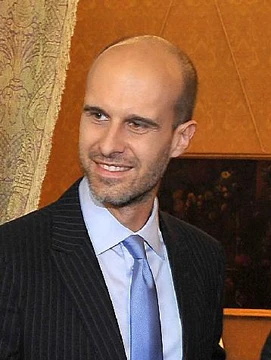
Alfonso Cuarón
Mexican filmmaker acclaimed for Gravity and Roma.
Last updated
Alfonso Cuarón Orozco, born on 28 November 1961 in Mexico City, is a Mexican filmmaker who has won four Academy Awards, three Golden Globes, seven BAFTAs, and a Golden Lion, and has been nominated for a Grammy. He grew up with a sister named Christina and two brothers: Carlos, also a filmmaker, and Alfredo, a conservation biologist. His father, Alfredo Cuarón, was a doctor specializing in nuclear medicine, and his mother, Cristina Orozco, worked as a pharmaceutical biochemist.
Cuarón studied philosophy at the National Autonomous University of Mexico and later filmmaking at the same university’s Centro Universitario de Estudios Cinematográficos. There he met director Carlos Marcovich and cinematographer Emmanuel Lubezki, and together they made his first short film, Vengeance Is Mine. He was expelled from the school and feared he would never find work in the film industry.
1990–1999: Rise to prominence
Cuarón began his career on Mexican television, first as a technician and later as a director. This led to assistant director roles on films such as La Gran Fiesta (1985), Gaby: A True Story (1987), and Romero (1989). His feature debut was the 1991 romantic comedy Sólo con tu pareja, about a womanizing businessman tricked into thinking he has AIDS. Cuarón wrote, produced, directed, and co-edited the film, which became a major hit in Mexico.
After that, Sydney Pollack hired him to direct an episode of the neo-noir series Fallen Angels in 1993, titled "Murder, Obliquely," starring Laura Dern, Alan Rickman, and Diane Lane. His first U.S. feature was A Little Princess (1995), an adaptation of Frances Hodgson Burnett’s novel, which earned two Academy Award nominations for cinematography and production design. He then directed a modernized version of Charles Dickens’s Great Expectations (1998), starring Ethan Hawke, Gwyneth Paltrow, and Robert De Niro. The film received mixed reviews but earned $55 million worldwide against a $25 million budget.
2000–2009: Career breakthrough and success
In 2001, Cuarón returned to Mexico to make Y tu mamá también, a road comedy about two teenagers and an older married woman. The film’s open sexuality and political asides made it an international hit and critical success, earning him an Academy Award nomination for Best Original Screenplay (shared with his brother Carlos) and the Venice Film Festival Award for Best Screenplay. In 2004, he directed Harry Potter and the Prisoner of Azkaban, the third film in the series.
Though some fans criticized his creative liberties, author J.K. Rowling called it her personal favorite of the series, and critics received it better than the first two films. Cuarón later directed the dystopian drama Children of Men (2006), the science fiction drama Gravity (2013), and the semi-autobiographical drama Roma (2018). Gravity and Roma each won him the Academy Award for Best Director; he also won Best Film Editing for Gravity and Best Cinematography for Roma.
Lore & Background
He studied philosophy at the National Autonomous University of Mexico and filmmaking at the Centro Universitario de Estudios Cinematográficos, where he met director Carlos Marcovich and cinematographer Emmanuel Lubezki. He was expelled from the school and worried he would never be employed in the film industry. Cuarón began working on television in Mexico, then as an assistant director on several films.
Frequently Asked Questions
What are Alfonso Cuarón's most acclaimed films?
His standout works include Y tu mamá también, Harry Potter and the Prisoner of Azkaban, Children of Men, Gravity, and Roma. He took home the Best Director Oscar for both Gravity and Roma, a rare double achievement.
How many major awards has Alfonso Cuarón won?
His accolades include four Academy Awards, three Golden Globe Awards, seven BAFTA Awards, and a Golden Lion, plus a Grammy nomination. That breadth of recognition spans directing, writing, and producing credits.
What nationality is Alfonso Cuarón and where does he work?
Cuarón is Mexican and has built his career in both the Mexican film industry and Hollywood. His work consistently bridges Latin American storytelling sensibilities with large-scale international production.
Also in the Codexery
More in Renowned Film Directors & Producers
Sources
Compiled from Wikipedia and the sources listed below. Text from Wikipedia is available under CC BY-SA 4.0; this entry is adapted from it.
- Wikipedia: Alfonso Cuarón (CC BY-SA 4.0).
Spotted an error? Know more?
Reader corrections go straight into our review queue. Suggest an edit · How this site is sourced