Chimney Rock National Monument
Ancestral Puebloan site with lunar-aligned great house.
Last updated
Where it is
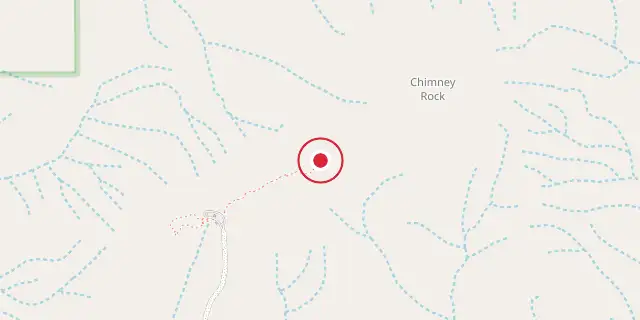
Coordinates: 37°11′31″N 107°18′22″W (37.1920, -107.3060) · Open in OpenStreetMap
Coordinates and connected clubs: the infobox of Wikipedia: Chimney Rock National Monument (CC BY-SA 4.0). Map: drawn by Codexery from OpenStreetMap tiles.
Covering 4,726 acres in Colorado’s San Juan National Forest, Chimney Rock National Monument safeguards an archaeological site that has been on the National Register of Historic Places since 1970. President Barack Obama established the monument on September 21, 2012, using the Antiquities Act, to protect and interpret the area.
History
The Ancestral Puebloan site was inhabited about 1,000 years ago, housing approximately 2,000 people between AD 925 and 1125. It contained about 200 rooms used for living, work, and ceremonies. The Great House Pueblo, built close to Chimney Rock and Companion Rock, had 36 ground-floor rooms and two round ceremonial kivas. Construction began in AD 1076 during a lunar standstill and was expanded and finished in AD 1093 during another.
The great house was mainly ceremonial, with only one or two families living there; during key ceremonies it housed visiting notables, some from Chaco Canyon 90 miles away. Building materials were hauled by hand uphill. Five pithouses (Rooms A through E) likely housed the workers. Rooms A and B were excavated in 1921–1922, but the archaeologists' insufficient knowledge of wall stabilization and their use of found wood for campfires left little of those ruins.
Pottery from the excavations is stored in boxes in the basement of the Anasazi Center in Durango. A grizzly bear jaw found in one room suggested reverence for the animal, and modern Chaco oral history says the Bear clan originated in the Chimney Rock area. The Chaco culture was hierarchical, with a priest class overseeing inhabitants. The moon appears in a lunar standstill between the two rocks for about 16 months every 18.6 years.
Geography
The monument lies on San Juan National Forest land surrounded by the Southern Ute Indian Reservation. The central archaeological area covers 960 acres. Chimney Rock rises about 315 feet, with Companion Rock beside it. The ridge terminating at Chimney Rock is mostly sandstone bedrock.
Did You Know?
- Companion Rock is a popular nesting spot for the Peregrine Falcon.
- In the mid-1970s, Companion Rock was home to one of only seven remaining pairs of peregrine falcons in the Rocky Mountains region.
- The first virtual visitors to the monument were 26 people on indoor stationary bicycles in Ohio.
More in Religious Places of the Indigenous Peoples of North America
Sources
Compiled from Wikipedia and the sources listed below. Text from Wikipedia is available under CC BY-SA 4.0; this entry is adapted from it.
- Wikipedia: Chimney Rock National Monument (CC BY-SA 4.0).
Spotted an error? Know more?
Reader corrections go straight into our review queue. Suggest an edit · How this site is sourced