Dowa Yalanne
Sacred Zuni mesa and historic refuge from Spanish expeditions.
Last updated
Where it is
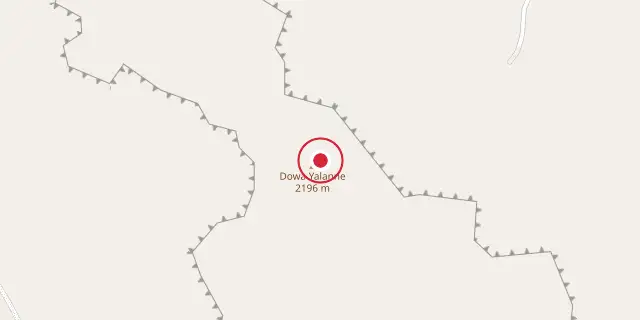
Coordinates: 35°03′11″N 108°47′31″W (35.0530, -108.7920) · Open in OpenStreetMap
Coordinates and connected clubs: the infobox of Wikipedia: Dowa Yalanne (CC BY-SA 4.0). Map: drawn by Codexery from OpenStreetMap tiles.
Dowa Yalanne, known to the Zuni as Corn Mountain, is a steep mesa located 5 km southeast of the present Pueblo of Zuni on the Zuni Indian Reservation in McKinley County, New Mexico. Rising to an elevation of 7,274 ft, it is plainly visible from the Zuni Pueblo and is a sacred site closed to outside visitors. The mesa is notable as a refuge where the Zuni people fled to escape the Coronado expedition in 1540.
History
Dowa Yalanne was settled before European contact. In 1540, Zuni people from the village of Hawikuu fled to the mesa top to escape the Coronado expedition, using 14 structures known as Heshoda Ayahltona as a refuge between 1540 and 1680. Before the Pueblo Revolt of 1680, the Zuni lived in six villages; afterward, until 1692, they took refuge atop Dowa Yalanne. About 48 Pueblo structures were built on the mesa top between 1680 and 1692, covering approximately 320 acres, with over 500 rooms in one- and two-story buildings.
The population in 1680 is estimated at about 2,500. On November 11, 1692, Don Diego de Vargas climbed to the top and baptized over 290 people. After peace was established, the Zuni relocated to their present location, briefly returning to the mesa top in 1703. According to T.J. Ferguson, the village on Dowa Yalanne was pivotal in historic settlement patterns as the first where the whole Zuni population gathered into a single settlement, with every family maintaining a residence there for refuge against Spaniards and Apache attacks.
Culture
Dowa Yalanne is sacred to the Zuni people, serving as a place for shrines and religious activities, and is closed to outside visitors. At winter solstice, the rising sun reaches a spot on the southwest of the mesa. The mesa is mythologically associated with the House of the Gods and the making of rain, lightning, and thunder, giving it the alternate name Thunder Mountain. Other alternate names include To'wa Yäl'länne, Tay-a-ol-o-ne, Taaiyalone Mountain, Tâaiyá'hltona Hlúelawa, and Peñol de Caquima.
A traditional tale, The Great Dancing Tarantula, takes place at the foot of Dowa Yalanne. Dowa Yalanne Elementary school is located near the mesa, and a youth program called DY-MESA is named after it. The Zuni Eagle Sanctuary's aviary was designed so eagles could view the mesa from their cages.
Did You Know?
- The red rock of the mesa is Entrada Sandstone with white bands, and the top layer is Dakota Sandstone.
- Springs around the mesa are a traditional source of water.
More in Religious Places of the Indigenous Peoples of North America
Sources
Compiled from Wikipedia and the sources listed below. Text from Wikipedia is available under CC BY-SA 4.0; this entry is adapted from it.
- Wikipedia: Dowa Yalanne (CC BY-SA 4.0).
Spotted an error? Know more?
Reader corrections go straight into our review queue. Suggest an edit · How this site is sourced