Grave Torture
A psychological horror film exploring religious fear of grave torture.

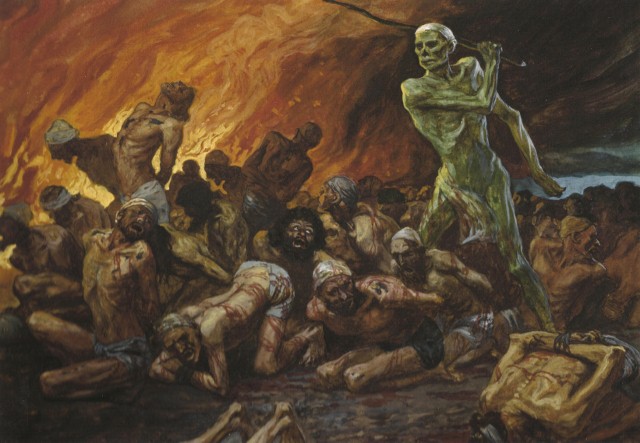
Jean Grave · Public domain
Grave Torture (Indonesian: *Siksa Kubur*) is a 2024 Indonesian psychological horror film written, directed, and edited by Joko Anwar, based on his 2012 short film of the same name. The cast includes Faradina Mufti, Reza Rahadian, Widuri Puteri, Muzakki Ramdhan, Slamet Rahardjo, and Christine Hakim. At the 2024 Indonesian Film Festival, it earned seventeen nominations, the most of any film, including one for Best Picture.
The story begins with siblings Sita and Adil, whose parents run a small bakery. One morning, a man enters, hands Adil a cassette tape he says he recorded himself, advises them to "seek refuge with Allah," warns Adil not to go outside, then detonates a suicide bomb on the street, killing many, including the siblings' parents. The bomber, motivated by fear of *Siksa Kubur*—torture in the grave after death—believed his act would spare him eternal torment. After police interviews, the children play the tape, which repeats the phrase "Siksa Kubur" amid screams of a man being tortured.
Sent to a strict religious boarding school, Sita and Adil struggle with their loss. Sita becomes obsessed with *Siksa Kubur*, the punishment inflicted by the angels Munkar and Nakir. One night, she overhears teachers Umaya and Ustadzah discussing the school's benefactor, Mr. Ilham, who has abused children, including a boy named Ismail, who died from the abuse. Sita goes to Ilham's residence and sees Adil being raped by him. With Umaya's help, the siblings escape through a tunnel, where they are briefly haunted by visions of a disfigured Ismail.
Years later, adult Sita works in a nursing home, still determined to disprove grave torture. One resident, Mr. Wahyu, shows signs of dementia. His family wants to discharge him due to cost, but Sita insists he needs the best care. She and Adil, now a mortician, bury a deceased resident and visit the grave of a serial killer named Masbeth. Sita says the "most ruthless man" she knows will be buried next to Masbeth to test whether grave torture is real, but she refuses to name him. It is later revealed the bomber claimed to have recorded his tape at Masbeth's grave.
Adil's wife, Lala, throws him out, accusing him of emotional unavailability. Sita and Mr. Wahyu discuss religion; he argues that neither souls nor bodies can be tortured after death, so he feels free to sin.
Quick Facts
- Native Name
- id · Siksa Kubur
- Director
- Joko Anwar
- Producer
- Tia Hasibuan
- Starring
- Faradina Mufti / Reza Rahadian / Widuri Puteri / Muzakki Ramdhan / Slamet Rahardjo / Christine Hakim
- Music
- Aghi Narottama
- Cinematography
- Ical Tanjung
- Studio
- Rapi Films / Legacy Pictures / Come and See Pictures / IFI Sinema / Komet Productions
- Distributor
- Rapi Films (Indonesia)
- Released
- 11 April 2024 · Indonesia · 2024 · 09 · 16 · Netflix
- Runtime
- 117 minutes
- Country
- Indonesia
- Language
- Indonesian
Facts from the source article.
Lore & Background
The film follows siblings Sita and Adil, whose parents are killed by a suicide bomber driven by fear of Siksa Kubur (grave torture). After the tragedy, they are sent to a strict religious boarding school, where Sita becomes obsessed with disproving the concept of posthumous punishment. As adults, Sita works in a nursing home and Adil as a mortician, with Sita caring for a man she later reveals to be the abuser who raped Adil in childhood. She hopes to observe whether he suffers in the grave after death, to prove religion a lie. The man shoots himself, and Sita buries him next to a serial killer's grave, then volunteers to be buried with him overnight to record any torture. The memory card comes back blank, but Sita later experiences hallucinations and a vision of the grave torture, recanting her skepticism. An epilogue suggests Sita may have died the first night, with subsequent events being her own version of hell.
Reader's Guide
Grave Torture is significant as one of the highest-grossing Indonesian films of all time, surpassing 4 million admissions. It competed closely with Dancing Village: The Curse Begins at the box office. The film received seventeen nominations at the 2024 Indonesian Film Festival, the most of any film that year, including for Best Picture. Critical response noted the first act as particularly well-executed, with a star-studded cast including Faradina Mufti, Reza Rahadian, and Christine Hakim. The film sparked a trend of people visiting cemeteries to record sounds from graves, which religious leaders claimed restored faith but also saw a rise in suicide bombings. Its release on Eid al-Fitr day 2024 and subsequent broadcast on Trans7 in 2026 expanded its reach.
Did You Know?
- The film is based on Joko Anwar's 2012 short film of the same name.
- It received the most nominations at the 2024 Indonesian Film Festival with seventeen, including Best Picture.
- The film opened with 257,871 admissions, one of the highest opening days for an Indonesian film.
- In Russia, the film grossed $271,389; in Vietnam, it grossed $57,949.
Creative Origins & Production
Grave Torture (Siksa Kubur) is a 2024 Indonesian psychological horror film that represents the culmination of a long creative journey for its writer, director, and editor, Joko Anwar. The project traces its roots back to a 2012 short film of the same name, meaning the concept gestated in Anwar's imagination for over a decade before expanding into a full-length theatrical feature. The film assembles a notable ensemble cast including Faradina Mufti, Reza Rahadian, Widuri Puteri, Muzakki Ramdhan, Slamet Rahardjo, and Christine Hakim, each bringing gravitas to a story steeped in personal and spiritual dread. Anwar's hands-on involvement across writing, directing, and editing underscores his singular authorial vision for the project. The film positions itself firmly within the psychological horror tradition while drawing deeply on Indonesian religious and cultural anxieties, making it a distinctly local take on supernatural terror rather than a generic genre product.
Narrative Architecture & Structure
The film's story spans decades, following siblings Sita and Adil from childhood trauma to adult obsession. Their parents, who run a small bakery, are killed in a suicide bombing driven by the bomber's terror of Siksa Kubur—the punishment inflicted by angels Munkar and Nakir in the grave after death. The orphaned children are sent to a strictly religious boarding school, where they discover the benefactor Mr. Ilham has been abusing students, including a boy named Ismail who dies from the abuse. Sita witnesses Adil being raped by Ilham, and the siblings escape through a tunnel haunted by visions of the disfigured child. Years later, as adults—Sita working in a nursing home and Adil as a mortician—Sita orchestrates a prolonged experiment to test whether grave torture is real, ultimately arranging to be buried overnight beside Ilham's corpse with recording equipment. The narrative weaves together personal grief, religious doubt, and psychological horror across a multi-generational arc.
Thematic Core & Moral Philosophy
At its heart, Grave Torture is a philosophical interrogation of divine justice and the afterlife. The central question—whether a soul truly suffers in the grave—drives every character's motivation. The suicide bomber acts out of desperate fear of eternal torment, while Ilham, a prolific abuser, argues that if no post-mortem punishment exists, life becomes a license for unchecked sin. Sita's lifelong mission to disprove Siksa Kubur is framed as an act of intellectual rebellion against a system that failed to protect her and her brother. The film does not resolve this question neatly; instead, it forces the audience to sit with the ambiguity of faith, suffering, and accountability. Anwar uses the horror genre as a vehicle for asking whether religion liberates or imprisons, whether punishment after death is comfort or cruelty, and whether witnessing atrocity demands a response beyond mere belief.
Cultural Resonance & Critical Reception
Grave Torture made an immediate mark on Indonesian cinema, receiving a record-breaking seventeen nominations at the 2024 Indonesian Film Festival, including a nod for Best Picture. The film's cultural ripple effects extend well beyond the screen. Within the narrative, Sita's live television broadcast—where she attempts to reveal her grave recording—sparks a nationwide trend of citizens visiting cemeteries to capture audio from beneath the soil. Religious leaders hail this as a restoration of faith, yet the same phenomenon fuels a troubling rise in suicide bombings, with perpetrators seeking martyrdom to escape the very torment they fear. This in-story societal fallout mirrors the real-world conversation the film provokes about the intersection of religious belief, public spectacle, and violence. Anwar's work thus operates as both entertainment and cultural provocation, challenging audiences to confront uncomfortable questions about faith and its consequences.
Gallery




Frequently Asked Questions
What is Grave Torture?
Grave Torture (Siksa Kubur) is a 2024 Indonesian psychological horror film that Joko Anwar wrote, directed, and edited himself, expanding his own 2012 short of the same name into a feature. The plot follows siblings Sita and Adil, whose parents run a small bakery, after a stranger arrives with a cassette tape that sets the story in motion.
Who directed Grave Torture and when did it release?
Joko Anwar handled all three creative roles—writer, director, and editor—building the feature from his earlier short. It premiered in Indonesian theaters on April 11, 2024.
What religious concept does Grave Torture explore?
The film is built around the Islamic belief in siksa kubur, the idea that a soul can suffer torment in its grave before the Day of Judgment. That theological dread serves as the psychological engine driving the horror elements of the narrative.
How did Grave Torture perform at the 2024 Indonesian Film Festival?
It collected seventeen nominations, the most of any entry that year, and was among them a Best Picture nod.
Who stars in Grave Torture?
The principal cast includes Faradina Mufti, Reza Rahadian, Widuri Puteri, Muzakki Ramdhan, Slamet Rahardjo, and veteran actress Christine Hakim. The story is anchored by the sibling duo Sita and Adil and their bakery-running parents.
More in Religious horror films 1-24
Spotted an error? Know more?
Reader corrections go straight into our review queue. Suggest an edit · How this site is sourced