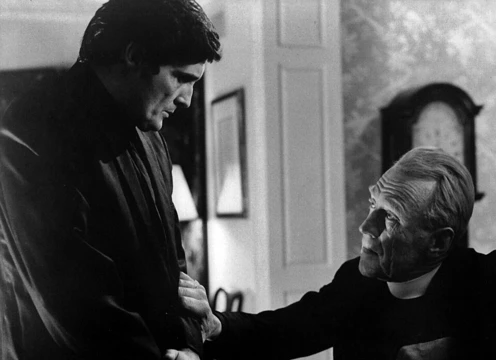
Djinn (2013 film)
A supernatural horror film set in the UAE.

Bernard Gagnon · CC BY-SA 3.0
Djinn is a 2013 Emirati supernatural horror film directed by Tobe Hooper, with a screenplay by David Tully. Set in the United Arab Emirates, the story revolves around the djinn and is told in both Arabic and English. Produced by Image Nation, the movie premiered at the Abu Dhabi Film Festival on October 25, 2013. It was Hooper's final film as director before his death in 2017.
The plot follows a young Emirati couple who return to their home country and move into a high-rise apartment in Abu Dhabi. They soon suspect their neighbors are not human. The narrative also flashes back to an abandoned fishing village on the site where the apartment was later built, where an American backpacker learns about the djinn from local Emiratis.
Hooper directed from Tully's script, with the project set up by Imagenation Abu Dhabi (later Image Nation) in February 2011. Emirati director Nayla Al Khaja served as a cultural consultant. The film is the first supernatural thriller in both English and Arabic. Tully noted that films about the djinn were rare, recalling only *Wishmaster* (1997), and said *Djinn* had minimal gore, similar to Hooper's earlier works *The Texas Chain Saw Massacre* (1974) and *Poltergeist* (1982). Tully got the idea after an Emirati friend took him to a village like the one in the film, where he learned local stories.
Filming began in the UAE in late March 2011 on a budget of US$5 million, taking place primarily in Abu Dhabi. The crew handled the subject carefully to avoid offending local values; in Al Jazira Al Hamra, they avoided saying "djinn" and taped over the film's title on the director's chair. Post-production was underway by late August 2011.
In February 2011, Fortissimo Films acquired international sales rights for Image Nation's films, including *Djinn*. A test screening in London in December 2011 drew 300 attendees. The film was offered a red-carpet premiere at the 2011 Dubai International Film Festival but did not screen there. The studio promised a theatrical release in early 2012, then mid-2012, but neither happened. *The National* reported in January 2012 that a website claimed Image Nation turned down two distribution offers; Image Nation denied this, saying post-production took longer than expected.
Quick Facts
- Director
- Tobe Hooper
- Producer
- Daniela Tully / Tim Smythe
- Writer
- David Tully
- Starring
- Khalid Laith / Razane Jammal
- Music
- BC Smith
- Cinematography
- Joel Ransom
- Editing
- Andrew Cohen / Mark Stevens
- Studio
- Image Nation / FilmWorks
- Released
- 25 October 2013 · Abu Dhabi Film Festival
- Runtime
- 85 minutes
- Country
- United Arab Emirates
- Language
- Arabic / English
Facts from the source article.
Lore & Background
The film follows a young Emirati couple who return to their home country and move into a high-rise apartment in Abu Dhabi, where they discover their neighbors may not be human. The story also flashes back to an abandoned fishing village on which the apartment was built, where an American backpacker learns about djinn from local Emiratis. The project was set up by Imagenation Abu Dhabi (now Image Nation) in February 2011, with Emirati director Nayla Al Khaja serving as cultural consultant. Tully said films about the djinn were very uncommon, only recalling Wishmaster (1997), and described Djinn as having minimal gore, similar to Hooper's earlier films The Texas Chain Saw Massacre (1974) and Poltergeist (1982).
Reader's Guide
Djinn is notable as Tobe Hooper's final film and as the first supernatural thriller in both English and Arabic. Its production involved cultural sensitivity: in Al Jazira Al Hamra, the cast and crew avoided using the word 'djinn' and taped over the film's title on the director's chair. The film's release was delayed multiple times; a test screening occurred in London in December 2011, and a promised theatrical release in early 2012 did not happen. The Guardian reported unofficial reasons including concerns about political subversion and cultural foreignness, though Image Nation's CEO blamed the delay on meeting Directors Guild of America requirements. Critical reception was largely negative, with reviewers citing unoriginal elements and poor execution, though some praised its cultural grounding and portrayal of Westernized Arab characters.
Production & Cultural Sensitivity
The production of Djinn was shaped by the delicate task of bringing supernatural horror into a region where such subject matter carried cultural weight. Set up by Imagenation Abu Dhabi (now Image Nation) in February 2011, the project brought in Emirati director Nayla Al Khaja as a cultural consultant to guide the team. The film carried a US$5 million budget and shot across several Dubai locations beginning in late March 2011. The crew treated the material with considerable care to avoid offending local sensibilities in the various towns where they filmed. In Al Jazira Al Hamra, cast and crew went so far as to avoid speaking the word "djinn" aloud and even taped over the film's title on the director's chair. By late August 2011, the production had moved into post-production. Screenwriter David Tully noted that films centering on djinn were exceedingly rare, with only Wishmaster (1997) coming to mind, and he aimed for a restrained, low-gore tone reminiscent of Hooper's Texas Chain Saw Massacre and Poltergeist.
The Long Road to Release
Djinn's path to audiences was marked by an extraordinary string of delays stretching from 2011 into late 2013. After a London test screening in December 2011 drew 300 attendees, the film was offered a red-carpet premiere at the 2011 Dubai International Film Festival but never actually screened there. The studio pledged theatrical releases in early 2012 and again in mid-2012, yet neither materialized. By January 2012, The National reported that Image Nation had allegedly turned down two distribution offers, a claim CEO Michael Garin firmly denied, attributing the holdup to extended post-production work. In December 2012, The Guardian reported unofficial reasons including concerns from figures connected to Abu Dhabi's royal family who found the film politically subversive, the perception that horror was culturally foreign in the UAE, and local pride prompting rewrites and restructuring. Garin countered that the delay stemmed from meeting Directors Guild of America requirements. Sales eventually launched at the 63rd Berlin International Film Festival in February 2013, continued at Cannes in May, and the film finally premiered at the Abu Dhabi Film Festival on 25 October 2013.
Critical Reception & Cultural Debate
Reviews of Djinn split along a fascinating cultural axis. Jay Weissberg of Variety called the film "outright bad," criticizing its recycling of elements from Rosemary's Baby and The Grudge, its "cheesy, ham-fisted" ghost story structure, and what he saw as Hooper's disengagement. Ronan Doyle at Indiewire was equally harsh, labeling it "an unmitigated disaster" and faulting Tully's script as "insistently uninventive," concluding the film fundamentally failed to deliver a culturally rooted new breed of horror. Yet Marwa Hamad of Gulf News offered a more nuanced take, acknowledging the film's reliance on jump-scare shockers while praising its portrayal of a Westernized Emirati couple whose crisis of nationality and lack of belonging underpins the entire plot. She argued the film resonated with viewers who rarely see themselves reflected in horror protagonists. Culture Crypt called it an "almost there" movie that wandered between two worlds, noting stronger performances in Arabic scenes but deadened English dialogue that chilled the characters' chemistry.
Hooper's Final Chapter
Djinn holds particular poignancy as the last film Tobe Hooper directed before his death in 2017. The veteran horror filmmaker, known for Texas Chain Saw Massacre (1974) and Poltergeist (1982), brought his signature restraint to this project. Screenwriter David Tully, who conceived the premise after an Emirati friend took him to a village resembling the one depicted in the film, deliberately kept gore to a minimum, echoing Hooper's earlier sensibilities. The story is set in the near future and follows a young Emirati couple who move into a high-rise apartment in Ras al-Khaimah, only to discover their neighbors may not be human. Flashbacks transport the audience to an abandoned fishing village where the apartment was eventually built, while an American backpacker learns about djinn from local Emiratis. The film was produced in both Arabic and English, making it the first supernatural thriller in both languages. Despite the critical reception and years of release delays, Djinn stands as a unique artifact: a Western horror master's final act, filtered through the cultural landscape of the United Arab Emirates.
Gallery




Frequently Asked Questions
What is Djinn (2013)?
A 2013 Emirati supernatural horror film helmed by Tobe Hooper, blending Arabic and English dialogue. It was produced by Image Nation with a five-million-dollar budget and is set in Abu Dhabi.
Who directed and wrote Djinn (2013)?
Tobe Hooper served as director while David Tully penned the screenplay. The film marked Hooper's final project behind the camera before his death in 2017.
What happens in Djinn (2013)?
A young Emirati couple relocates to a high-rise apartment in Abu Dhabi and grows increasingly convinced that their neighbors are not human. The narrative intercuts their present-day dread with flashbacks to an abandoned site, deepening the supernatural threat.
Why is Djinn (2013) notable in horror cinema?
It stands as Tobe Hooper's last directed feature, giving it a special place in the legacy of a well-known horror filmmaker. It is also one of the few major supernatural horror productions filmed within the United Arab Emirates.
Where and when did Djinn (2013) first screen?
The film premiered at the Abu Dhabi Film Festival on October 25, 2013. It was backed by Image Nation, the UAE-based film production entity.
More in Religious horror films 1-24
Spotted an error? Know more?
Reader corrections go straight into our review queue. Suggest an edit · How this site is sourced