Gabriel (2007 film)
An Australian action-horror film set in purgatory.

Didier Descouens · Public domain
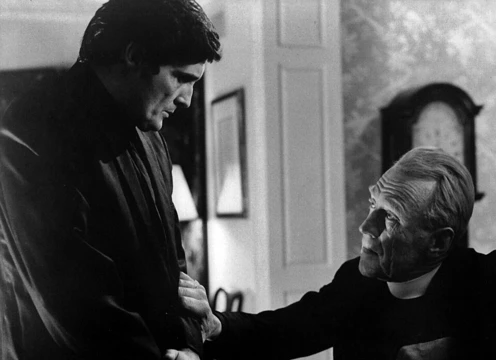
Gabriel is a 2007 Australian action-horror movie that takes place in purgatory. The story centers on the archangel Gabriel as he battles to cleanse purgatory of corrupt fallen angels and rescue the souls trapped there. This film marks the directorial debut of Shane Abbess, who co-wrote the script with Matt Hylton Todd. The cast includes Andy Whitfield in the title role, with Dwaine Stevenson playing Sammael, Samantha Noble as Amitiel, and Erika Heynatz as Lilith.
Quick Facts
- Director
- Shane Abbess
- Producer
- Shane Abbess / Anna Cridland / Kristy Vernon
- Writer
- Shane Abbess / Matt Hylton Todd
- Starring
- Andy Whitfield / Dwaine Stevenson / Samantha Noble / Erika Heynatz / Michael Piccirilli
- Music
- Brian Cachia
- Cinematography
- Peter Holland
- Editing
- Adrian Rostirolla
- Distributor
- Sony Pictures / Screen Corporation
- Released
- 15 November 2007
- Runtime
- 113 minutes
- Country
- Australia
- Language
- English
Facts from the source article.
Lore & Background
The film's plot begins with Heaven and Hell having fought over Purgatory since the beginning of time, each side sending seven warriors—archangels from Heaven and fallen angels from Hell—who must assume human form. Hell has gained control, transforming purgatory into a dark city. The last archangel, Gabriel, enters purgatory to discover the fate of his comrades and restore the Light. He finds that the archangels have been weakened by human desires and that the fallen angels, led by Sammael, have killed or corrupted most of them. Gabriel rescues the archangel Amitiel, who had been forced into prostitution, and learns that Sammael draws power from the other fallen angels. After the remaining archangels are killed, Gabriel's eyes turn brown (the color of the Fallen) in anger, but he ultimately confronts Sammael. In the final fight, Gabriel forgives Sammael, and Sammael heals Gabriel before dying, restoring light to purgatory. A post-credits scene shows Gabriel with brown eyes joining Amitiel, though this scene is absent from the DVD version.
Reader's Guide
Gabriel is notable as an unconventional Australian action film produced without government funding on a low budget. The filmmakers aimed to create a film that could compete in international markets and become financially profitable. Upon its Australian release on 15 November 2007, Gabriel received mixed reviews and came fifth in its opening-week box office. The film was released on DVD in the U.S. on 19 February 2008. Its significance lies in its independent production model and its attempt to blend action and horror within a theological framework, though it did not achieve major commercial success. The film is also remembered as the first feature directed by Shane Abbess and for featuring Andy Whitfield in the lead role before his later fame.
Did You Know?
- Gabriel was shot for roughly A$150,000, though deferred payments brought the actual cost into the millions.
- The film came fifth in its opening-week box office in Australia.
- The post-credits scene showing Gabriel with brown eyes joining Amitiel is not included in the DVD version.
- Director Shane Abbess described the budget as 'the catering budget on a Hollywood film.'
Production & Creative Ambition
Gabriel marked the feature-film debut of director Shane Abbess, who also shared screenplay credit with Matt Hylton Todd. The project stood out in the Australian film landscape for several reasons. Rather than relying on government funding, the production was assembled on a deliberately low budget, a choice that reflected the team's confidence in their material rather than institutional support. Their stated goal was ambitious: craft an action-horror that could hold its own on international screens and generate genuine profit. This was a notable departure from the typical Australian genre output, which more often gravitated toward drama or comedy. The decision to build a mythological action film with a purgatory setting, populated by archangels and fallen angels locked in a seven-versus-seven conflict, gave the project a scope that felt larger than its modest production values would suggest. Abbess and Todd clearly wanted audiences to experience the spectacle of celestial warfare filtered through a gritty, urban noir lens, and that tonal blend became the film's defining creative signature.
The Cast & Character Architecture
The film's ensemble is built around a clear duality. Andy Whitfield, already familiar to international viewers from his role as Spartacus, anchors the story as Gabriel, the last surviving archangel sent to reclaim purgatory. Opposing him is Dwaine Stevenson as Sammael, the leader of the fallen angels who has reshaped purgatory into a dark, corrupt city. Samantha Noble plays Amitiel, an archangel stripped of her wings and forced into a life of exploitation, while Erika Heynatz portrays Lilith, another of the fallen. Supporting characters round out the seven-on-seven structure: Michael Piccirilli as Asmodeus, Goran D. Kleut as Molloch, Kevin Copeland as Ahriman, Harry Pavlidis as Uriel, Jack Campbell as Raphael, and Matt Hylton Todd as Ithuriel. Each angel must assume human form to enter purgatory, a rule that strips them of divine power and exposes them to mortal weakness, desire, and decay. This constraint transforms what could be a straightforward good-versus-evil battle into a study of identity erosion, where the line between archangel and sinner grows dangerously thin.
Narrative Structure & Thematic Core
The plot operates on a ticking-clock logic. Seven archangels were dispatched to purgatory to battle seven fallen angels, but the fallen have gained the upper hand, and Gabriel arrives as the final defender. The central tension is not merely physical but existential: angels in purgatory are severed from their divine source, and the longer they remain, the more human frailty consumes them. Uriel, found drunk in a derelict bus, explains that the earlier archangels succumbed to desire and exhaustion. Gabriel must therefore fight not only the fallen but the very environment that erodes his power. The narrative escalates through a series of rescues and confrontations—he frees Amitiel from a brothel, heals a wounded Raphael in underground tunnels, and systematically eliminates the remaining fallen. A pivotal moment of moral crisis occurs when Gabriel, driven by rage, nearly falls to the dark side, his eyes shifting to the fallen's signature brown. His recovery hinges on an act of compassion rather than violence, reinforcing the film's thesis that purity of purpose, not raw power, defines an angel's true nature.
Release, Reception & Aftermath
Gabriel hit Australian cinemas on 15 November 2007, and the response was decidedly mixed. Critics were divided on the film's blend of mythological spectacle and grounded character drama, and the audience verdict was reflected at the box office: the film placed fifth in its opening weekend, a modest showing for a production that had been explicitly positioned as a commercial, internationally competitive action-horror. The film's journey to wider audiences came later, with a U.S. DVD release on 19 February 2008, suggesting a strategy of building a home-video and international presence rather than relying on a broad theatrical rollout. For a low-budget, independently produced Australian genre film, the fact that it reached an American consumer market at all represented a meaningful achievement. The film also stands as a rare example of Australian cinema embracing the action-horror genre with mythological subject matter, a niche that remains relatively unexplored in the country's output. Its legacy is that of a bold, if imperfect, genre experiment that proved a small team could assemble a mythic-scale story without institutional backing.
Gallery
Frequently Asked Questions
What is Gabriel (2007)?
Gabriel is a 2007 Australian action-horror film in which the archangel Gabriel wages war against corrupt fallen angels to purify purgatory and liberate the souls held captive there. It opened in Australian theaters on November 15, 2007.
Who stars in Gabriel (2007) and what roles do they play?
Andy Whitfield takes on the title role of the archangel Gabriel, while Dwaine Stevenson portrays the antagonist Sammael. Samantha Noble appears as Amitiel and Erika Heynatz as Lilith in key supporting parts.
What is the central conflict in Gabriel (2007)?
The narrative follows Gabriel as he fights to purge a group of fallen angels who have corrupted purgatory and are keeping human souls imprisoned within the realm. His goal is to restore the space to its proper state and set the captive souls free.
Who directed Gabriel (2007) and what was the production like?
Shane Abbess made his feature-directorial debut with the picture, co-writing the script with Matt Hylton Todd. The film was shot on a modest budget of roughly A$150,000, with additional costs covered through deferred payments to cast and crew.
How does Gabriel (2007) end?
Gabriel prevails over the corrupt fallen angels and succeeds in cleansing purgatory, freeing the trapped souls from their bondage. The film closes with the realm restored and the liberated souls released from the realm.
More in Religious horror films 1-24
Spotted an error? Know more?
Reader corrections go straight into our review queue. Suggest an edit · How this site is sourced