
Albert Gallatin
Genevan-American statesman, financier, diplomat, and co-founder of American ethnology.
Last updated

via Wikipedia: Albert Gallatin · see source
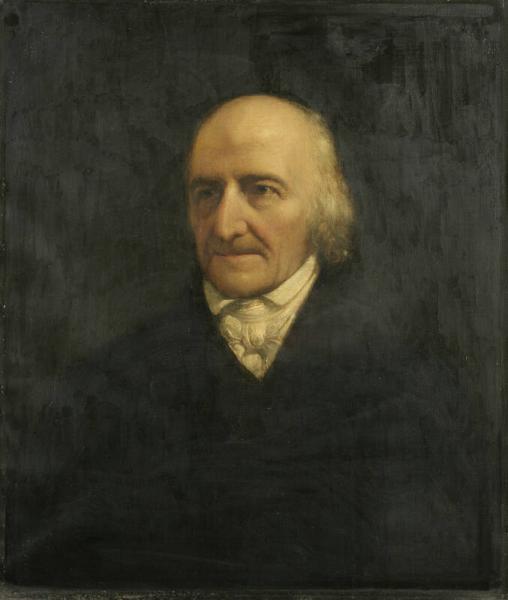
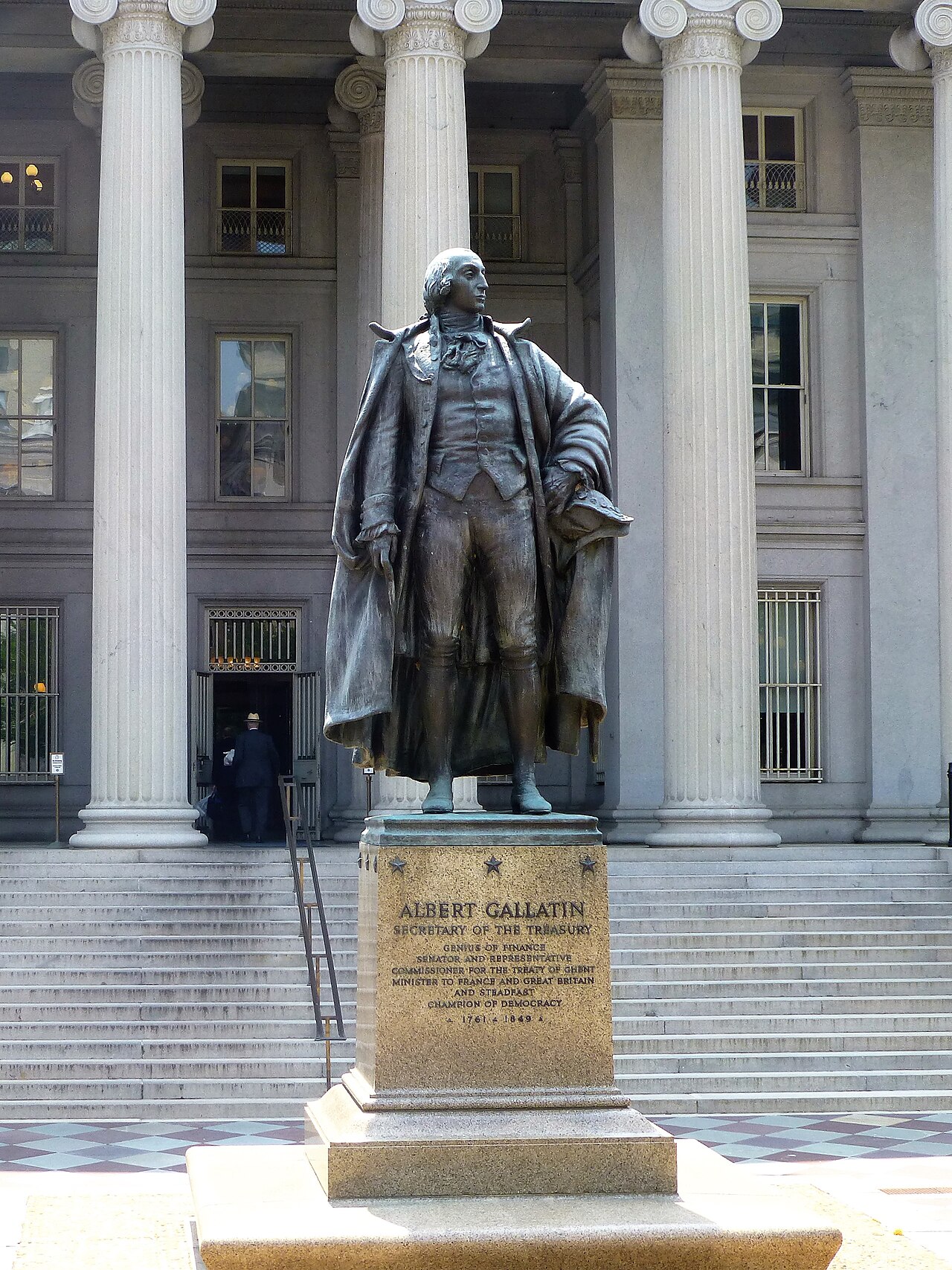
Abraham Alfonse Albert Gallatin (January 29, 1761 – August 12, 1849) was a Genevan-American who served as a politician, diplomat, ethnologist, and linguist. Known as "America's Swiss Founding Father," he was instrumental in establishing the young nation's financial systems and foreign policy. A key member of the Democratic-Republican Party, Gallatin represented Pennsylvania in both the Senate and the House of Representatives and served under four presidents, most notably as the longest-serving U.S. secretary of the treasury. He also founded New York University and co-founded the American Ethnological Society.
Born in Geneva (now part of Switzerland), Gallatin’s first language was French. Inspired by the American Revolution, he emigrated to the United States in the 1780s and settled in western Pennsylvania. He was a delegate to the 1789 Pennsylvania Constitutional Convention and later served in the Pennsylvania General Assembly.
Whiskey Rebellion
Elected to the U.S. Senate in 1793, he became a leading Anti-Federalist who opposed Alexander Hamilton’s economic plans. However, he was removed from the Senate on a party-line vote for failing to meet citizenship requirements. Returning to Pennsylvania, he helped calm angry farmers during the Whiskey Rebellion.
Elected to the U.S. House in 1795, Gallatin helped create the House Ways and Means Committee. He became the Democratic-Republicans’ chief financial spokesman and led opposition to Federalist economic policies. His support helped Thomas Jefferson win the contentious 1800 presidential election, and his reputation for prudent financial management earned him the Treasury Secretary post.
Jefferson administration
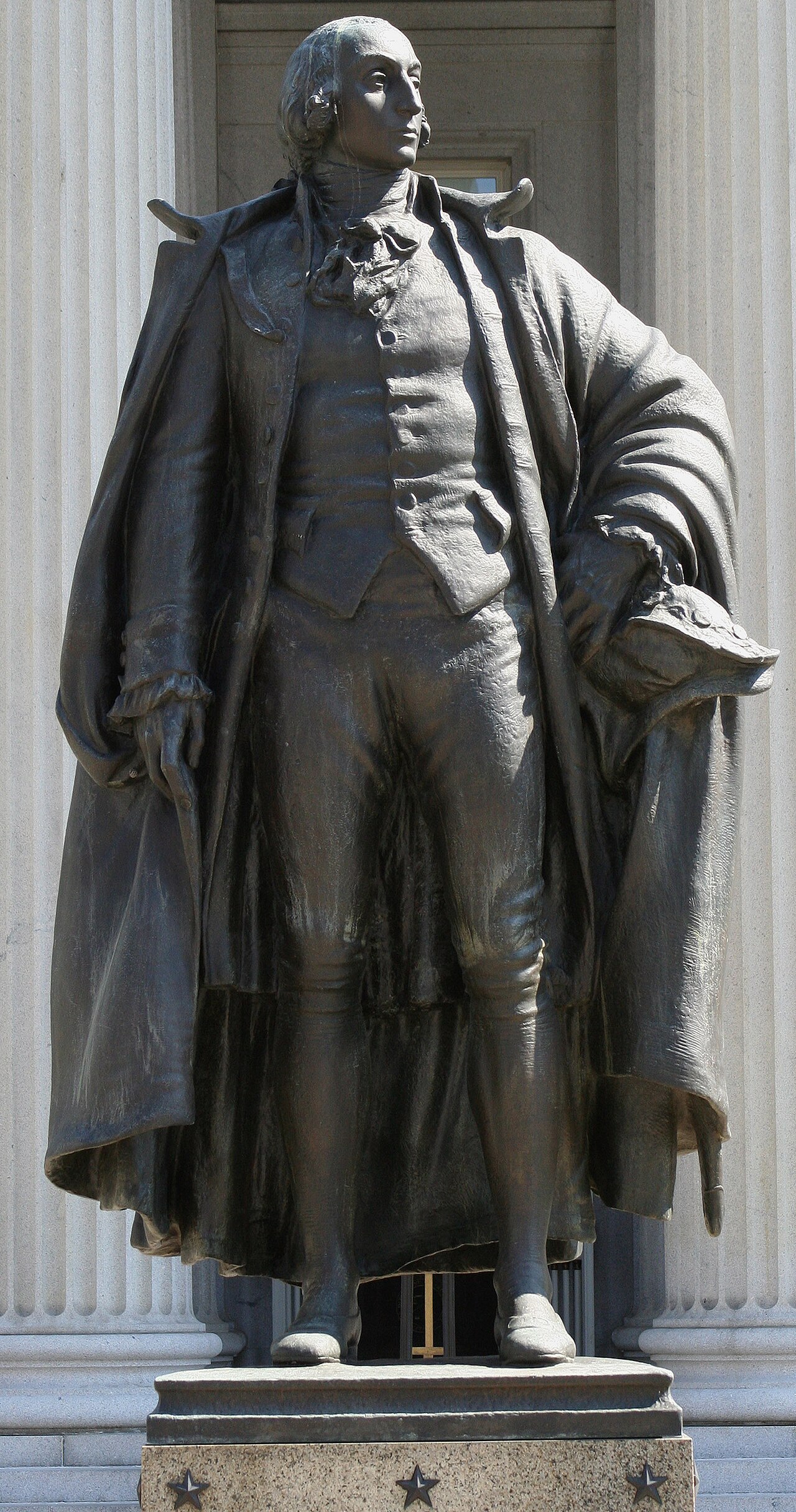
Under Jefferson, he cut government spending, established checks on expenditures, financed the Louisiana Purchase, and advocated for internal improvements like roads and canals via his Report on Roads and Canals. He stayed on through James Madison’s administration until February 1814, preserving much of Hamilton’s financial system while reducing the national debt. Gallatin served on the American commission that negotiated the Treaty of Ghent, ending the War of 1812, and later helped found the Second Bank of the United States.
Diplomat
Declining another term at Treasury, Gallatin served as U.S. Ambassador to France from 1816 to 1823, with limited success in improving relations during the Bourbon Restoration. In the 1824 presidential election, the Democratic-Republican congressional caucus nominated him for Vice President, but he never wanted the role and withdrew due to weak popular support. From 1826 to 1827, he served as ambassador to Britain, negotiating a ten-year extension of joint occupation of the Oregon Country.
Later life
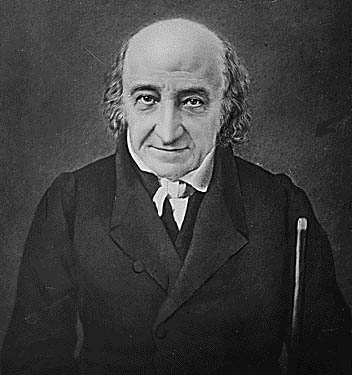
He then retired from politics and devoted himself to civic, humanitarian, and academic work. He was the first president of the New York branch of the National Bank from 1831 to 1839, and in 1842 co-founded the American Ethnological Society with John Russell Bartlett. His studies of Native American languages earned him the title "father of American ethnology." Gallatin remained active as an outspoken opponent of slavery and an advocate for fiscal responsibility, free trade, and individual liberty.
Gallatin was born on January 29, 1761, in Geneva, a citizen of the Republic of Geneva until 1785. His wealthy parents were Jean Gallatin and Sophie Albertine Rollaz. His family held great influence in Geneva, with many members serving in the magistracy and army.
His father, a prosperous merchant, died in 1765; his mother died in April 1770. Orphaned, Gallatin was cared for by Mademoiselle Pictet, a family friend and distant relative. In January 1773, he entered the elite Academy of Geneva, where he read deeply the works of Jean-Jacques Rousseau, Voltaire, and the French Physiocrats.
He grew dissatisfied with Geneva’s traditionalism. A student of the Enlightenment, he believed human nature was noble and would flourish when freed from social restrictions. The democratic spirit of the United States attracted him, and he decided to emigrate.
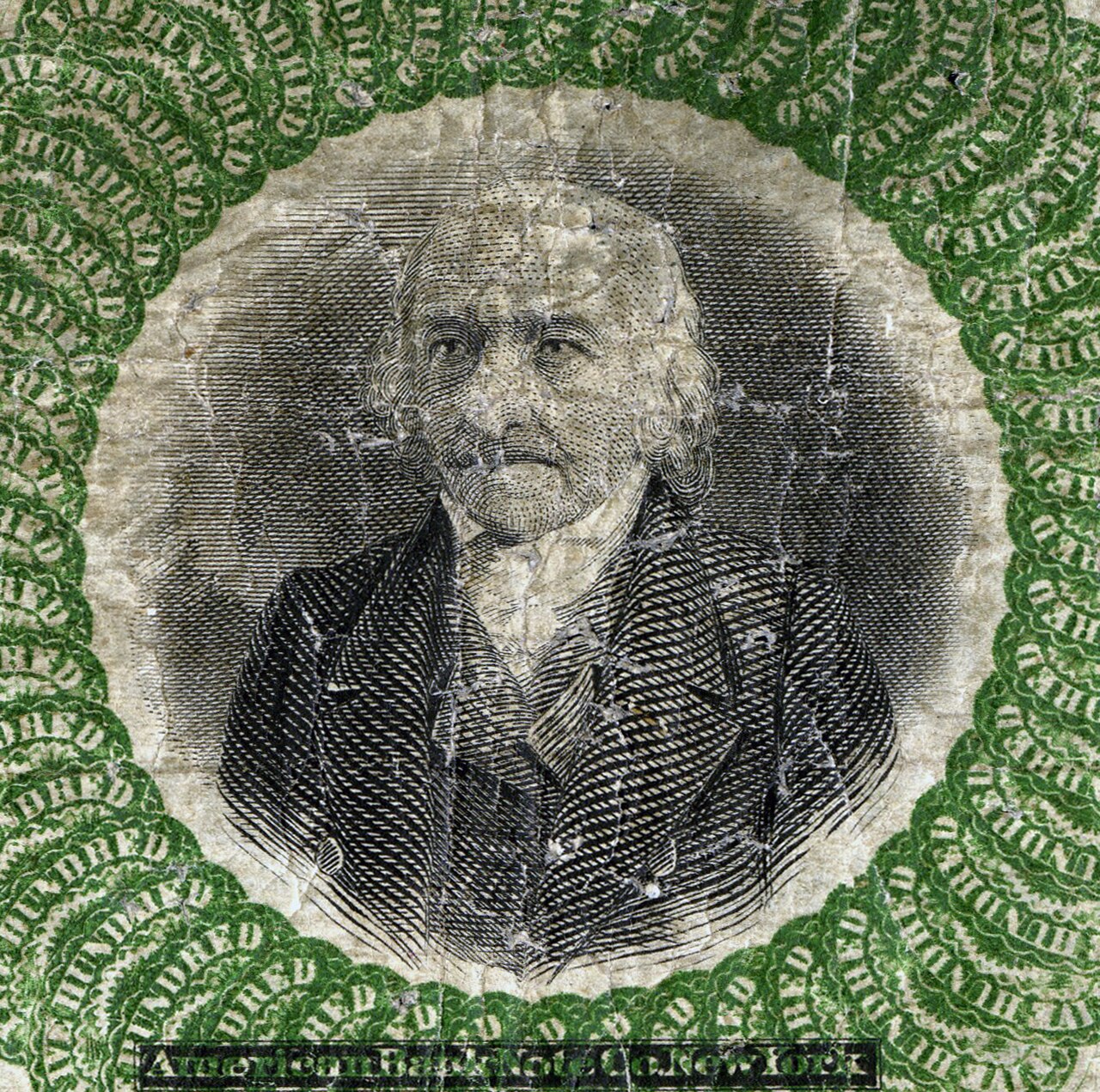
In April 1780, Gallatin secretly left Geneva with classmate Henri Serre. Carrying letters of recommendation from eminent Americans (including Benjamin Franklin) that his family had procured, they left France in May aboard an American ship, the Kattie. They reached Cape Ann on July 14 and arrived in Boston the next day, traveling the last thirty miles by horseback. Bored with Boston’s monotony, Gallatin and Serre sailed with a Swiss female companion to Machias, on the northeastern tip of the Maine frontier.
There, Gallatin ran a bartering venture dealing in various goods and supplies, enjoying the simple life and natural surroundings. They abandoned the venture and returned to Boston in October 1781. Friends of Pictet, learning Gallatin had come to America, convinced Harvard College to hire him as a French tutor. Gallatin disliked New England, preferring to become a farmer in the Trans-Appalachian West.
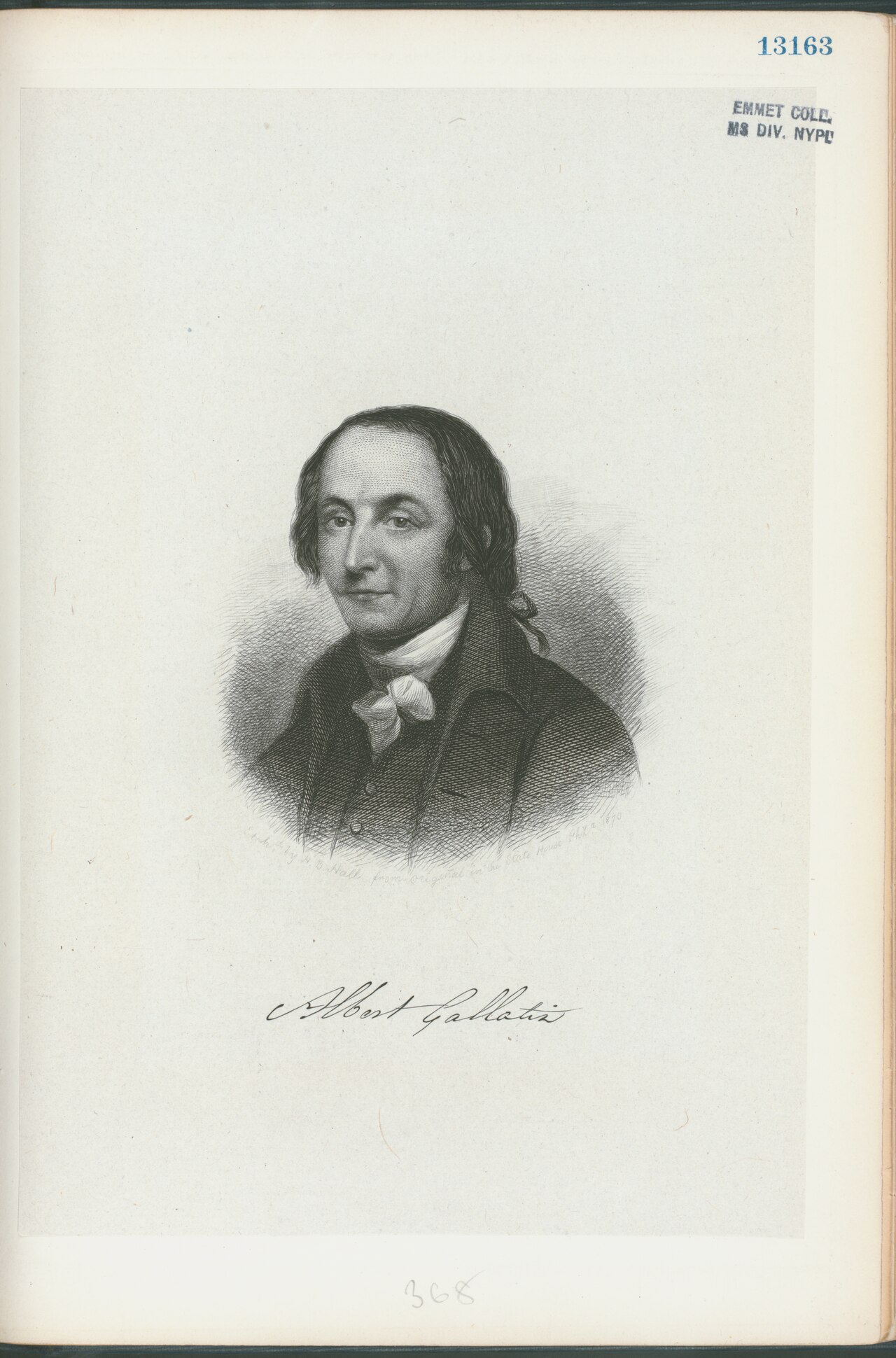
Lore & Background
Gallatin helped Thomas Jefferson prevail in the contentious 1800 U.S. presidential election, and his reputation as a prudent financial manager led to his appointment as Treasury Secretary. Under Jefferson, Gallatin reduced government spending, instituted checks and balances for government expenditures, and financed the Louisiana Purchase and advocated for internal improvements, most notably through his Report on Roads and Canals. He retained his position through James Madison's administration until February 1814, maintaining much of Hamilton's financial system while presiding over a reduction in the national debt.
Gallatin served on the American commission that agreed to the Treaty of Ghent, which ended the War of 1812. In the aftermath of the war, he helped found the Second Bank of the United States. Declining another term at the Treasury, Gallatin served as U.S. Ambassador to France from 1816 to 1823, struggling with scant success to improve relations during the Bourbon Restoration.
In 1826 and 1827, he served as the American ambassador to Britain and negotiated several agreements, such as a ten-year extension of the joint occupation of Oregon Country. He thereafter retired from politics and dedicated the rest of his life to various civic, humanitarian, and academic causes. He became the first president of the New York branch of the National Bank from 1831 to 1839, and in 1842 joined John Russell Bartlett to establish the American Ethnological Society; his studies of Indigenous languages of North America have earned him the moniker "father of American ethnology." Gallatin remained active in public life as an outspoken opponent of slavery and an advocate for fiscal responsibility, free trade, and individual liberty.
Reader's Guide
Albert Gallatin's significance lies in his dual impact on American governance and scholarship. As the longest-serving secretary of the treasury, he reduced government spending, instituted checks and balances for expenditures, financed the Louisiana Purchase, and advocated for internal improvements via his Report on Roads and Canals, while maintaining much of Hamilton's financial system and presiding over a reduction in the national debt. His diplomatic work—including serving on the commission that agreed to the Treaty of Ghent, ending the War of 1812, and negotiating a ten-year extension of joint occupation of Oregon Country as ambassador to Britain—helped stabilize U.S. foreign relations.
Did You Know?
- He was removed from the U.S. Senate in 1794 on a party-line vote for not meeting requisite citizenship requirements.
More in Reformers And Leaders Of The Americas And Beyond
Related in Reformers And Leaders Of The Americas And Beyond
Links follow this subject's own source article.
Sources
Compiled from Wikipedia and the sources listed below. Text from Wikipedia is available under CC BY-SA 4.0; this entry is adapted from it.
- Wikipedia: Albert Gallatin (CC BY-SA 4.0).
Spotted an error? Know more?
Reader corrections go straight into our review queue. Suggest an edit · How this site is sourced