
Abigail Adams
Wife and advisor of John Adams, mother of John Quincy Adams.
Last updated

via Wikipedia: Abigail Adams · see source
Abigail Adams (born Abigail Smith, November 22, 1744 – October 28, 1818) served as the wife and most trusted adviser to John Adams, the second U.S. president, and as the mother of John Quincy Adams, the sixth U.S. president. She is regarded as a key figure in the nation’s founding. Though the titles did not exist in her time, she was both the first second lady and the second first lady of the United States. Along with Barbara Bush, she is one of only two American women to have been both a president’s wife and a president’s mother.
Her life is among the best documented of any first lady. The many letters she exchanged with John Adams while he served as a delegate in the Continental Congress in Philadelphia, before and during the Revolutionary War, reveal a close and versatile partnership. John Adams often turned to her for advice on a wide range of topics, and their correspondence is full of intellectual debates about government and politics. These letters also provide firsthand accounts of life on the home front during the war.
Regard by historians
Since 1982, periodic surveys by the Siena College Research Institute have consistently ranked Abigail Adams among the top three first ladies as judged by historians.
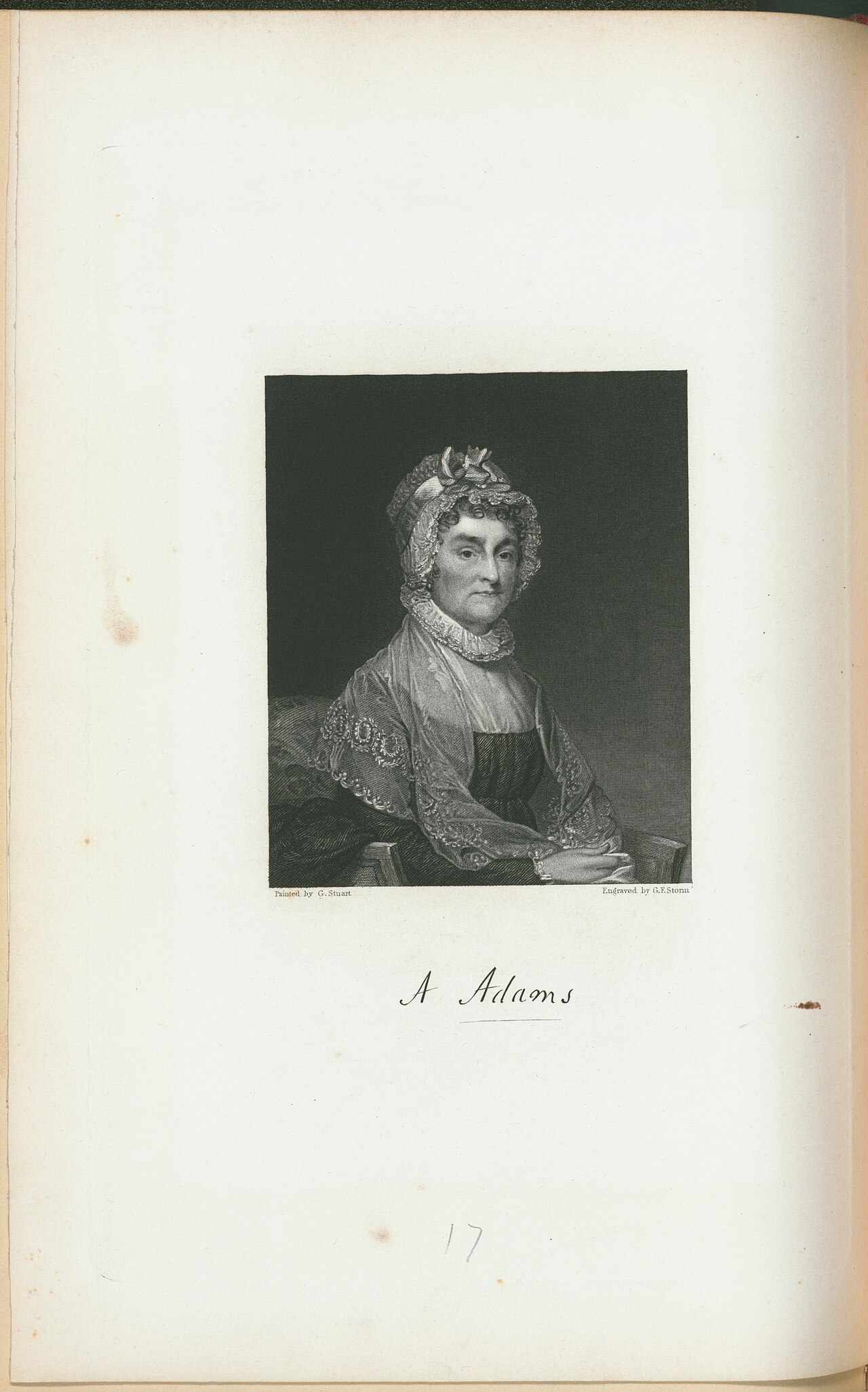
Early life and family (1744–1759)
Born on November 22, 1744, at the North Parish Congregational Church in Weymouth, Massachusetts, she was the second child of William Smith and Elizabeth Quincy Smith. Her mother’s side connected her to the influential Quincy political family of the Massachusetts colony, making her a cousin of Dorothy Quincy, who married John Hancock. She was also a great-granddaughter of John Norton, the founding pastor of Old Ship Church in Hingham.
Her father, a liberal Congregational minister, emphasized reason and morality over predestination or original sin. He married Elizabeth Quincy in 1740, and the couple had three daughters and one son. Elizabeth died in October 1775 after 35 years of marriage; William Smith died in 1784 at age 77.
The Smith family owned slaves, known to include at least four people. A slave named Phoebe cared for Abigail and the other children; later, after gaining her freedom, Phoebe worked for Abigail as a paid servant. As an adult, Abigail came to hold anti-slavery views.
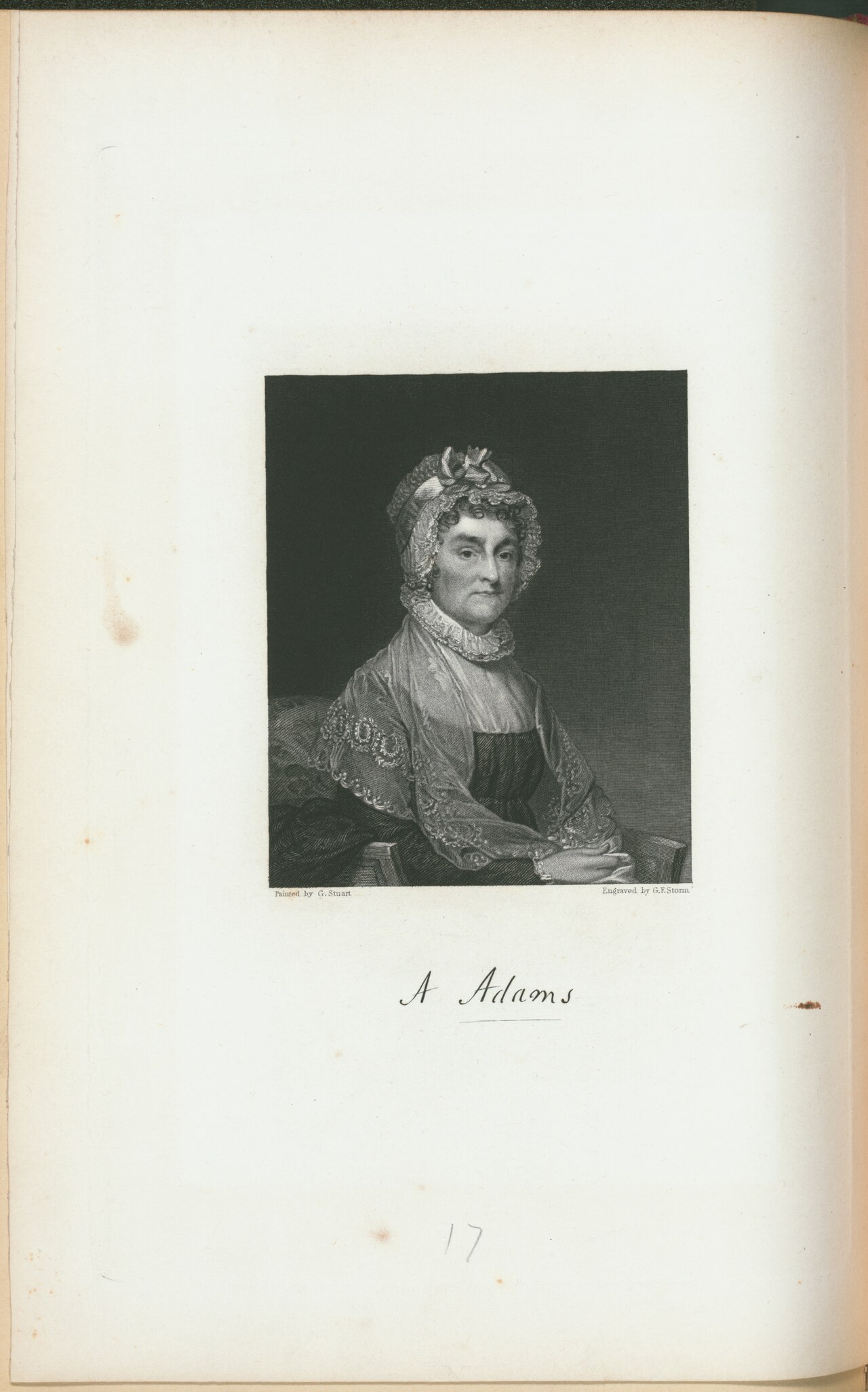
Abigail never received formal schooling. Frequent childhood illness may have prevented her education, and she later believed she was denied it simply because females were rarely given the opportunity. Her mother taught her and her sisters to read, write, and do basic arithmetic.
The large libraries of her father, uncle, and grandfather allowed the sisters to study English and French literature. Her grandmother, Elizabeth Quincy, also helped educate her. As she grew, she read with friends to further her learning, and she became known as one of the most learned women ever to serve as first lady.
Marriage and children (1759–1783)
She first met John Adams in 1759, when she was 15. John had come to the Smith home with his friend Richard Cranch, who was engaged to Abigail’s older sister Mary. (Cranch and Mary later became the parents of federal judge William Cranch.) John Adams later said he found the Smith sisters neither “fond, nor frank, nor candid.” Abigail’s father approved of the match, but her mother was dismayed at the idea of her daughter marrying a country lawyer with farm-like manners.
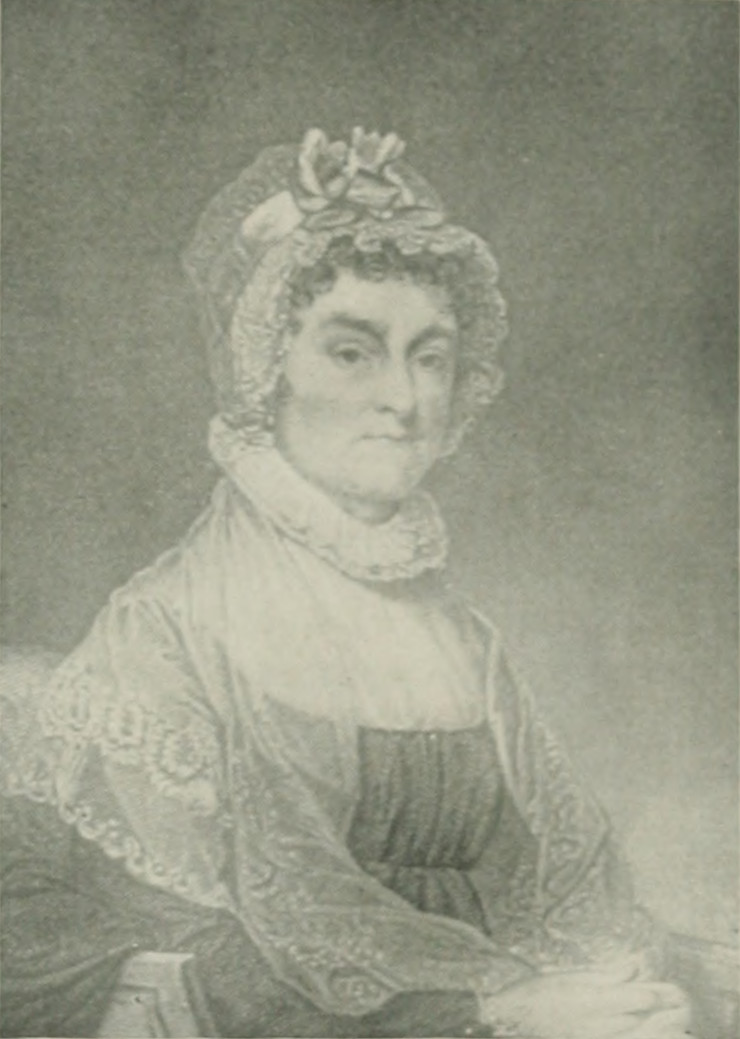
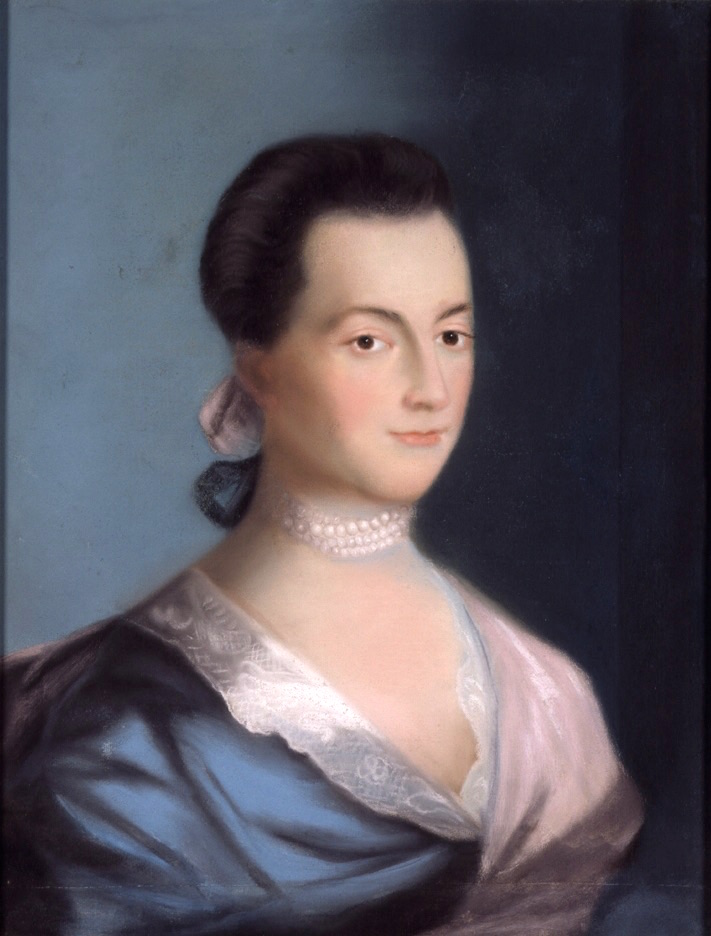
She eventually relented, and the couple married on October 25, 1764, in the Smith home in Weymouth, with Abigail’s father officiating. After the reception, they rode a single horse to their new home—a saltbox house and farm in Braintree, Massachusetts (now part of Quincy) that John had inherited from his father. Their first child was born nine months later.
Over 12 years, Abigail gave birth to six children: Abigail (“Nabby,” 1765–1813), John Quincy (1767–1848), Susanna (“Suky,” 1768–1770), Charles (1770–1800), Thomas (1772–1832), and Elizabeth (stillborn in 1777). She raised her children with constant reminders of their duty to virtue and the Adams family legacy. While John was away on long trips, she managed both the family and the farm.
“Alas!” she wrote in December 1773, “How many snow banks divide thee and me.” Their marriage is richly documented through their letters, which show that John’s trust in her judgment was genuine. Like her husband, she frequently quoted literature in her correspondence—historian David McCullough notes she did so “more readily” than he did. Their letters reveal deep mutual emotional and intellectual respect, and John often apologized to her for his “vanity,” showing his need for her approval.
In April 1768, John moved the family to Boston, renting a clapboard house on Brattle Street known locally as the “White House.” They lived there for a year, then moved to Cold Lane, and later to a larger house in Brattle Square in the city center. John’s growing law practice required these changes. In 1771, he moved Abigail and the children again.
Lore & Background
Abigail Adams was born on November 22, 1744, at the North Parish Congregational Church in Weymouth, Massachusetts, to William Smith and Elizabeth (née Quincy) Smith. On her mother's side, she was descended from the Quincy political family. She did not receive formal schooling; she was frequently sick as a child, something which may have been a factor preventing her from receiving an education. Later in life, Adams would also consider that she was deprived an education because females were rarely given such an opportunity.
Although she did not receive a formal education, her mother taught her and her sisters to read, write and cipher; her father's, uncle's and grandfather's large libraries enabled the sisters to study English and French literature. Her grandmother, Elizabeth Quincy, also contributed to Adams's education. As she grew up, Adams read with friends in an effort to further her learning. She became regarded as one of the most erudite women ever to serve as first lady.
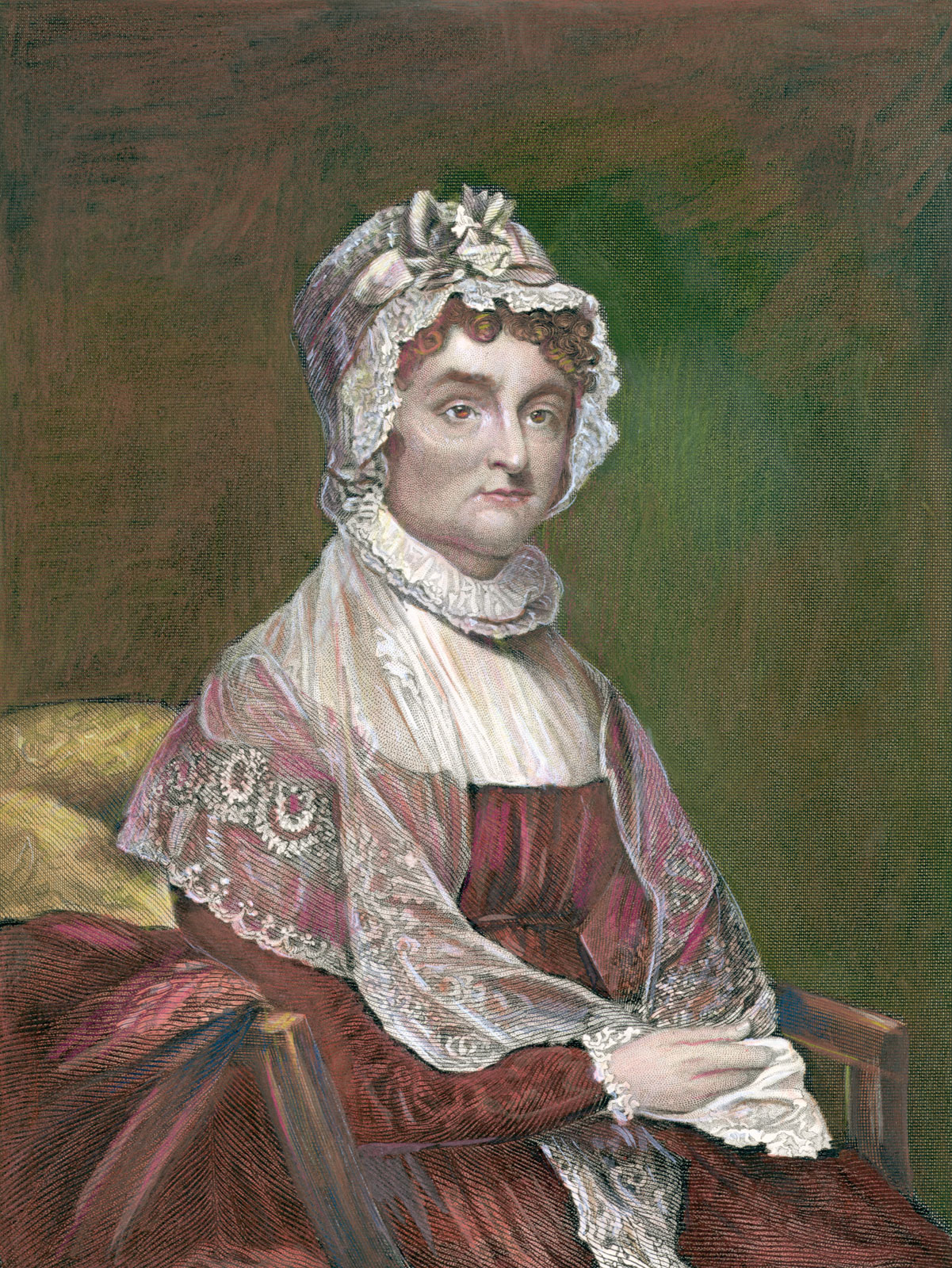
The Smith family were slaveholders and are known to have owned at least four people. A slave named Phoebe took a caretaking role to Abigail and other children; later on she would work as a paid servant for Abigail after she became free. Abigail would come to express anti-slavery beliefs as an adult. Abigail Smith first met John Adams when she was 15 years old in 1759.
The couple married on October 25, 1764, in the Smiths' home in Weymouth. William Smith, Abigail's father, presided over the marriage. After the reception, the couple mounted a single horse and rode off to their new home, the saltbox house and farm John had inherited from his father in Braintree, Massachusetts. In 12 years, Abigail Adams gave birth to six children: Abigail ("Nabby"; 1765–1813), John Quincy (1767–1848), Susanna (nicknamed "Suky") (1768–1770), Charles (1770–1800), Thomas (1772–1832), and Elizabeth (stillborn in 1777).
Europe (1784–1788)
Adams was responsible for family and farm when her husband was on his long trips. "Alas!", she wrote in December 1773, "How many snow banks divide thee and me." Letters exchanged throughout John's political obligations indicate his trust in Abigail's knowledge was sincere. John often excused himself to Abigail for his "vanity", exposing his need for her approval. In 1784, Abigail and her daughter Nabby joined her husband and her eldest son, John Quincy, at her husband's diplomatic post in Paris. At first, she found life in Paris difficult and was rather overwhelmed by the novel experience of running a large house with a retinue of servants.
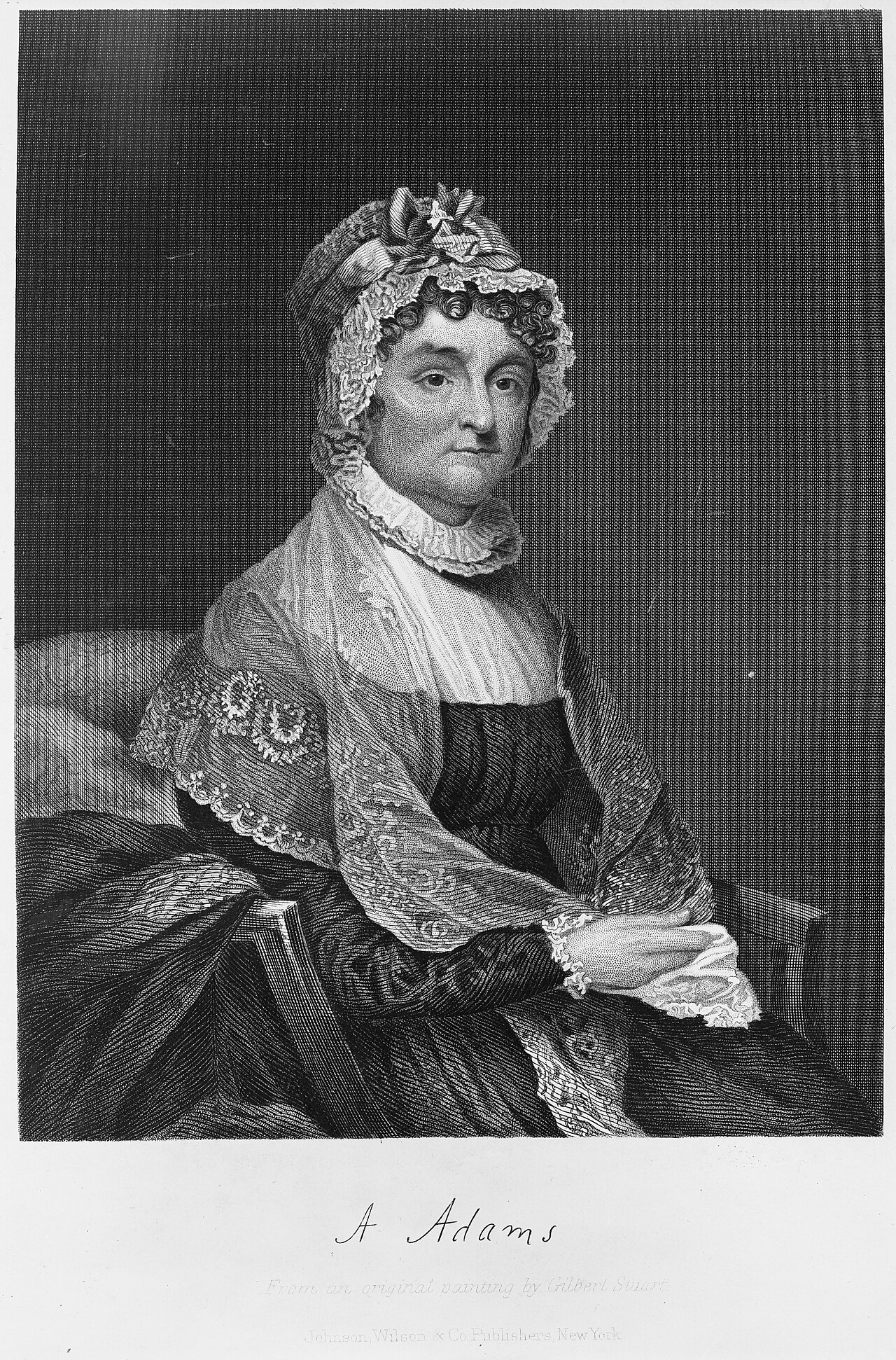
However, as the months passed, she began to enjoy herself: she made numerous friends, discovered a fondness for the theatre and opera, and was fascinated by Parisian women's fashions, although she ruefully admitted that she "would never be in the mode." After 1785, she filled the role of wife of the first U.S. minister to the Court of St James's (Britain). In contrast to Paris, Abigail disliked London, where she had few friends and was, in general, cold-shouldered by polite society. One pleasant experience was her temporary guardianship of Thomas Jefferson's young daughter Mary (Polly), for whom Abigail came to feel a deep and lifelong love. She and John returned in 1788 to their home in Quincy, Peacefield (also known as the "Old House"), which she set about vigorously enlarging and remodeling.
Reader's Guide
Abigail Adams is significant as one of the most documented of the first ladies. Surveys of historians conducted periodically by the Siena College Research Institute since 1982 have consistently found Adams to rank as one of the three most highly regarded first ladies by historians. When John was elected President of the United States, Abigail continued a formal pattern of entertaining. She held a large dinner each week, made frequent public appearances, and provided for entertainment for the city of Philadelphia each Fourth of July.
First Lady (1797–1801)
She took an active role in politics and policy, unlike the quiet presence of Martha Washington. Abigail was so politically active, her political opponents came to refer to her as "Mrs. President." As John's confidant, Abigail was often well informed on issues facing her husband's administration, at times including details of current events not yet known to the public in letters to her sister Mary and her son John Quincy. Some people used Abigail to contact the president.
At times Abigail planted favorable stories about her husband in the press. Abigail remained a staunch supporter of her husband's political career, supporting his policies, such as passing the Alien and Sedition Acts. Adams brought the children of her brother William Smith, her brother-in-law John Shaw, and her son Charles to live in the President's House during her husband's presidency because the children's fathers all struggled with alcoholism.
Charles's daughter, Susanna, was just 3 years old in 1800 when Adams brought her to live in the President's House in Philadelphia days before Charles's death. Abigail also took responsibility for the family's financial matters, including investments. Her investments made through her uncle Cotton Tufts in debt instruments issued to finance the Revolutionary War were rewarded after Alexander Hamilton's First Report on the Public Credit endorsed full federal payment at face value to holders of government securities. One recent researcher even credits Abigail's financial acumen with providing for the Adams family's wealth through the end of John's lifetime.
More in Reformers And Leaders Of The Americas And Beyond
Related in Reformers And Leaders Of The Americas And Beyond
Links follow this subject's own source article.
Sources
Compiled from Wikipedia and the sources listed below. Text from Wikipedia is available under CC BY-SA 4.0; this entry is adapted from it.
- Wikipedia: Abigail Adams (CC BY-SA 4.0).
Spotted an error? Know more?
Reader corrections go straight into our review queue. Suggest an edit · How this site is sourced