Ridge lift
Rising air deflected by slopes enables sustained unpowered flight.

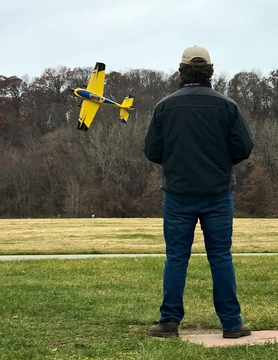
Ridge lift, sometimes called slope lift, happens when the wind hits a large, steep obstacle—like a mountain ridge or cliff—and gets forced upward. If the wind is strong enough, this rising air can lift gliders, hang gliders, paragliders, and birds, letting them stay aloft for a long time or cover huge distances by ridge soaring. Unpowered aircraft naturally sink through the air, but they will gain altitude if the surrounding air rises faster than they descend. Model glider fans call this slope gliding or sloping.
Orville Wright used ridge lift to set a duration record of 11 minutes in 1911. The sport of soaring really took off in Germany after World War I. In 1921, Dr. Wolfgang Klemperer broke the Wright Brothers’ record with a 13-minute flight. The next year, Arthur Martens became the first glider pilot to use an updraft from a mountain slope to stay up for a long time, flying for over an hour.
Ridge lift forms when wind blows against a hill, ridge, escarpment, or ocean wave, pushing the air upward—meteorologists call this orographic lift. The wind creates a zone of rising air right above the slope, which can stretch some distance up and out from the face because the airflow follows the hill’s upward shape. But near nearly vertical cliffs, there’s often a turbulent area with descending air close to the base. Downwind of the hill, lee waves can develop; glider pilots use these to gain height too, but that’s different from slope lift.
On slopes rather than cliffs, the strongest lift is usually found along a flight path that crosses an imaginary line coming straight out from the slope at a right angle. Long mountain ranges—like the Ridge-and-valley Appalachians in the United States, or ranges in New Zealand and Chile—have let glider pilots fly over a thousand kilometers in a single trip. Birds, including many seabirds (especially albatross) and raptors, also use slopes this way.
- First recorded use
- Orville Wright set a duration record of 11 minutes in 1911 using ridge lift.
- First soaring duration record broken
- Dr. Wolfgang Klemperer broke the Wright Brothers' 1911 record with a flight of 13 minutes in 1921.
- First lengthy slope flight
- Arthur Martens became the first glider pilot to use an updraft rising along a mountain slope to stay aloft for over an hour in 1922.
- Meteorological term
- Orographic lift
Lore & Background
The sport of soaring began in Germany after the First World War. In 1921, Dr. Wolfgang Klemperer broke the Wright Brothers' 1911 soaring duration record with a flight of 13 minutes. The following year, Arthur Martens became the first glider pilot to use an updraft rising along a mountain slope to stay aloft for a lengthy period, achieving a flight of over an hour. Ridge lift is generated when wind blows against a hill, ridge, escarpment, or ocean wave, causing the air to rise. In meteorology this is known as orographic lift. The wind creates a region of rising air directly above the slope, which may extend some distance upward and outward from its face because the airflow follows the upward contour of the hill. However, near vertical cliffs there is usually an area of turbulence with descending air near the base of the cliff. Downwind of the hill, lee waves can form; these are also used by glider pilots to gain height, but this should not be confused with slope lift.
Reader's Guide
Ridge lift has been fundamental to the development of soaring flight. Orville Wright used it to set a duration record of 11 minutes in 1911, and the sport of soaring began in Germany after the First World War. In 1921, Dr. Wolfgang Klemperer broke the Wright Brothers' record with a 13-minute flight, and in 1922 Arthur Martens became the first glider pilot to use an updraft along a mountain slope to stay aloft for over an hour. Long mountain ranges, such as those in the Ridge-and-valley Appalachians in the United States, New Zealand, and Chile, have been used by glider pilots to fly in excess of a thousand kilometers in a single flight. Birds, including many seabirds (particularly albatross) and raptors, also use slopes in this way. Near slopes rather than vertical cliffs, the strongest lift is often found in a flight path that intersects with an imaginary line emerging at right angles from the slope. Model glider enthusiasts refer to the technique as slope gliding or sloping.
Did You Know?
- Ridge lift is also known as slope lift and is created when wind strikes a large, steep obstacle such as a mountain ridge or cliff.
- Long mountain ranges in the Ridge-and-valley Appalachians, New Zealand, and Chile have enabled glider flights exceeding a thousand kilometers.
More in Radio-Controlled Aircraft 1-24
Spotted an error? Know more?
Reader corrections go straight into our review queue. Suggest an edit · How this site is sourced