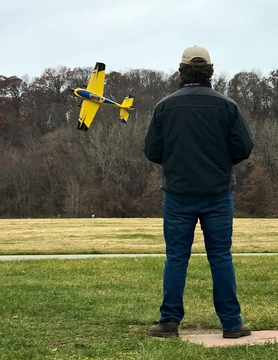
Park flyer
Small, electric-powered radio-controlled aircraft for park flying.

Park flyers are a category of small radio-controlled aircraft, most often powered by electricity. The smallest ones, known as micro planes, can be flown indoors—in spaces like a gymnasium or even a living room. Larger park flyers are typically operated at designated flying sites. These aircraft weigh a maximum of 2 pounds (0.91 kg), which keeps their speed under half the current wind speed. Models that fly slowly are more affected by wind and turbulence. Because of their quiet operation and compact size, they are suitable for use in residential areas.
Even after a serious crash, the parts of a park flyer are usually repairable. Clubs exist to help newcomers and provide information on good places to take off. There are two main types: ready-to-fly (RTF) models, which require little more than basic assembly, and almost ready to fly (ARF) models, which need the user to install and construct various components.
Advances in electronics and materials have led to high-performance “3D-flyers” in the park flyer class. These fully aerobatic aircraft can perform extreme high-g maneuvers and hover nose-up.
One notable park flyer is the SQuiRT, used in the 2008 Wings Across America event. The project aimed to fly this model across the 48 contiguous U.S. states. Starting in Virginia, the plane was passed from pilot to pilot in person. After each flight at a home airfield, the pilot would drive to the next location for a handoff. Five years later, in 2013, the SQuiRT returned to its starting airfield in Virginia and was soon donated to the AMA museum in a small ceremony.
Safety is a concern with certain park flyers, especially small delta-wing designs, which can reach dangerous speeds and cause injuries to bystanders. A standard precaution is to keep a safe distance from the public. The Academy of Model Aeronautics recommends a minimum of 50 feet (15.24 m) between the aircraft and any spectators other than the pilot.
- Maximum weight
- 2 pounds (0.91 kg)
- Speed limit
- Less than half of the current wind speed
- Minimum safe distance from spectators
- 50 feet (15.24 m)
Lore & Background
Park flyers are a class of small, primarily electric-powered radio-controlled aircraft. The smallest class of park flyers are called micro planes, and are capable of being used in an enclosed area such as a gymnasium or a living room, while larger park flyers are usually flown at designated park flyer sites. Models with low flying speed are more susceptible to wind and turbulence. Park flyers weigh no more than 2 pounds (0.91 kg), allowing park flyers to have a speed limit of less than half of the current wind speed.
Even after serious crash damage, the aircraft's components tend to still be repairable. They may be flown in residential areas because of their modest size and silent operation. Clubs exist to assist newcomers and offer details on suitable takeoff spots.
Advanced electronic and material technologies have aided in the development of high-performance, park flyer sized “3D-flyers”, or fully aerobatic aircraft capable of extreme high g maneuvers and nose-up hovering. Types of park flyers include ready-to-fly (RTF) park flyers, which require no construction or installation, and almost ready to fly (ARF) park flyers, which require construction and installation of different parts by the users.
Reader's Guide
Park flyers represent a significant segment of radio-controlled aircraft due to their accessibility and versatility. Their modest size and silent operation allow them to be flown in residential areas, making the hobby more convenient for many enthusiasts. The weight limit of 2 pounds (0.91 kg) and speed restriction to less than half the current wind speed help define their operational envelope. Even after serious crash damage, components tend to remain repairable, which reduces waste and encourages continued use. The development of high-performance, park flyer sized “3D-flyers” demonstrates how advanced electronic and material technologies have expanded the capabilities of these small aircraft, enabling fully aerobatic maneuvers such as extreme high g maneuvers and nose-up hovering. The SQuiRT park flyer model was used in the Wings Across America 2008 event, a project that flew the plane across the 48 contiguous states of the U.S. through in-person handoffs, beginning in Virginia and returning there 5 years later in 2013, after which it was donated to the AMA museum. Safety considerations include keeping an appropriate distance from the public, with the Academy of Model Aeronautics recommending a minimum safe distance of at least 50 feet (15.24 m) from any spectators other than the pilot.
Did You Know?
- The smallest class of park flyers, called micro planes, can be used in an enclosed area such as a gymnasium or a living room.
- The SQuiRT park flyer was flown across the 48 contiguous states of the U.S. during the Wings Across America 2008 event.
More in Radio-Controlled Aircraft 1-24
Spotted an error? Know more?
Reader corrections go straight into our review queue. Suggest an edit · How this site is sourced