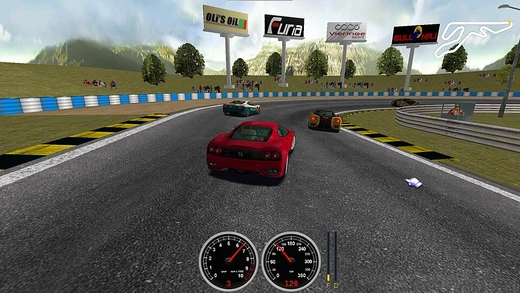
Racing video game
A genre spanning realistic simulations to fantastical arcade racing.

The Conmunity - Pop Culture Geek from Los Angeles, CA, USA · CC BY 2.0
Racing video games are a genre in which the player participates in a racing competition. They may be based on real-world racing leagues or fantastical settings, and are distributed along a spectrum between realistic racing simulations and arcade-style racing games. Kart racing games emerged in the 1990s as a popular sub-genre of the latter, and racing games may also fall under the category of sports video games.
- Earliest known precursor
- Electro-mechanical driving games (1939)
Lore & Background
Racing video games have roots in electro-mechanical driving games from the late 1930s, such as Drive Yourself (1939), which used a steering wheel to control a model car over a painted road. Arcade-style racing games prioritize fun and fast-paced experiences with liberal physics, encouraging powersliding and exaggerated collisions. They often license real cars or use exotic settings, and some include weapons to impede opponents. Simulation racing games strive to replicate real automobile handling, including tire condition and fuel level, and often feature customizable aids like traction control. Kart racing games, popularized by Super Mario Kart in 1992, simplify driving mechanics and add obstacles, unusual track designs, and power-ups. The go-kart theme was a deliberate design choice, not a result of hardware limitations. Anti-gravity racing games, dating back to the late 1980s in arcades, feature hovering vehicles and futuristic tracks, with notable home console entries like F-Zero (1990) and Wipeout (1995).
Reader's Guide
Racing video games have evolved from electro-mechanical arcade machines to a diverse genre encompassing multiple sub-genres. Arcade-style racers focus on accessibility and excitement, often incorporating weapons or fantastical settings, while simulation racers emphasize realistic physics and precision driving. Kart racing games, a sub-genre of arcade-style, became a staple with the Mario Kart series, introducing simplified controls and combat elements. Anti-gravity racing games brought science fiction themes and hover vehicles. The genre's history shows a continuous interplay between technological limitations and creative solutions, such as the go-kart theme in Super Mario Kart due to hardware constraints. Racing games remain a significant part of the video game industry, appealing to both casual players and dedicated enthusiasts through their varied approaches to competition and driving experience.
Did You Know?
- The earliest known mechanical arcade racing game is typically cited as the 1930s or later, not 1900.
- Super Mario Kart (1992) used a go-kart theme as a deliberate design choice, not due to hardware limitations.
- Anti-gravity racing games in arcades date back to the late 1980s, with titles like STUN Runner (1989).
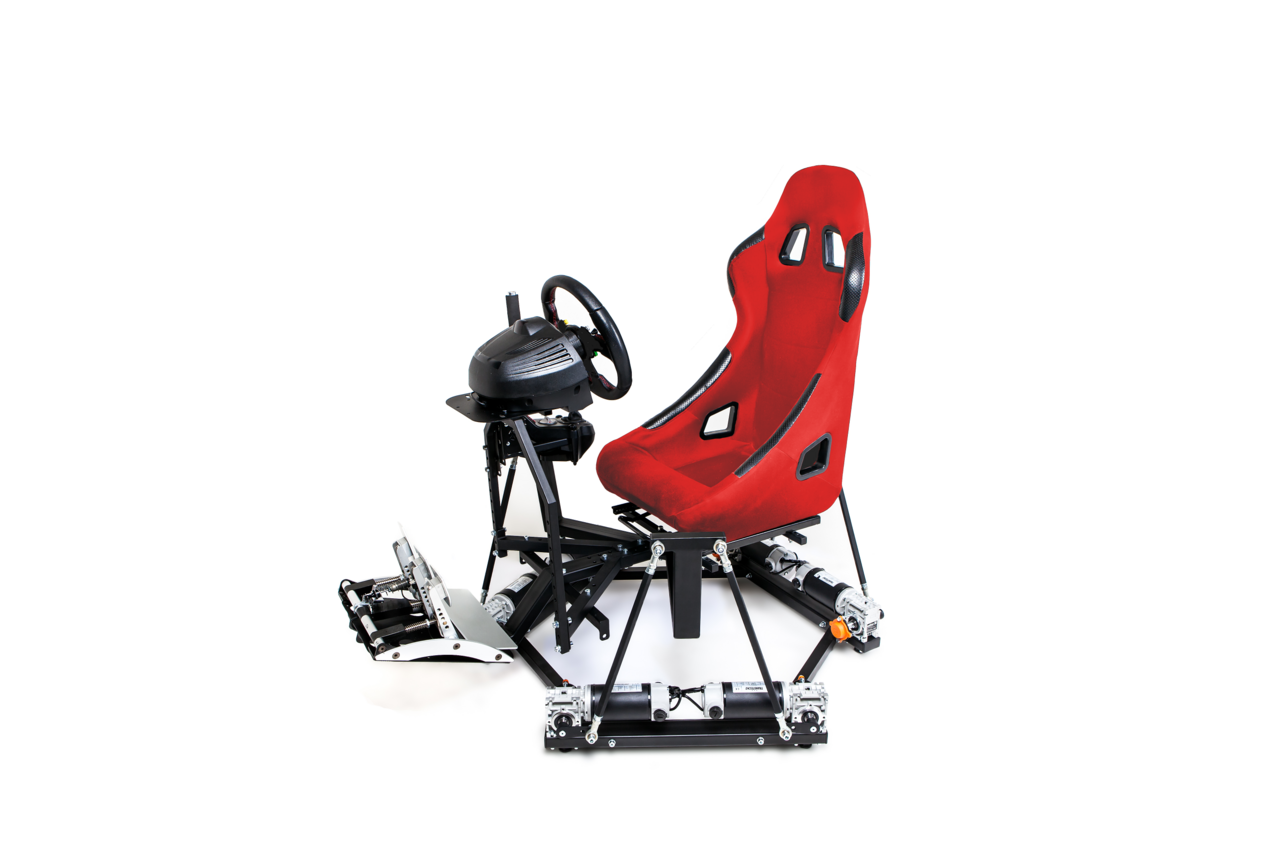
- Some arcade racing games use hydraulic motion simulator cabinets that simulate the look and feel of driving.
Origins in the Mid-to-Late 1970s
The vehicle racing video game genre traces its earliest roots to the mid- and late-1970s, a period when interactive entertainment was still in its infancy and the very concept of a playable digital experience was being defined. That the genre is described as having 'first emerged' during this window places it among the pioneering categories of video game design, developed at a time when graphical capabilities were rudimentary and the idea of simulating speed, steering, and competition on a screen was a novel creative challenge. The fact that this origin point is anchored to a specific two-to-three-year span rather than a single year suggests a gradual crystallization of the racing format, likely building on earlier arcade experiments with motion and scoring. By establishing a clear birth window, the broader historical record acknowledges that racing was not an afterthought or a derivative of another genre but a distinct creative impulse that found its footing alongside the foundational years of the medium itself.
Five Decades of Continuous Presence
The structure of the notable racing video game list reveals a genre that has maintained an unbroken thread of relevance from the 1970s all the way through the 2020s. The entries are organized into five distinct era groupings: the 1970s and 1980s are combined into a single section, while the 1990s, 2000s, 2010s, and 2020s each receive their own dedicated heading. This organizational choice implies that the earliest two decades constituted a formative, perhaps less prolific, period during which the genre was still establishing its identity and conventions. From the 1990s onward, each decade is treated as a self-contained chapter, suggesting a maturation and diversification of the category that warranted separate treatment. The sheer span of five consecutive decades of listed titles underscores that racing has never experienced a prolonged absence from the video game landscape, remaining a persistent and recognizable pillar of interactive entertainment across every generation of hardware and design philosophy.
Adjacent Genres and Specialized Motorsport Niches
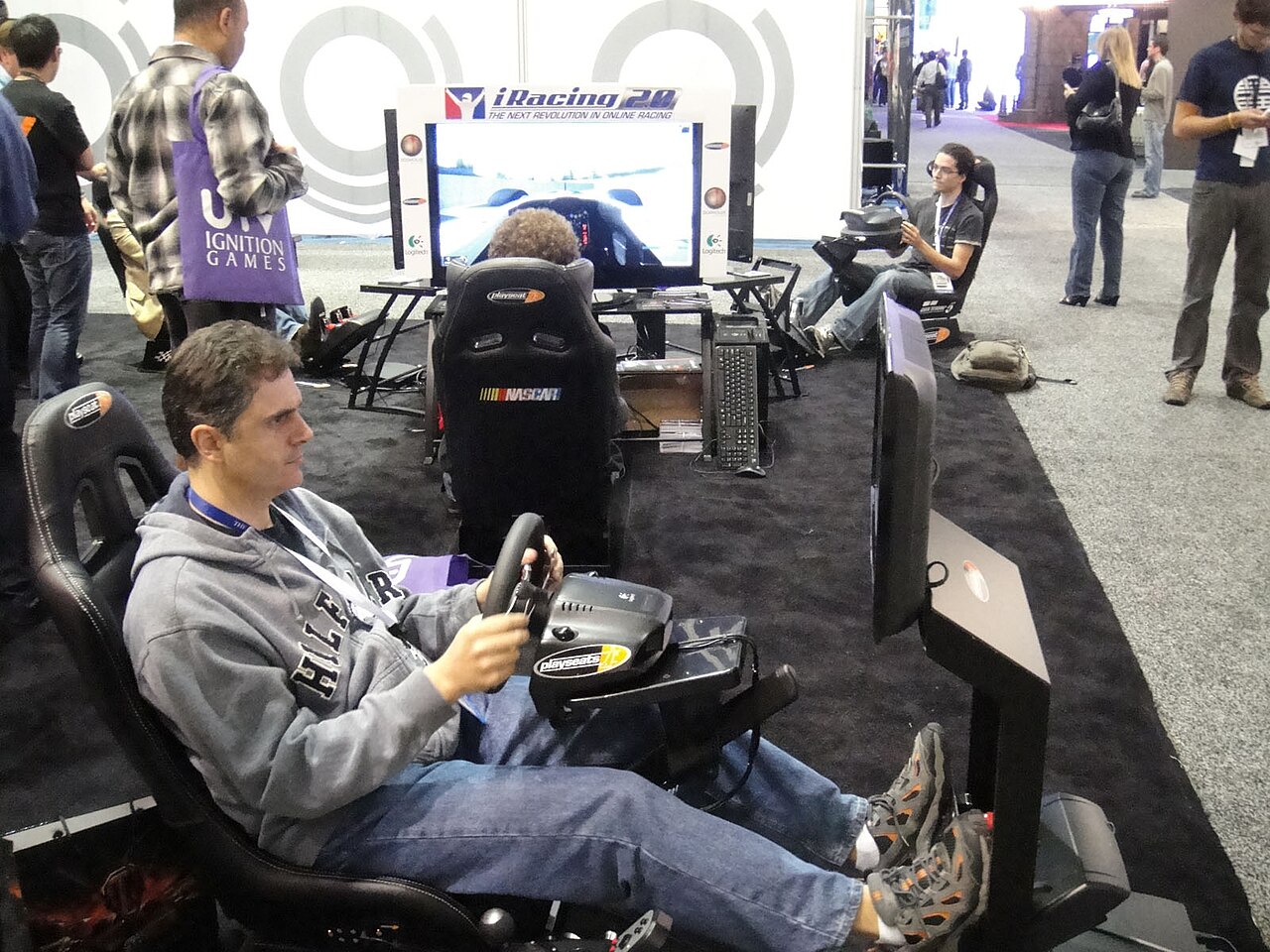
The broader ecosystem surrounding racing video games extends well beyond a single monolithic category. Related entries in the reference material point to highly specialized subgenres tied to specific motorsport disciplines, including Formula One video games and titles centered on V8 Supercars. The existence of these dedicated categories indicates that certain racing series attract enough cultural and commercial weight to justify their own distinct lists, separate from the general vehicle racing compilation. Additionally, the term 'sim racing' appears as a closely related but conceptually distinct field, suggesting a meaningful divide between arcade-style or entertainment-focused racing titles and those built around high-fidelity simulation of driving physics, track behavior, and vehicle mechanics. This layered taxonomy reveals that what a casual observer might call 'racing games' is actually a spectrum, ranging from accessible, fast-paced competition to deeply technical simulation experiences, with the general racing video game category serving as the umbrella under which all these specialized expressions reside.
Ongoing Development and the Unreleased Pipeline
Perhaps the most telling structural element of the racing video game list is the inclusion of a dedicated 'Unreleased' section. The very existence of this category signals that, at the time the list was compiled, there were racing titles actively in development that had not yet reached players. This is a small but significant detail, because it confirms that the genre was not a historical artifact frozen in the past but a living, evolving space with a forward-looking pipeline of new projects. The fact that these unreleased entries are tracked and catalogued alongside decades of shipped titles suggests that the community and the industry treat upcoming racing games as part of the genre's ongoing narrative, worthy of documentation even before public release. Combined with the genre's continuous presence from the 1970s through the 2020s, the Unreleased section paints a picture of a category that shows no signs of creative exhaustion, with developers continuing to explore new approaches to the fundamental appeal of digital speed and competition.
Gallery



Frequently Asked Questions
What is a racing video game?
A racing video game is a genre in which the player takes part in a driving competition, set either in real-world racing leagues or in entirely fantastical environments. Titles in the genre range from realistic simulations to fast-paced arcade experiences.
What are the main sub-genres of racing video games?
The genre broadly splits into realistic racing simulations and arcade-style racing, with kart racing emerging in the 1990s as a popular offshoot of the latter. Some racing titles also overlap with the wider sports video game category.
When did racing video games first appear?
The earliest known precursors were electro-mechanical driving cabinets dating back to 1941, well before digital video games existed. These physical machines established the core idea of competitive driving that later translated into electronic formats.
What's the difference between sim and arcade racing games?
Simulation racing focuses on replicating realistic vehicle physics, handling, and track conditions, while arcade racing prioritizes speed, fun, and accessibility over mechanical accuracy. Most titles in the genre land somewhere along this spectrum rather than at a strict extreme.
What is kart racing in video games?
Kart racing is a sub-genre of arcade racing that gained popularity in the 1990s, typically featuring small colorful vehicles, power-ups, and playful track design. It occupies the lighthearted, accessible end of the racing genre's spectrum.
More in Racing video games 1-24
Spotted an error? Know more?
Reader corrections go straight into our review queue. Suggest an edit · How this site is sourced