Inferior and superior planets
Terms distinguishing planets by orbit size relative to Earth.

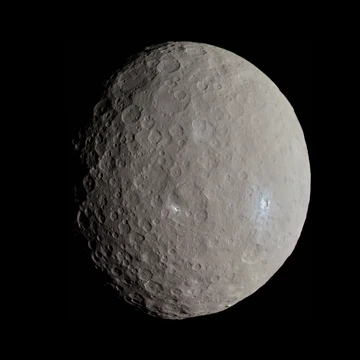
In the Solar System, a planet is called inferior or interior relative to another if its orbit is closer to the Sun than the other planet’s orbit. The planet with the larger orbit is then called superior. From Earth’s perspective—where these terms first came into use—the inferior planets are Mercury and Venus, while the superior planets are Mars, Jupiter, Saturn, Uranus, and Neptune. Most dwarf planets, such as Ceres and Pluto, along with the majority of asteroids, are considered superior because their orbits lie beyond Earth’s.
Historically, these labels originated in Claudius Ptolemy’s geocentric system. He classified Mercury and Venus as inferior because their epicycles stayed aligned with the Sun and Earth, and Mars, Jupiter, and Saturn as superior because they did not. In the 16th century, Copernicus, who rejected Ptolemy’s Earth-centered model, redefined the terms to describe a planet’s orbital size relative to Earth’s orbit.
When Earth is the reference point, “inferior planet” refers to Mercury and Venus, which orbit closer to the Sun. “Superior planet” refers to Mars, Jupiter, Saturn, Uranus, and Neptune (the last two were added later), which orbit farther from the Sun. The terms can also be used more broadly; for instance, Earth is an inferior planet relative to Mars.
Today, “inferior planet” is the preferred term among astronomers. These categories differ from “inner planet” and “outer planet,” which separate planets inside the asteroid belt from those outside. “Inferior planet” is also distinct from “minor planet” or “dwarf planet,” and “superior planet” is not the same as “gas giant.”
- Inferior planets relative to earth
- Mercury and Venus
- Superior planets relative to earth
- Mars, Jupiter, Saturn, Uranus, Neptune
- Original geocentric inferior planets
- Mercury and Venus
- Original geocentric superior planets
- Mars, Jupiter, Saturn
- Later added superior planets
- Uranus, Neptune
Lore & Background
These terms were originally used in the geocentric cosmology of Claudius Ptolemy to differentiate as inferior those planets (Mercury and Venus) whose epicycle remained co-linear with the Earth and Sun, and as superior those planets (Mars, Jupiter, and Saturn) that did not. In the 16th century, the terms were modified by Copernicus, who rejected Ptolemy's geocentric model, to distinguish a planet's orbit's size in relation to the Earth's.
When Earth is stated or assumed to be the reference point, 'inferior planet' refers to Mercury and Venus, which are closer to the Sun than Earth is. 'Superior planet' refers to Mars, Jupiter, Saturn, Uranus, and Neptune (the latter two added later), which are further from the Sun than Earth is. The terms are sometimes used more generally; for example, Earth is an inferior planet relative to Mars.
Inferior planet now seems to be the preferred term for astronomers. Inferior/interior and superior are different from the terms inner planet and outer planet, which designate those planets that lie inside the asteroid belt and those that lie outside it, respectively. Inferior planet is also different from minor planet or dwarf planet. Superior planet is also different from gas giant.
Reader's Guide
The terms inferior and superior planets have historical significance rooted in Ptolemy's geocentric cosmology, where they described planets whose epicycles either remained co-linear with Earth and Sun (inferior) or did not (superior). Copernicus later redefined them based on orbit size relative to Earth, a shift that marked a key development in heliocentric thinking. In modern astronomy, these terms remain useful for describing orbital positions relative to Earth: Mercury and Venus are always inferior, while Mars through Neptune are superior. The article notes that 'inferior planet' is now the preferred term among astronomers. Importantly, these classifications are distinct from inner/outer planets (divided by the asteroid belt), minor planets, dwarf planets, and gas giants. The terms also apply generally—Earth itself can be considered inferior relative to Mars. This framework helps clarify orbital relationships without conflating them with other planetary categories.
Did You Know?
- In the reference frame of Earth, the inferior planets are Mercury and Venus.
- The terms were originally used in Ptolemy's geocentric cosmology.
- Copernicus modified the terms in the 16th century to refer to orbit size relative to Earth.
The Reference Frame and Planetary Classification
In the architecture of our Solar System, the labels inferior and superior carry no judgment about a planet's quality or importance. They describe a purely geometric relationship: a planet is called inferior, or interior, when its orbital path around the Sun sits inside the orbital path of another planet. The planet whose orbit encloses the other is then termed superior. When astronomers anchor this comparison to Earth, the classification falls neatly into two groups. Mercury and Venus, both orbiting closer to the Sun than our home world, are the inferior planets. Mars, Jupiter, Saturn, Uranus, and Neptune all trace orbits beyond Earth's and therefore qualify as superior. The framework does not stop at the eight major planets. Dwarf planets such as Ceres and Pluto, along with the vast majority of asteroids, find themselves on the superior side of the ledger simply because their orbits lie outside Earth's. This makes the classification both elegant in its simplicity and remarkably broad in its reach, encompassing bodies far beyond the familiar planetary lineup.
From Ptolemy to Copernicus: A Shift in Meaning
The vocabulary of inferior and superior planets was not born with modern astronomy. It traces its roots to the geocentric cosmology of Claudius Ptolemy, whose model placed Earth at the center of all celestial motion. Within Ptolemy's framework, the distinction was mechanical rather than orbital. Mercury and Venus were labeled inferior because their epicycles stayed aligned along the line connecting Earth and the Sun. Mars, Jupiter, and Saturn, whose epicycles could swing to the far side of the Sun, were designated superior. The meaning of these labels underwent a fundamental transformation in the sixteenth century when Nicolaus Copernicus dismantled the geocentric picture. By placing the Sun at the center and redefining planetary motion in heliocentric terms, Copernicus repurposed the same two words to describe something simpler and more geometric: whether a planet's orbit is smaller or larger than Earth's. The words survived the revolution; their definitions did not, and the modern usage we recognize today is a direct inheritance of that Copernician reworking.
Navigating a Crowded Lexicon of Planetary Terms
One of the most common sources of confusion in popular astronomy is the overlap between inferior and superior on one hand, and inner and outer on the other. These are distinct classifications with different criteria. Inner planets are those whose orbits lie inside the asteroid belt; outer planets are those beyond it. Inferior and superior, by contrast, are defined strictly relative to Earth's orbital position, regardless of where the asteroid belt happens to sit. The terminology also needs to be kept separate from other categories entirely. Calling a body an inferior planet is not the same as calling it a minor planet or a dwarf planet, and labeling a body superior does not automatically make it a gas giant. The distinctions matter because they answer different questions about a body's place in the Solar System. Among professionals, the phrasing inferior planet appears to have gained ground as the preferred term, suggesting a gradual standardization in how the astronomical community communicates these relational ideas. The vocabulary, in other words, is still settling into its modern form.
A Classification That Moves With the Observer
Perhaps the most intellectually interesting feature of the inferior-superior distinction is its complete relativity. The labels are not fixed properties of a planet; they are relational descriptors that change depending on which body you choose as your reference point. In the standard Earth-centered usage, Venus is inferior and Mars is superior. But if you shift your vantage point to Mars, the roles reverse: Earth now occupies the inferior position relative to Mars, while Mars becomes the superior body. This flexibility means the same planet can wear either label in different contexts. The classification also stretches beyond the traditional planetary lineup. Uranus and Neptune were added to the superior list as they were discovered and incorporated into the model, and the logic extends further still to dwarf planets and asteroids, which are overwhelmingly superior simply because their orbits sit outside Earth's. The system is, in essence, a flexible relational language rather than a rigid taxonomy.
More in Planets and Dwarf Planets 1-24
Spotted an error? Know more?
Reader corrections go straight into our review queue. Suggest an edit · How this site is sourced