Promethium
A rare, radioactive lanthanide with no stable isotopes.
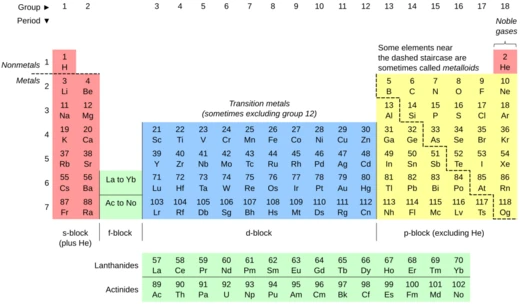
Promethium (symbol Pm, atomic number 61) is a synthetic element whose every isotope is radioactive. It is exceptionally scarce, with only about 500 to 600 grams present naturally in the Earth’s crust at any moment. Alongside technetium, it is one of just two radioactive elements whose immediate neighbors in the periodic table both have stable forms. A member of the lanthanide series, promethium exhibits a single stable oxidation state: +3.
The existence of an element between neodymium (60) and samarium (62) was first suggested in 1902 by Bohuslav Brauner. Henry Moseley confirmed this gap in 1914 after measuring the atomic numbers of all known elements. Two groups—one Italian, one American—claimed to have isolated element 61 in 1926, but both discoveries were quickly disproven. In 1938, a nuclear experiment at Ohio State University produced radioactive nuclides that were clearly not isotopes of neodymium or samarium, but chemical proof of element 61 was lacking, and the work received little recognition. Promethium was finally produced and identified in 1945 at Oak Ridge National Laboratory, where researchers separated and analyzed fission products from uranium fuel irradiated in a graphite reactor. The discoverers proposed the name “Prometheum” (later respelled), after the Titan Prometheus, who stole fire from Mount Olympus for humanity—a name meant to symbolize “both the daring and the possible misuse of mankind’s intellect.” A sample of the metal itself was not made until 1963.
Natural promethium arises from two sources: rare alpha decays of europium-151, which yield promethium-147, and spontaneous fission of uranium, which produces various isotopes. The most stable isotope is promethium-145, but only promethium-147 has practical uses. Its compounds appear in luminous paint, atomic batteries, and thickness-measurement devices. Because natural promethium is so scarce, it is usually synthesized by bombarding enriched uranium-235 with thermal neutrons, generating promethium-147 as a fission product.
A promethium atom has 61 electrons arranged as [Xe] 4f⁵ 6s². The seven 4f and 6s electrons act as valence electrons. When forming compounds, the atom loses its two outermost electrons and one 4f electron from an open subshell. Among the lanthanides, promethium has the second-largest atomic radius, though it is only slightly larger than those of its neighbors.
- Symbol
- Pm
- Atomic number
- 61
- Category
- Lanthanide
- Discovery year
- 1945
- Discovery location
- Oak Ridge National Laboratory
- Most stable isotope
- Promethium-145 (half-life 17.7 years)
- Primary application isotope
- Promethium-147
Lore & Background
In 1902, Bohuslav Brauner suggested that a then-unknown element existed with properties intermediate between neodymium and samarium. This was confirmed in 1914 by Henry Moseley, who found that atomic number 61 was missing. In 1926, two groups (one Italian and one American) claimed to have isolated element 61, but both discoveries were soon proven false. In 1938, a nuclear experiment at Ohio State University produced radioactive nuclides that were not neodymium or samarium, but lacked chemical proof of element 61. Promethium was first produced and characterized at Oak Ridge National Laboratory in 1945 by separating and analyzing fission products of uranium fuel irradiated in a graphite reactor. The discoverers proposed the name 'Prometheum' (later changed), derived from Prometheus, the Titan who stole fire from Mount Olympus, symbolizing both daring and the possible misuse of intellect. A sample of the metal was made only in 1963.
Reader's Guide
Promethium's significance lies in its unique position as a synthetic element with no stable isotopes, making it a key example of the limits of nuclear stability. Its discovery filled a gap in the periodic table and confirmed theoretical predictions about lanthanide properties. The element's only practical isotope, promethium-147, is used in luminous paint, atomic batteries, and thickness-measurement devices, despite the element's extreme scarcity in nature. Natural promethium arises from rare alpha decays of europium-151 and spontaneous fission of uranium, but it is typically synthesized by bombarding enriched uranium-235 with thermal neutrons. Chemically, promethium behaves like other lanthanides, forming pink or red compounds and a single stable +3 oxidation state. Its study remains incomplete due to its instability, but it has contributed to understanding nuclear fission products and the lanthanide contraction, where promethium is the most notable exception to the general trend of decreasing atomic radii.
Did You Know?
- Promethium is one of only two radioactive elements preceded and succeeded in the periodic table by elements with stable forms.
- The most stable isotope, promethium-145, has a half-life of 17.7 years and is the only promethium isotope with experimentally observed alpha decay.
- Natural promethium is extremely scarce, with only about 500–600 grams present in the Earth's crust at any given time.
- The element's name was originally proposed as 'Prometheum', derived from the Titan Prometheus.
More in Periodic Table & Elements 1-21
Spotted an error? Know more?
Reader corrections go straight into our review queue. Suggest an edit · How this site is sourced