Einsteinium
Synthetic element discovered in hydrogen bomb debris.

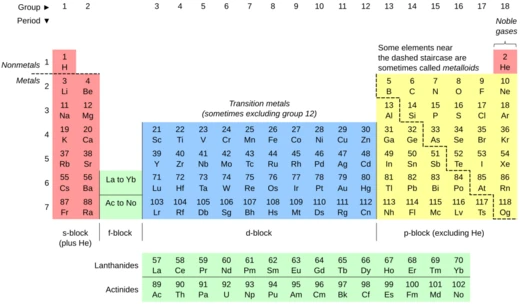
Einsteinium is a synthetic element, symbol Es and atomic number 99, belonging to the actinide series and ranking as the seventh transuranium element. It was first identified in debris from the 1952 Ivy Mike hydrogen bomb test. The most common isotope, einsteinium-253, has a half-life of 20.47 days and is produced artificially—about one milligram per year—through the decay of californium-253 in specialized high-power nuclear reactors, followed by a complex separation process. Other isotopes are synthesized in much smaller amounts by bombarding heavy actinides with light ions. Because of the tiny quantities produced and the short half-life of its main isotope, einsteinium has no practical applications beyond basic scientific research; notably, it was used in 1955 to create the first 17 atoms of mendelevium.
A soft, silvery, paramagnetic metal, einsteinium exhibits typical late-actinide chemistry, favoring the +3 oxidation state, though the +2 state is also possible, especially in solids. The high radioactivity of einsteinium-253 causes a visible glow and rapidly damages its crystalline metal lattice, releasing about 1,000 watts of heat per gram. Studying its properties is challenging because it decays to berkelium-249 and then californium-249 at roughly 3% per day. The longest-lived isotope, einsteinium-252 (half-life 471.7 days), would be better for physical studies, but it is far harder to produce and available only in minute quantities. Einsteinium is the heaviest element that has been observed in macroscopic quantities in pure form, as einsteinium-253. Like all synthetic transuranium elements, its isotopes are highly radioactive and dangerous to health if ingested.
**History**
Einsteinium was first identified in December 1952 by Albert Ghiorso and colleagues at the University of California, Berkeley, working with Argonne and Los Alamos National Laboratories, in fallout from the Ivy Mike nuclear test on November 1, 1952, at Enewetak Atoll. Initial analysis of the debris revealed a new plutonium isotope, plutonium-244, which could only form through uranium-238 absorbing six neutrons and undergoing two beta decays. This showed that multiple neutron absorption, then considered extremely rare, could produce elements heavier than californium. Ghiorso’s team examined filter papers flown through the explosion cloud (the same method used to find plutonium-244). Larger radioactive samples were later isolated from coral debris and sent to the U.S. Using ion exchange with a citric acid/ammonium buffer at elevated temperatures and weak acidity, fewer than 200 atoms of einsteinium were recovered. Element 99, specifically einsteinium-253, was detected by its characteristic 6.6 MeV alpha decay and had a 20.5-day half-life. It formed when uranium-238 captured 15 neutrons and underwent seven beta decays, made possible by the extreme neutron flux during the detonation, which allowed newly created heavy isotopes to absorb neutrons before decaying. Neutron capture raised the mass number without changing the atomic number, while beta decays gradually increased the atomic number.
- discovered_by
- Albert Ghiorso, Glenn T. Seaborg, and co-workers at University of California, Berkeley, in collaboration with Argonne and Los Alamos National Laboratories
Lore & Background
Seaborg, and co-workers at University of California, Berkeley in collaboration with the Argonne and Los Alamos National Laboratories, in the fallout from the Ivy Mike nuclear test. Initial examination of the debris showed the production of a new isotope of plutonium, 244Pu, which indicated that still more neutrons could have been captured by uranium, producing new elements heavier than californium. Ghiorso and co-workers analyzed filter papers flown through the explosion cloud on airplanes. Larger amounts of radioactive material were later isolated from coral debris of the atoll. The separation of suspected new elements was carried out using ion exchange at elevated temperatures; fewer than 200 atoms of einsteinium were recovered. Element 99, einsteinium, and in particular 253Es, could be detected via its characteristic high-energy alpha decay at 6.6 MeV. The discovery of the new elements was initially kept secret on the orders of the U.S.
Reader's Guide
Its discovery provided direct experimental confirmation of the r-process multi-neutron absorption needed to explain the cosmic nucleosynthesis of certain heavy elements in supernovas. As a synthetic actinide, einsteinium is a soft, silvery, paramagnetic metal whose chemistry is typical of late actinides, predominantly exhibiting a +3 oxidation state, though the +2 state is also accessible, particularly in solids. The element is intensely radioactive; its decay visibly glows and releases about 1,000 watts of heat per gram, which rapidly damages its crystalline metal lattice. Studying its properties is complicated by the fact that its most common isotope, einsteinium-253, decays to berkelium-249 and then californium-249 at roughly 3% per day. The longest-lived isotope, einsteinium-254, has a half-life of 471.7 days and would be more suitable for physical research, but it is far more difficult to produce and exists only in minute quantities. Einsteinium is the heaviest element ever observed in macroscopic pure form, as einsteinium-253. Due to the small amounts produced and the short half-life of its most common isotope, there are no practical applications for einsteinium except basic scientific research. Notably, it was used to synthesize the first 17 atoms of mendelevium in 1955. Like all synthetic transuranium elements, isotopes of einsteinium are very radioactive and are considered highly dangerous to health on ingestion.
Frequently Asked Questions
What is Einsteinium?
Einsteinium is a synthetic, radioactive element carrying the symbol Es and atomic number 99. It sits within the actinide series and is counted as the seventh transuranium element.
Who discovered Einsteinium?
Albert Ghiorso, Glenn T. Seaborg, and their co-workers at the University of California, Berkeley made the identification. They collaborated with teams at Argonne and Los Alamos National Laboratories to confirm the new element.
Is Einsteinium found naturally on Earth?
No—Einsteinium is entirely synthetic and has no natural occurrence. It must be created artificially, either as a trace byproduct of nuclear explosions or through sustained reactor irradiation.
More in Periodic Table & Elements 1-21
Spotted an error? Know more?
This is a living reference — every entry is fact-audited, and reader corrections feed straight into our audit queue. Suggest an edit · See this site's audit record