Darmstadtium

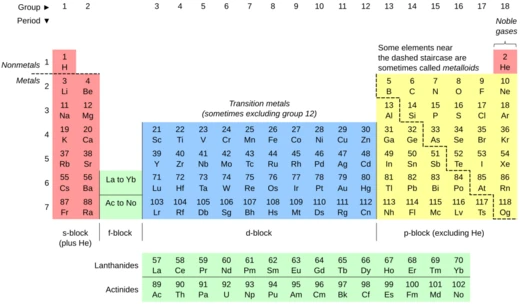
Darmstadtium is a synthetic, highly radioactive chemical element with the symbol Ds and atomic number 110. Its most stable known isotope, darmstadtium-281, has a half-life of about 14 seconds. The element was first created in November 1994 at the GSI Helmholtz Centre for Heavy Ion Research in Darmstadt, Germany, after which it is named. The discovery team, led by Peter Armbruster, Gottfried Münzenberg, and Sigurd Hofmann, produced a single atom of darmstadtium-269 by bombarding a lead-208 target with nickel-62 nuclei. Two more atoms were detected later that month, though a fourth reported atom was later retracted due to fabricated data. The team also synthesized nine atoms of a heavier isotope using nickel-64. Earlier attempts at the Joint Institute for Nuclear Research in Dubna and the Lawrence Berkeley National Laboratory had been inconclusive. In the periodic table, darmstadtium is a d-block transactinide element in period 7 and group 10, but no chemical experiments have yet confirmed it behaves as the heavier homologue to platinum. It is calculated to have properties similar to its lighter group 10 homologues: nickel, palladium, and platinum. The element has no stable or naturally occurring isotopes; eleven radioactive isotopes with atomic masses from 267 to 281 have been reported, though darmstadtium-267 remains unconfirmed. Most decay primarily through alpha decay, with some undergoing spontaneous fission. Heavier isotopes tend to be more stable, and theoretical models predict that the undiscovered isotope darmstadtium-294, with a magic number of 184 neutrons, could have an alpha decay half-life on the order of centuries. The name darmstadtium was officially recommended by IUPAC in August 2003, replacing the systematic placeholder name ununnilium and earlier proposals such as hahnium and becquerelium.
Lore & Background
Darmstadtium is a synthetic, highly radioactive element with the symbol Ds and atomic number 110. Its most stable known isotope, darmstadtium-281, has a half-life of about 14 seconds. As a d-block transactinide, it belongs to period 7 and group 10 of the periodic table, placing it below nickel, palladium, and platinum. Although no chemical experiments have confirmed its behavior, calculations suggest it should resemble these lighter group 10 elements as a heavier homologue and a member of the 6d transition metal series. The element was first created in November 1994 at the GSI Helmholtz Centre for Heavy Ion Research in Darmstadt, Germany, by bombarding a lead-208 target with accelerated nickel-62 nuclei, which produced a single atom of the isotope darmstadtium-269. Two additional atoms were detected later that month. The element was named after the city of Darmstadt, the location of its discovery. All darmstadtium isotopes are unstable and radioactive, with heavier isotopes generally being more stable. Most decay via alpha decay, though some undergo spontaneous fission. The known isotopes have atomic masses ranging from 267 to 281, though darmstadtium-267 remains unconfirmed. Several metastable states have also been reported.
Reader's Guide
Darmstadtium is a synthetic, highly radioactive element with no stable isotopes. Its most stable known form, darmstadtium-281, decays with a half-life of roughly 14 seconds. The element was first created in November 1994 at the GSI Helmholtz Centre for Heavy Ion Research in Darmstadt, Germany, by bombarding a lead-208 target with accelerated nickel-62 nuclei, which produced a single atom of darmstadtium-269. Subsequent experiments using nickel-64 ions yielded nine atoms of another isotope. The discovery was confirmed by the IUPAC/IUPAP Joint Working Party in 2001, granting the GSI team naming rights, and the element was officially named after the city of Darmstadt in 2003. As a d-block transactinide in group 10 of the periodic table, darmstadtium is predicted to behave as a heavier homologue of platinum, nickel, and palladium, though no chemical experiments have yet verified this. Its isotopes decay primarily through alpha emission or spontaneous fission, with half-lives ranging from microseconds to seconds. The heaviest known isotope, darmstadtium-281, is also the most stable, and theoretical models suggest that the undiscovered isotope darmstadtium-294, with a magic number of 184 neutrons, could have an alpha decay half-life on the order of centuries, placing it near a predicted island of stability. Darmstadtium’s synthesis and study push the boundaries of nuclear physics and chemistry, testing models of superheavy element stability and the limits of the periodic table.
Frequently Asked Questions
Where does Darmstadtium sit on the periodic table?
It occupies group 10 in the 7th period, directly below platinum. Despite that position, no chemical experiments have yet confirmed it truly behaves as a heavier platinum homologue.
Why is it called Darmstadtium?
The name honors the city of Darmstadt in Germany, where the GSI facility achieved the element's first synthesis. This follows the long-standing convention of naming new elements after the location or discoverers involved.
More in Periodic Table & Elements 1-21
Spotted an error? Know more?
This is a living reference — every entry is fact-audited, and reader corrections feed straight into our audit queue. Suggest an edit · See this site's audit record