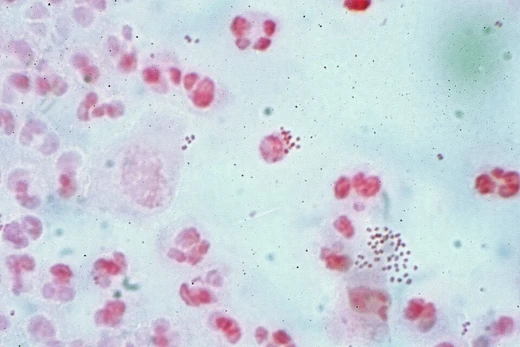
Listeria monocytogenes
A virulent foodborne pathogen causing listeriosis, often fatal in high-risk groups.

Listeria monocytogenes is the bacterial species responsible for the disease listeriosis. This pathogen is Gram-positive, rod-shaped, and facultatively anaerobic, meaning it can thrive in both oxygen-rich and oxygen-poor environments. It is highly virulent and considered one of the most dangerous foodborne pathogens, with fatality rates in high-risk individuals reaching twenty to thirty percent. In the European Union, listeriosis has been on an upward trend since 2008, with 2,161 confirmed cases and 210 deaths reported in 2014—a sixteen percent increase from the previous year. Its mortality rate in the EU exceeds that of other common foodborne pathogens. In the United States, it causes an estimated 1,600 illnesses and 260 deaths annually, ranking third in total deaths among bacterial foodborne pathogens, with a fatality rate surpassing even that of *Clostridium botulinum*.
The bacterium was first described in 1924 by E.G.D. Murray following six sudden deaths in young rabbits, and was initially named *Bacterium monocytogenes* before Harvey Pirie reclassified it under the genus *Listeria* in 1940. It was not recognized as a significant cause of neonatal infection until 1952, and its link to foodborne illness was only established in 1981 during a Canadian outbreak linked to contaminated coleslaw. *L. monocytogenes* can grow at temperatures as low as 0 °C, allowing it to multiply under refrigeration. It is motile via flagella at 30 °C and below but not at 37 °C; inside host cells, it moves by polymerizing actin into comet tails. While up to ten percent of human gastrointestinal tracts may carry the bacterium, clinical disease is more frequently seen in ruminants. Pregnant women are advised to avoid soft cheeses due to the risk of neonatal meningitis, for which *L. monocytogenes* is the third most common cause. Of its 13 serotypes, over ninety percent of human infections are caused by serotypes 1/2a, 1/2b, and 4b, with 4b responsible for all major foodborne outbreaks since the 1980s.
- field
- Bacteriology, Foodborne Pathogens
- known_for
- Causing listeriosis, a serious foodborne infection with high mortality in high-risk individuals
- gram_stain
- Gram-positive
- motility
- Motile via flagella at 30°C and below; moves within eukaryotic cells by actin polymerization
- serotypes
- 13 serotypes; 90% of human isolates are serotypes 1/2a, 1/2b, and 4b
Lore & Background
Listeria monocytogenes is a Gram-positive, rod-shaped bacterium that does not form spores and is facultatively anaerobic, meaning it can grow with or without oxygen. It is motile at temperatures of 30°C and below due to flagella, but at body temperature (37°C) it does not synthesize flagella and instead moves within host cells by using explosive polymerization of actin filaments to form comet tails. The bacterium is catalase-positive and oxidase-negative, and it produces a beta hemolysin that destroys red blood cells. Under a light microscope, it displays a characteristic tumbling motion. Its defining ability to grow at temperatures as low as 0°C allows it to multiply in refrigerated foods, making it a persistent hazard. The species is one of the most virulent foodborne pathogens and can survive and reproduce inside host cells. It causes the infection listeriosis, which is particularly dangerous for high-risk individuals, with a fatality rate of 20 to 30 percent in such cases. In the European Union, listeriosis has been on an upward trend since 2008, with 2,161 confirmed cases and 210 deaths in 2014. In the United States, it causes an estimated 1,600 illnesses and 260 deaths annually, ranking third in total deaths among foodborne bacterial pathogens. The bacterium is named after Joseph Lister. It is found in soil and can colonize up to 10% of human gastrointestinal tracts. Clinical disease is more frequently recognized in animals, especially as meningoencephalitis in ruminants. In humans, it is a common cause of meningitis in newborns, often acquired from the mother during birth, which is why pregnant women are advised to avoid soft cheeses that may harbor the bacterium. The species has 13 serotypes, but over 90% of human infections are caused by serotypes 1/2a, 1/2b, and 4b, with serotype 4b responsible for 33 to 35% of sporadic cases and all major foodborne outbreaks in Europe and North America since the 1980s.
Reader's Guide
Listeria monocytogenes is a significant pathogen due to its high virulence and ability to cause severe disease, particularly in pregnant women, newborns, and immunocompromised individuals. Its ability to grow at refrigeration temperatures (as low as 0°C) makes it a persistent hazard in the food industry. The bacterium's pathogenesis involves survival and multiplication in phagocytic host cells, and it can infect the brain, spinal-cord membranes, and bloodstream. Pregnant women are often advised to avoid soft cheeses that may be contaminated. The three serotypes 1/2a, 1/2b, and 4b account for over 90% of human isolates, with serotype 4b responsible for 33 to 35% of sporadic cases and all major foodborne outbreaks in Europe and North America since the 1980s.
Did You Know?
- Listeria monocytogenes can grow at temperatures as low as 0°C, allowing multiplication in refrigerated foods.
- It is the third most common cause of meningitis in newborns.
- The bacterium moves within host cells by explosive polymerization of actin filaments, forming comet tails.
- Up to 10% of human gastrointestinal tracts may be colonized by L. monocytogenes.
Frequently Asked Questions
What are Listeria monocytogenes's powers and abilities?
It can grow and replicate inside host cells, propelling itself through eukaryotic cytoplasm via actin polymerization. At 30 °C and below it also swims freely using flagella, and its facultative anaerobic metabolism lets it thrive with or without oxygen.
How does Listeria monocytogenes's story end?
In high-risk groups—pregnant women, neonates, the elderly, and immunocompromised patients—twenty to thirty percent of foodborne listeriosis cases can be fatal. In otherwise healthy adults the infection is typically milder but still requires prompt medical treatment.
Why is Listeria monocytogenes so important in the canon?
It is regarded as one of the most virulent foodborne pathogens in bacteriology, largely because it can multiply at refrigeration temperatures and invade cells that most other foodborne bacteria cannot. This makes it a cornerstone figure in food-safety research and public-health policy.
More in Pathogenic Bacteria 1-20
Spotted an error? Know more?
This is a living reference — every entry is fact-audited, and reader corrections feed straight into our audit queue. Suggest an edit · See this site's audit record