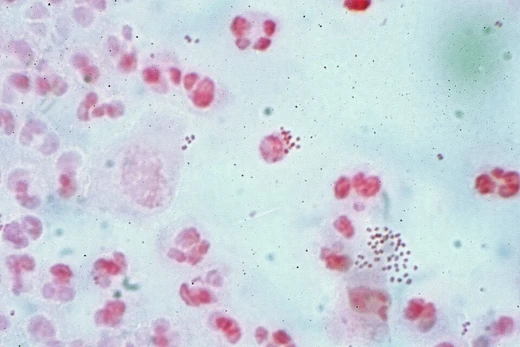
Campylobacter jejuni
A helical bacterium causing widespread foodborne illness worldwide.

Campylobacter jejuni is a species of pathogenic bacteria that is a leading cause of bacterial gastroenteritis worldwide. It is commonly associated with poultry and animal feces, and is one of the most frequent causes of food poisoning in Europe and the United States, with most cases occurring as isolated events rather than mass outbreaks. The bacterium is a helical-shaped, Gram-negative, microaerophilic, motile organism with a single flagellum at one or both poles; it does not form spores and does not ferment sugars. When exposed to atmospheric oxygen, it can transform into a coccal form. Its name derives from Greek roots meaning "curved rod," and it was originally classified under the genus *Vibrio* before being reclassified into *Campylobacter* in 1963 due to its low guanine-cytosine content, non-fermentative metabolism, and microaerophilic growth requirements. The first well-documented outbreak occurred in 1938 when contaminated milk caused diarrhea among 355 inmates in two Illinois institutions. *C. jejuni* was first isolated from the human small intestine in the 1970s, though symptoms had been noted since the early 20th century. By 1996, U.S. agencies identified it as responsible for over 40% of laboratory-confirmed bacterial gastroenteritis. Active surveillance in the U.S. records about 20 diagnosed cases per 100,000 people annually, though the CDC estimates 1.5 million total infections each year due to underdiagnosis. In 2018, the European Food Safety Authority reported 246,571 cases, estimating roughly nine million annual infections across the European Union. In Africa, Asia, and the Middle East, infections are endemic. While rarely life-threatening, campylobacteriosis can be severely debilitating and has been linked to Guillain–Barré syndrome, which develops two to three weeks after infection in about 0.3 per 1,000 cases—roughly 100 times the background rate. Reactive arthritis, particularly in individuals with the HLA-B27 genetic marker, may also occur weeks after infection. Metabolically, *C. jejuni* cannot use sugars as a carbon source due to lacking glucokinase and 6-phosphofructokinase; it primarily uses amino acids such as serine, aspartate, asparagine, and glutamate, obtained from the host or gut microbes. It can also utilize acetate and lactate when other carbon sources are exhausted. Its metabolic pathways include the TCA cycle, a non-oxida
- first_well_recorded_incident
- 1970s (first confirmed isolation from human stool samples)
Lore & Background
Campylobacter jejuni is a Gram-negative, microaerophilic, non-spore-forming bacterium with a distinctive helical or curved-rod shape, from which the genus name *Campylobacter*—meaning “curved rod”—is derived. It is motile, possessing a single flagellum at one or both poles, and is oxidase-positive. The organism grows optimally at temperatures between 37 and 42 °C and does not ferment carbohydrates. When exposed to atmospheric oxygen, it can transform into a coccal form. Its natural range is global, with infections considered endemic in Africa, Asia, and the Middle East. The bacterium is commonly associated with poultry and is frequently found in animal feces, making it a widespread contaminant. A defining characteristic is its inability to use sugars for energy; instead, it relies on amino acids—primarily serine, aspartate, asparagine, and glutamate—as carbon sources, metabolizing them through the TCA cycle, gluconeogenesis, and fatty acid synthesis. It can also utilize acetate and lactate when other carbon sources are depleted. First identified in human small intestines in the 1970s, *C. jejuni* was originally classified as *Vibrio jejuni* before being reclassified into the *Campylobacter* genus in 1963 due to its low guanine-cytosine content, non-fermentative metabolism, and microaerophilic growth requirements. It is now recognized as one of the most common causes of bacterial gastroenteritis worldwide, often linked to subsequent Guillain–Barré syndrome and reactive arthritis in genetically susceptible individuals.
Reader's Guide
Campylobacter jejuni is a helical-shaped, Gram-negative, microaerophilic bacterium that grows optimally at 37 to 42 °C and can change into a coccal form when exposed to atmospheric oxygen. It is unable to use sugars as a carbon source, relying instead on amino acids such as serine, aspartate, asparagine, and glutamate for growth. Its metabolic pathways include the TCA cycle, gluconeogenesis, and fatty acid synthesis. The bacterium can use multiple electron donors and acceptors, including oxygen, nitrate, nitrite, and fumarate, allowing it to survive in oxygen-limited environments. Infection with C. jejuni typically causes campylobacteriosis, characterized by enteritis with abdominal pain, diarrhea (often bloody), fever, and malaise, usually developing two to five days after exposure and lasting about seven days. The disease is usually self-limiting but responds to antibiotics. Reactive arthritis is another possible complication, particularly in individuals with the HLA-B27 genetic marker.
Did You Know?
- Campylobacter means 'curved rod', from Greek kampylos (curved) and baktron (rod).
- C. jejuni lacks glucokinase and 6-phosphofructokinase, preventing it from using sugars for energy.
Global Epidemiology and Surveillance
C. jejuni stands as one of the leading bacterial culprits behind foodborne illness across the Western world. The CDC projects approximately 1.5 million human infections each year domestically. A defining feature of this pathogen is that the overwhelming majority of cases present as scattered, individual incidents rather than large-scale outbreaks. Beyond these well-monitored regions, evidence points to endemic transmission in Africa, Asia, and the Middle East, where surveillance infrastructure is thinner and the true scale of infection likely remains undercounted. Poultry and animal feces serve as the principal reservoirs, linking the bacterium directly to agricultural and food-handling practices worldwide.
Clinical Presentation and Post-Infectious Complications
While most episodes of campylobacteriosis resolve without lasting harm, the infection can be severely debilitating. The bacterium is one of the world's most frequent causes of human gastroenteritis, and although fatalities are rare, the acute illness can be protracted. Two post-infectious syndromes demand particular attention. Guillain–Barré syndrome, an autoimmune attack on peripheral nerves, typically emerges two to three weeks after the initial gastrointestinal illness. Individuals who have recently been infected with C. A second complication, reactive arthritis, may surface several weeks after the infection and is strongly tied to a specific genetic marker: the human leukocyte antigen B27. Persons carrying this allele are markedly more susceptible to developing the joint inflammation that follows campylobacter infection. Together, these sequelae underscore that the clinical significance of C. jejuni extends well beyond the acute diarrheal phase.
Taxonomic History and Morphological Identity
The bacterium now known as C. jejuni was long misclassified. That year, Seabald and Vernon argued for a new genus, Campylobacter, grounded in three distinguishing features: unusually low guanine and cytosine content in its nucleic acids, a non-fermentative metabolic profile, and an obligate requirement for reduced oxygen tension during growth. The genus name is a direct translation from Greek—kampylos meaning curved and baktron meaning rod—capturing the organism's characteristic helical morphology. Microscopically, C. jejuni appears as a Gram-negative, non-spore-forming, motile rod bearing a single polar flagellum at one or both ends. It is oxidase-positive, does not ferment carbohydrates, and thrives best between 37 and 42 degrees Celsius. A striking adaptive response occurs when cells encounter atmospheric oxygen: they abandon their curved-rod shape and adopt a spherical, coccoid form.
Metabolic Strategy and Amino Acid Dependence
C. jejuni occupies a metabolic niche unlike most gut bacteria: it cannot ferment sugars. The organism lacks glucokinase and 6-phosphofructokinase, enzymes essential for the classic glycolytic pathway, rendering carbohydrates essentially unusable as a carbon source. Instead, it depends almost entirely on amino acids, with a clear hierarchy of preference: serine, aspartate, asparagine, and glutamate, in that order. Serine is the single most critical input; the SdaC transporter brings it into the cell, where the SdaA dehydratase cleaves it to pyruvate. That pyruvate then feeds the tricarboxylic acid cycle, generating oxaloacetate intermediates that can be channeled into gluconeogenesis to produce the carbohydrates needed for virulence factor assembly, or converted to acetyl-CoA for fatty acid synthesis. Aspartate and glutamate enter via Peb1A transporters and are funneled into the TCA cycle through deamination and transamination reactions. When these preferred amino acids are exhausted, some strains can turn to proline, acetate, or lactate as fallback carbon sources. Energy generation relies on microaerophilic respiration through cytochrome c and quinol terminal oxidases, supplemented by substrate-level phosphorylation during acetate production.
Frequently Asked Questions
Who is Campylobacter jejuni?
Campylobacter jejuni is a helical-shaped bacterium that sits near the top of the list for bacterial gastroenteritis worldwide. It is most frequently linked to poultry and animal feces, making it a staple culprit behind food-poisoning cases in Europe and the United States.
What are Campylobacter jejuni's powers or role?
Its signature 'ability' is provoking acute gastroenteritis—diarrhea, fever, and cramping—after a person ingests contaminated food or water. Unlike some outbreak pathogens, most of its cases show up as isolated, self-limiting episodes rather than large-scale mass events.
How does Campylobacter jejuni's story end?
In the majority of healthy hosts, the immune system clears the infection within one to two weeks and the episode simply resolves. When complications arise or symptoms are severe, targeted antibiotic therapy can eliminate the pathogen, though rare post-infectious sequelae such as Guillain-Barré syndrome can persist.
Why is Campylobacter jejuni important?
It consistently ranks among the most common causes of foodborne illness in the U.S. and Europe, accounting for millions of cases each year. That sheer volume keeps it at the center of public-health surveillance, poultry-industry safety standards, and antimicrobial-resistance monitoring.
When did Campylobacter jejuni first enter the story?
The first well-documented isolations from human stool samples came in the 1970s, when researchers confirmed it as a genuine human pathogen. Prior to that, the organism had been noted in animal intestines, but its direct link to human disease had not yet been established.
More in Pathogenic Bacteria 1-20
Spotted an error? Know more?
This is a living reference — every entry is fact-audited, and reader corrections feed straight into our audit queue. Suggest an edit · See this site's audit record