Borrelia
Genus of spirochete bacteria causing Lyme disease and relapsing fever.

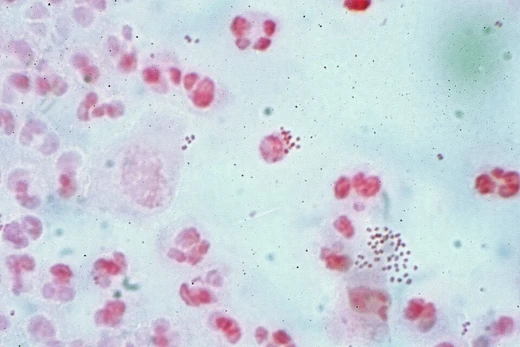
Borrelia is a genus of spiral-shaped bacteria belonging to the spirochete group. Some species cause Lyme disease (also known as Lyme borreliosis), which is a zoonotic illness spread to humans by ticks. Other species are responsible for relapsing fever, transmitted by either ticks or lice, depending on the particular bacterium. The genus was named after French biologist Amédée Borrel, who first showed that *Borrelia anserina* was distinct from *Treponema pallidum*, another spirochete. These bacteria are visible only under dark-field microscopy, where they appear white against a dark background, and they are grown in Barbour-Stoenner-Kelly medium.
Of the 52 known *Borrelia* species, 20 belong to the Lyme disease group (with three more proposed), 29 are part of the relapsing fever group, and two form a genetically distinct third group typically found in reptiles. A proposal exists to split the Lyme disease group into a separate genus called *Borreliella*, based on genetic differences, but this change has not gained wide acceptance. The bacteria use hard ticks, soft ticks, and lice as vectors. Diagnosis in humans involves two-tiered serological testing, which includes immunoassays and immunoblotting. A few species, such as "Candidatus Borrelia mahuryensis," show intermediate genetic features between Lyme disease and relapsing fever types.
Biologically, *Borrelia* species belong to the family Spirochaetaceae and have the characteristic spiral shape. Most are obligate anaerobes, though some can tolerate oxygen. Their outer membrane contains a substance similar to lipopolysaccharides, an inner membrane, and a peptidoglycan layer in the periplasmic space, which makes them Gram-negative, though this is not easily seen with Gram staining. They are typically 20–30 micrometers long and 0.2–0.3 micrometers wide. Movement comes from axial filaments called endoflagella, which rotate in the periplasmic space between the outer membrane and peptidoglycan, propelling the bacterium forward in a corkscrew motion. The outer membrane also contains outer surface proteins (Osp) that contribute to virulence.
The taxonomy includes many species, some with uncertain placement. Among these are "Ca. Borrelia africana," "Ca. Borrelia algerica," "Ca. Borrelia aligera," "Ca. Borrelia amblyommatis," *Borrelia baltazardii*, *Borrelia brasiliensis*, "Ca. Borrelia caatinga," *Borrelia caucasica*, "Ca. Borrelia darwini," *Borrelia dugesii*, "Ca. Borrelia fainii," *Borrelia graingeri*, *Borrelia harveyi*, "Ca. Borrelia ibitipocensis," "Ca. Borrelia ivorensis," "Ca. Borrelia johnsonii," "Ca. Borrelia kalaharica," *Borrelia latyschewii*, "Ca. Borrelia limariensis," "Borrelia lonestari," "Ca. Borrelia mahuryensis," *Borrelia mazzottii*, "Borrelia merionesi," "Borrelia microti," "Ca. Borrelia mimona," "Ca. Borrelia mvumii," "Borrelia myelophthora," "Borrelia nietonii," "Ca. Borrelia octodonta," "Ca. Borrelia paulista," "B. rubricentralis," "Ca. B. sibirica," "Ca. Borrelia texasensis," *Borrelia theileri*, *Borrelia tillae*, "B. undatumii," *Borreliella bissettii*, and *Borreliella kurtenbachii*.
Hard ticks of the family Ixodidae are common vectors, and they are the only ticks shown to transmit Lyme disease to humans. Some *Amblyomma* ticks carry "Candidatus Borrelia mahuryensis" in South America. Soft ticks of the genus *Ornithodoros* carry relapsing fever species, while *B. anserina* is carried by the soft tick *Argas*. Inside ticks, the bacteria grow in the midgut and then move to the salivary glands for transmission to a new host. Ticks can also spread bacteria to each other when co-feeding, and a tick can become infected by biting an infected animal. Most human infections occur from nymph-stage ticks, which are small and easily overlooked. The tick usually needs to feed for 36 to 48 hours to successfully transmit the bacteria. Lice that feed on infected humans acquire the bacteria, which multiply in the louse's hemolymph and gut. Transmission to a new human host occurs when the louse is crushed or the bite site is scratched. However, the U.S. Centers for Disease Control and Prevention has reported no credible evidence that lice can carry *Borrelia*.
Of the 52 known *Borrelia* species, 20 belong to the Lyme disease group, and eight of those are known to cause Lyme disease or borreliosis.
- field
- Microbiology
- known_for
- Causing Lyme disease and relapsing fever
- type
- Genus of bacteria
- phylum
- Spirochete
- named_after
- Amédée Borrel
Lore & Background
Borrelia species are members of the family Spirochaetaceae and present the characteristic spirochete spiral shape. Most species are obligate anaerobes, although some are aerotolerant. They have an outer membrane containing a substance similar to lipopolysaccharides, an inner membrane, and a layer of peptidoglycan in a periplasmic space, classifying them as Gram-negative, though this result is not easily visualized using Gram staining. They are typically 20–30 μm long and 0.2–0.3 μm wide. Spirochetes move using axial filaments called endoflagella in their periplasmic space, rotating between the outer membrane and the peptidoglycan layer to propel the bacterium forward in a corkscrew-like motion. The outer membrane contains outer surface proteins (Osp) that play a role in their virulence. Of 52 known species of Borrelia, 20 are members of the Lyme disease group (with an additional 3 proposed), 29 belong to the relapsing fever group, and two are members of a genetically distinct third group typically found in reptiles. A proposal has been made to split the Lyme disease group based on genetic diversity and move them to their own genus, Borelliella, but this change is not widely accepted. A few Borrelia species such as 'Candidatus Borrelia mahuryensis' harbor intermediate genetic features between Lyme disease and relapsing fever Borrelia. Hard ticks of the family Ixodidae are common vectors for Lyme disease Borrelia, but not all Borrelia species are transmitted by hard ticks; relapsing fever Borrelia are transmitted by soft ticks (e.g., Ornithodoros) or lice. Lice that feed on infected humans acquire Borrelia organisms, but the U.S. Centers for Disease Control and Prevention reported that no credible evidence shows that lice can carry Borrelia.
Reader's Guide
Borrelia is significant as the bacterial genus responsible for two major human diseases: Lyme disease and relapsing fever. Lyme disease, caused by species such as Borrelia burgdorferi, Borrelia afzelii, and Borrelia garinii, is a widespread zoonotic illness transmitted by hard ticks. Relapsing fever, caused by species like Borrelia recurrentis and Borrelia hermsii, can be spread by lice or soft ticks and often involves severe bacteremia. The genus comprises 52 known species, with ongoing taxonomic debate about splitting the Lyme disease group into a separate genus, Borelliella. Diagnosis relies on two-tiered serological testing, including immunoassays and immunoblotting, as well as direct culture and polymerase chain reaction. The bacteria's unique spiral shape and periplasmic flagella enable corkscrew-like motility, aiding their transmission and virulence. Understanding Borrelia is critical for public health, as tick-borne diseases continue to emerge globally, and the bacteria's complex interactions with vectors and hosts pose ongoing challenges for prevention and treatment.
Did You Know?
- Borrelia species must be viewed using dark-field microscopy, which makes the cells appear white against a dark background.
- Of 52 known species, 20 belong to the Lyme disease group, 29 to the relapsing fever group, and two to a genetically distinct third group found in reptiles.
- For Lyme disease Borrelia, ticks must have around 36 to 48 hours of contact with a host to successfully transmit the bacteria; however, relapsing fever Borrelia can be transmitted in minutes.
- A proposal to move Lyme disease group species to a new genus, Borelliella, is not widely accepted.
Frequently Asked Questions
What is Borrelia?
Borrelia is a genus of spiral-shaped bacteria belonging to the spirochete phylum, best known in the pathogen community as the causative agent of Lyme disease and relapsing fever.
What are Borrelia's powers or role?
Species within this genus act as the infectious agents behind Lyme borreliosis, a zoonotic vector-borne illness, as well as relapsing fever, with transmission occurring through tick bites or, for certain species, through lice.
How does Borrelia's story end?
In its natural cycle, Borrelia depends on arthropod vectors—ticks for the Lyme disease species and ticks or lice for the relapsing fever species—to move between animal hosts, making these insects essential to the bacterium's ongoing persistence.
Why is Borrelia important?
Borrelia occupies a prominent place in medical microbiology because its members are responsible for two significant human infectious diseases, making the genus a major focus of research, diagnostics, and public-health surveillance.
More in Pathogenic Bacteria 1-20
Spotted an error? Know more?
This is a living reference — every entry is fact-audited, and reader corrections feed straight into our audit queue. Suggest an edit · See this site's audit record