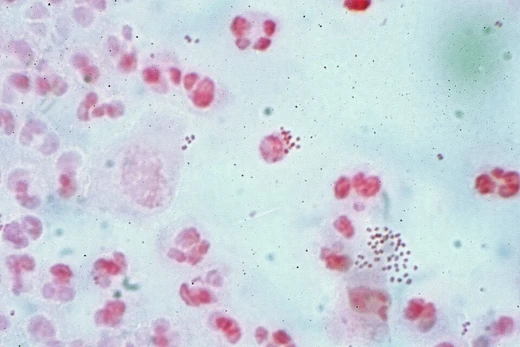
Clostridium tetani
Soil bacterium that causes tetanus via a potent neurotoxin.

Clostridium tetani is a Gram-positive, rod-shaped bacterium that is the causative agent of tetanus. Vegetative cells are typically up to 2.5 μm long and motile, surrounded by flagella. This bacterium is an obligate anaerobe, unable to grow in the presence of oxygen, and thrives at temperatures between 33 and 37 °C. Under unfavorable conditions, it sheds its flagella and forms a single spore at one end of the cell, giving the bacterium a distinctive drumstick or tennis racket shape. These spores are exceptionally resilient, resisting heat, boiling for several minutes, and various antiseptics, allowing them to persist for long periods. They are found globally in soil and within the gastrointestinal tracts of livestock and companion animals.
The species belongs to the genus Clostridium, a large group of over 150 Gram-positive species. It is closely related to other pathogenic species such as C. botulinum and C. perfringens, with its nearest relative being C. cochlearium. Notably, some other Clostridium species, like C. difficile, are more genetically similar to members of other genera than to C. tetani.
When introduced into a deep wound with low oxygen, such as from a puncture or contaminated needle, the spores can germinate. Growing bacteria release the toxins tetanolysin and tetanospasmin upon cell lysis. Tetanospasmin is an extremely potent toxin, with a lethal dose of less than 2.5 nanograms per kilogram of body weight. It spreads through the lymphatic system and bloodstream, entering the nervous system and blocking the release of inhibitory neurotransmitters glycine and GABA at motor nerve endings. This blockade causes widespread motor neuron activation and severe muscle spasms, typically beginning in the jaw (lockjaw) about eight days after infection, then progressing to the abdomen and limbs. The binding of the toxin is irreversible, and spasms can last for weeks. The gene for tetanospasmin is carried on a plasmid; strains lacking this plasmid are non-toxigenic. Treatment involves tetanus immune globulin to neutralize circulating toxin, along with benzodiazepines or muscle relaxants for spasms. Prevention is achieved through the tetanus toxoid vaccine, made by inactivating the toxin with formaldehyde, often combined with diphtheria and pertussis vaccines.
- field
- Microbiology, Bacteriology
- known_for
- Causative agent of tetanus; production of tetanospasmin toxin
Lore & Background
Clostridium tetani is a motile, rod-shaped bacterium that cannot grow in the presence of oxygen. It forms a single spore at one end of the cell, giving it a distinctive drumstick or tennis racket shape. These spores are resistant to heat, antiseptics, and boiling, and can persist for long periods in soil and animal intestines. The bacterium grows best at temperatures between 33 and 37 °C. Vegetative cells are typically up to 0.5 μm wide and 2.5 μm long, and they are motile due to flagella surrounding the body. When exposed to certain conditions, the bacterium sheds its flagella and produces a single spore, usually at one end, creating the characteristic swollen shape. The spores are extremely hardy and are found globally in soil as well as in the gastrointestinal tracts of livestock and companion animals. If introduced into a wound, the spores can germinate in low-oxygen environments, such as deep puncture wounds, and the growing bacteria release a potent toxin called tetanospasmin. This toxin blocks the release of inhibitory neurotransmitters at motor nerve endings, leading to widespread muscle spasms that often begin in the jaw—hence the common name lockjaw—and then spread downward. The toxin’s effects are irreversible once bound to nerve cells. Tetanus can be prevented through vaccination with inactivated tetanus toxoid, commonly given as part of the DPT or DTaP vaccine. The bacterium is susceptible to several antibiotics, though treatment often involves tetanus immune globulin to neutralize circulating toxin. The genome of one strain has been sequenced, containing 2.80 million base pairs and over 2,300 protein-coding genes.
Reader's Guide
Clostridium tetani is significant as the causative agent of tetanus, a severe disease characterized by muscle spasms that often begin in the jaw (lockjaw) and spread downward. The disease occurs when spores enter a wound and germinate in low-oxygen conditions, releasing tetanospasmin. This toxin blocks inhibitory neurotransmitters, leading to uncontrolled motor neuron activation. Tetanus is prevented by vaccination with tetanus toxoid, an inactivated form of the toxin, often given as part of the DPT or DTaP vaccine. Treatment involves tetanus immune globulin and muscle relaxants. The bacterium's genome has been sequenced, and its toxin gene is carried on a plasmid. Historical understanding of tetanus dates back to Hippocrates, with key advances in the late 19th and early 20th centuries, including the development of antitoxin and the toxoid vaccine.
Did You Know?
- Clostridium tetani spores are resistant to boiling for several minutes.
- The tetanospasmin toxin has an estimated lethal dose of less than 2.5 nanograms per kilogram of body weight.
- The gene for tetanospasmin is located on a plasmid; strains lacking the plasmid cannot produce the toxin.
- The closest relative to Clostridium tetani is Clostridium cochlearium.
Morphology & Environmental Resilience
Clostridium tetani is a Gram-positive, rod-shaped bacterium roughly 0.5 micrometers wide and up to 2.5 micrometers long. It propels itself through its surroundings via flagella encircling the cell body, yet it is strictly anaerobic and cannot survive in the presence of oxygen. Its preferred growth window falls between 33 and 37 degrees Celsius, and it thrives on anaerobic media such as thioglycolate, casein hydrolysate, and blood agar, especially at neutral to alkaline pH supplemented with reducing agents. One of its most striking biological features is spore formation: under triggering conditions the cell sheds its flagella and produces a single spore at one pole, swelling into a distinctive drumstick or tennis-racket silhouette. These spores are remarkably resilient, withstanding heat, common antiseptics, and even several minutes of boiling. They persist for extended periods in soils worldwide and in the intestinal tracts of livestock and companion animals, rendering them a ubiquitous environmental hazard wherever wounds might occur.
Toxin Production & Disease Mechanism
The true lethality of Clostridium tetani resides not in the bacterium itself but in the toxin it liberates. When spores lodge in a deep wound—such as a puncture or contaminated needle site—the resulting low-oxygen, tissue-damaged milieu permits germination and proliferation. As cells lyse, they release two products: tetanolysin, whose precise function is uncertain but which may assist in establishing the infection, and tetanospasmin, the agent responsible for the clinical syndrome of tetanus. Tetanospasmin is extraordinarily potent, with an estimated lethal dose below 2.5 nanograms per kilogram of body weight. It disseminates through the lymphatic system and bloodstream before infiltrating the nervous system, where it irreversibly blocks the release of the inhibitory neurotransmitters glycine and GABA at motor nerve endings. The result is uncontrolled motor-neuron activation and violent, widespread muscle spasms. Symptoms typically surface around eight days after infection, beginning in the jaw—giving rise to the common name lockjaw—then progressing to abdominal and limb muscles and persisting for weeks. The gene encoding tetanospasmin is carried on a plasmid; strains lacking it cannot produce the toxin, and its role in bacterial physiology remains unknown.
Prevention & Clinical Management
Because tetanospasmin's binding to the neuromuscular junction is irreversible, prevention is far more effective than treatment. The cornerstone of prevention is the tetanus toxoid vaccine, manufactured by cultivating large quantities of C. tetani in fermenters, purifying the toxin, and inactivating it with 40 percent formaldehyde over four to six weeks. This toxoid is typically co-administered with diphtheria toxoid and a pertussis component as the DPT or DTaP combination, delivered in multiple doses spaced across months or years to build durable immunity. For individuals who do develop tetanus, management centers on tetanus immune globulin to neutralize circulating toxin, supplemented by benzodiazepines or muscle relaxants to mitigate spasms. Although C. tetani is susceptible to several antibiotics—including chloramphenicol, clindamycin, erythromycin, penicillin G, and tetracycline—the clinical utility of antibiotic therapy remains uncertain. The vaccine, routinely administered to children worldwide, stands as the single most impactful tool in averting this devastating condition.
Historical Discovery & Evolutionary Placement
Human recognition of tetanus traces back to at least the fourth century BCE, when Hippocrates described wound-associated cases in his Aphorisms. tetani from a human victim, proved it could cause illness in experimental animals, and showed the toxin could be neutralized by specific antibodies. The First World War underscored the life-saving value of tetanus antitoxin and validated Kitasato's foundational theories. Evolutionarily, C. botulinum and C. perfringens. Its nearest relative is C. cochlearium, whereas species like C. difficile are actually closer to the genus Peptostreptococcus than to C. tetani itself.
Frequently Asked Questions
Who is Clostridium tetani?
Clostridium tetani is a Gram-positive, rod-shaped bacterium famous for its ability to form extraordinarily tough spores. It is a soil-dwelling organism that also lives harmlessly in the gut tracts of many animals, and its spores are found in virtually every environment on Earth.
What are Clostridium tetani's powers or role?
Its defining ability is the production of tetanospasmin, one of the most potent neurotoxins known. Once the bacterium takes hold in a wound, that toxin blocks inhibitory signals at motor neurons, forcing muscles into violent, sustained contractions.
How does Clostridium tetani's story end?
Left untreated, the rigid muscle spasms it provokes can lock the jaw and paralyze the breathing muscles, ultimately causing death by asphyxiation. With timely wound debridement, antitoxin, and antibiotics, however, the organism is eliminated and the patient recovers.
Why is Clostridium tetani important?
It remains a leading cause of preventable deaths in low-resource regions because its spores are nearly indestructible and ubiquitous in soil. Its toxin mechanism has also become a key model for studying neurotoxin biology and designing protective vaccines.
Where does Clostridium tetani live?
Its primary habitat is soil, though it also persists as a harmless commensal in the intestines of horses, cattle, and other animals. The spores' extreme resistance to heat, desiccation, and chemicals means they are distributed globally and can remain viable for decades.
More in Pathogenic Bacteria 1-20
Spotted an error? Know more?
This is a living reference — every entry is fact-audited, and reader corrections feed straight into our audit queue. Suggest an edit · See this site's audit record