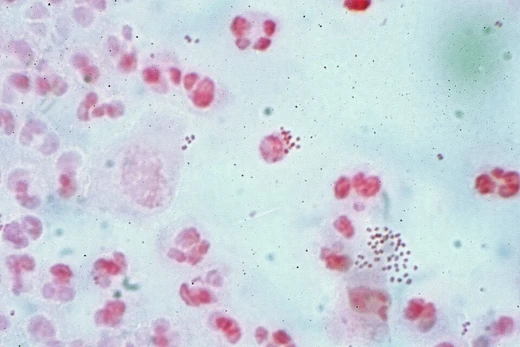
Chlamydia pneumoniae
Obligate intracellular bacterium causing pneumonia and chronic diseases.

Chlamydia pneumoniae is a type of bacterium that can only live and reproduce inside a host cell, making it an obligate intracellular pathogen, and it is a leading cause of pneumonia in people. It was originally called the Taiwan acute respiratory agent, or TWAR, after the first two samples: one from Taiwan (TW-183) and another from a respiratory infection (AR-39). For a short time it was known as Chlamydophila pneumoniae, and some sources still use that name, sometimes giving both to avoid confusion. Its full genetic sequence was published in 1999. Besides humans, this bacterium also infects and causes disease in koalas, emerald tree boas, iguanas, chameleons, frogs, and turtles. The earliest known human infection occurred in Taiwan in 1950, involving a case of conjunctivitis, and no cases have been found before that year. This atypical bacterium often leads to pharyngitis, bronchitis, coronary artery disease, and atypical pneumonia, along with several other possible illnesses.
**Life cycle and method of infection**
Chlamydia pneumoniae is a small gram-negative bacterium, measuring 0.2 to 1 μm, and it changes form during its life cycle. Between hosts, it exists as an elementary body (EB), which is not biologically active but can survive outside a host for a short time because it resists environmental stress. The EB travels from an infected person to another person’s lungs in small droplets and starts the infection. Once in the lungs, the EB is taken into a cell inside a pouch called an endosome through a process called phagocytosis. Unlike typical material taken in this way, the EB is not destroyed by fusion with lysosomes. Instead, it turns into a reticulate body (RB) and begins to multiply inside the endosome. The RB relies on the host cell’s metabolism to complete its replication. After multiplying, the RBs change back into EBs and are released back into the lung, often after killing the host cell. These new EBs can then infect other cells, either in the same person or in a new host. So the life cycle has two main stages: the EB, which can infect new hosts but cannot replicate, and the RB, which replicates but cannot cause a new infection.
**Diseases**
**Acute infection** Around the world, Chlamydia pneumoniae is a common cause of pneumonia, especially in otherwise healthy people, and it is a type of community-acquired pneumonia. Its treatment and diagnosis differ from those for more traditional causes like Streptococcus pneumoniae. Because it does not stain well with Gram stain and is very different from most other pneumonia-causing bacteria (it was once thought to be a virus), the pneumonia it causes is labeled “atypical pneumonia.” In 1991, C. pneumoniae infection was first linked to wheezing, asthmatic bronchitis, and adult-onset asthma. Later studies of fluid from the lungs of children with asthma and other severe chronic respiratory illnesses found that more than half had evidence of C. pneumoniae when tested directly. The infection triggers acute wheezing, and if it becomes chronic, it is diagnosed as asthma. These findings suggest that an acute C. pneumoniae infection can cause various chronic respiratory problems that lead to asthma. Treatment with macrolide antibiotics can improve asthma in a certain group of patients, though this group is not yet clearly defined. The idea that macrolides help came from two observational studies and two randomized controlled trials of azithromycin for asthma. One of those trials and another macrolide study suggest that the benefit may be greatest in patients with severe, hard-to-treat asthma. These clinical results match epidemiological evidence linking C. pneumoniae to worse asthma and lab evidence showing that the infection creates resistance to steroids. A meta-analysis of 12 randomized controlled trials of macrolides for long-term asthma management found significant improvements in asthma symptoms, quality of life, bronchial hyperreactivity, and peak flow, but not in FEV1. More recent positive results from long-term azithromycin treatment—reducing asthma attacks and improving quality of life in patients with severe, refractory asthma—have led international guidelines to recommend azithromycin as a treatment option for these patients. A recent case series of 101 adults with asthma reported that macrolides (mostly azithromycin) and tetracyclines, alone or together, seemed very effective in a subgroup of “difficult-to-treat” patients with severe asthma (not necessarily those unresponsive to high-dose inhaled steroids, but those who did not take them), many of whom also had asthma-COPD overlap syndrome. Randomized controlled trials that include these types of asthma patients are still needed.
**Chronic diseases** Chronic C. pneumoniae infection has been confirmed by directly detecting the organism (using PCR or culture) in sputum and bronchoalveolar lavage fluid from children with chronic respiratory conditions like asthma, and in the blood of healthy blood donors. The bacterium has also been found through immunohistochemical staining in the monocytes inside the lungs of every patient who had lung surgery for cancer; those with COPD had a significantly higher infection burden than those without. The same study found that 44% of young and middle-aged accident victims also had chronic infections, though with a lower burden.
Lore & Background
Chlamydia pneumoniae has a complex life cycle alternating between an elementary body (EB), which is resistant to environmental stresses and infects new hosts, and a reticulate body (RB), which replicates inside host cells. The EB is transmitted via respiratory droplets, enters lung cells by phagocytosis, and transforms into an RB that uses host metabolism to replicate. The RB then converts back to EB and is released, often killing the host cell. This cycle allows the bacterium to persist and cause both acute and chronic infections. It was later identified as a cause of atypical pneumonia in the 1980s, distinct from traditional bacterial pneumonias because it does not stain well with Gram stain and was initially mistaken for a virus. Studies have found that over 50% of pediatric patients with severe chronic respiratory illnesses had evidence of C. pneumoniae in bronchoalveolar lavage fluid. Chronic infection has been documented in children with asthma, in healthy blood donors, and in lung tissue of accident victims and patients with lung cancer. It has been associated with atherosclerosis, coronary artery disease, multiple sclerosis, schizophrenia, and chronic fatigue syndrome. Treatment typically involves macrolides (erythromycin, azithromycin, clarithromycin) or tetracyclines (tetracycline, doxycycline), but the bacterium is resistant to penicillin, ampicillin, and sulfa drugs. Long-term antibiotic courses are often needed due to recurrence.
Reader's Guide
Chlamydia pneumoniae is significant as a common cause of community-acquired atypical pneumonia and as a pathogen linked to several chronic inflammatory diseases. The bacterium's unique life cycle—alternating between infectious but non-replicating elementary bodies and replicating but non-infectious reticulate bodies—illustrates a sophisticated adaptation to obligate intracellular parasitism. Its association with asthma, atherosclerosis, multiple sclerosis, and schizophrenia suggests a broader role in chronic disease, though causal relationships remain under investigation. The finding that macrolide antibiotics can improve symptoms in a subgroup of patients with severe, refractory asthma has led to inclusion of azithromycin in international treatment guidelines. However, the lack of a vaccine and limited diagnostic facilities worldwide highlight ongoing challenges. The bacterium also infects koalas, emerald tree boas, iguanas, chameleons, frogs, and turtles, indicating a wide host range. Its resistance to common antibiotics like penicillin underscores the need for targeted therapy. Overall, C. pneumoniae represents a model for studying persistent infections and their potential links to chronic human diseases.
Did You Know?
- C. pneumoniae primarily infects humans and has not been widely documented in reptiles and amphibians.
- C. pneumoniae shows resistance to penicillin, ampicillin, and sulfa drugs, so these antibiotics are not recommended for treatment.
Origins, Naming, and Early History
No cases are known to have occurred before that year, making this a relatively recent addition to the catalog of human pathogens. For a period, the species carried the genus name Chlamydophila rather than Chlamydia, and some references still use that alternate designation. To prevent confusion, many sources list both names side by side. Despite its relatively late formal identification, C. pneumoniae has since been recognized as a significant contributor to respiratory illness in humans worldwide.
Life Cycle and Intracellular Strategy
Chlamydia pneumoniae is a small gram-negative bacterium measuring roughly 0.2 to 1 micrometer, and it cannot survive or reproduce independently. As an obligate intracellular pathogen, it must hijack a host cell to complete its replication cycle. Between hosts, the organism exists as an elementary body, a metabolically dormant form tough enough to withstand brief environmental exposure. Transmission occurs when these elementary bodies ride tiny respiratory droplets from an infected person into the lungs of a susceptible individual. Once inside lung tissue, the elementary body is engulfed by a host cell through phagocytosis and sealed within a compartment called an endosome. Rather than being digested by lysosomes, the elementary body reorganizes into a reticulate body, a metabolically active form that draws on the host cell's machinery to multiply. After replication, reticulate bodies revert to elementary bodies and burst out, frequently killing the host cell. The freed elementary bodies can then infect neighboring cells or be expelled to start infection in another person. This two-stage cycle means the infectious form cannot replicate, while the replicating form cannot initiate a new infection.
Atypical Pneumonia and the Asthma Connection
C. pneumoniae is a widespread cause of community-acquired pneumonia, typically striking otherwise healthy individuals. Because the bacterium does not stain well with the standard Gram method and looks quite different from classic pneumonia pathogens, the infections it causes are classified as atypical pneumonia. In its early days, the organism was even mistaken for a virus. Beyond pneumonia, it is also linked to pharyngitis, bronchitis, and coronary artery disease. pneumoniae was first connected to wheezing, asthmatic bronchitis, and adult-onset asthma. Subsequent studies of bronchoalveolar lavage fluid from children with asthma and other severe chronic respiratory conditions found that over half showed direct evidence of the organism. Research suggests an acute infection can trigger wheezing that, if persistent, becomes diagnosed as asthma. Macrolide antibiotics, particularly azithromycin, have shown benefit in a subset of asthma patients. A meta-analysis of twelve randomized controlled trials confirmed significant improvements in symptoms, quality of life, bronchial hyperreactivity, and peak flow.
Chronic Infections and Broader Disease Links
Beyond acute respiratory illness, C. pneumoniae has been detected in a range of chronic and systemic contexts. Direct organism detection through PCR and culture has identified the bacterium in sputum and bronchoalveolar lavage samples from children with chronic respiratory conditions, as well as in the peripheral blood of healthy blood donors. In a striking finding, immunohistochemical staining revealed the organism in lung-resident monocytes of every single patient undergoing lung resection for cancer, with those who also had COPD carrying a significantly higher infection burden. Even among young and middle-aged accident victims, 44 percent tested positive for chronic infection, though at lower burden levels. A meta-analysis of serological data suggested that prior C. pneumoniae infection is associated with an increased risk of developing lung cancer. The bacterium has also been implicated in atherosclerosis and coronary artery disease, with evidence drawn from serological testing, direct pathologic examination of arterial plaques, and in vitro experiments. Notably, C. pneumoniae is not limited to humans; it also causes disease in koalas, emerald tree boas, iguanas, chameleons, frogs, and turtles, highlighting its broad host range across the animal kingdom.
Frequently Asked Questions
Who is Chlamydia pneumoniae?
It is an obligate intracellular bacterium that can only survive and multiply inside human host cells. In the Pathogenic Bacteria 1-20 lineup, it is the one most associated with a very common form of lung infection.
What are Chlamydia pneumoniae's powers and role?
Its signature ability is infiltrating and replicating within human cells, which makes it resistant to many standard antibiotic strategies aimed at free-floating organisms. It is best known for triggering atypical pneumonia in otherwise healthy individuals and has also been linked to long-term inflammatory conditions.
How does Chlamydia pneumoniae's story end?
There is no clean finale, because the bacterium is still actively circulating in human populations today. Its ongoing arc spans both acute respiratory illness and a suspected contribution to chronic diseases, so fans treat it as a continuing character rather than a one-and-done antagonist.
Why is Chlamydia pneumoniae important?
It accounts for a significant share of community-acquired atypical pneumonia cases worldwide, making it one of the most frequently encountered respiratory pathogens in outpatient settings. Its suspected connections to chronic conditions beyond the lungs also keep researchers and clinicians closely monitoring it.
More in Pathogenic Bacteria 1-20
Spotted an error? Know more?
This is a living reference — every entry is fact-audited, and reader corrections feed straight into our audit queue. Suggest an edit · See this site's audit record