
Flanders
Dutch-speaking northern region of Belgium with rich medieval history.

Txllxt TxllxT · CC BY-SA 4.0
Flanders is the Dutch-speaking northern part of Belgium, a region whose definition shifts depending on cultural, linguistic, political, or historical context. Its people are called Flemings, and the adjective Flemish describes both the local Dutch dialects and the Belgian variant of Standard Dutch. Most Flemings reside in the Flemish Region, a federal entity with its own elected government, though its official capital is Brussels—a city located within the separate, bilingual Brussels-Capital Region, where the Flemish government’s authority is largely confined to cultural and educational matters. Geographically, Flanders is predominantly flat and includes Belgium’s entire North Sea coastline. It borders the French department of Nord to the southwest, the Dutch provinces of Zeeland, North Brabant, and Limburg to the north and east, and the Walloon provinces of Hainaut, Walloon Brabant, and Liège to the south. Despite covering only 45% of Belgium’s territory, Flanders is home to over half the population, with 6.8 million inhabitants as of early 2024. The land is agriculturally fertile and densely populated, at 501 people per square kilometer. The Brussels Region is an officially bilingual enclave within the Flemish Region, while Flanders itself possesses exclaves: Voeren in the east, between Wallonia and the Netherlands, and Baarle-Hertog in the north, consisting of 22 exclaves surrounded by Dutch territory. The five present-day Flemish provinces, excluding Brussels, are Antwerp, East Flanders, Flemish Brabant, Limburg, and West Flanders. The official language is Dutch. Historically, the area has been prominent since the Middle Ages. The original County of Flanders, stretching around 900 AD from the Strait of Dover to the Scheldt estuary, roughly corresponds to modern West and East Flanders, plus parts of France and the Netherlands. Cities like Ghent, Bruges, and later Antwerp made the region one of Europe’s wealthiest and most urbanized, trading and weaving wool into cloth, fostering a sophisticated culture with arts and architecture rivaling northern Italy. In the 19th century, Belgium’s Industrial Revolution centered on French-speaking Wallonia, but in the late 20th century, massive investments in port infrastructure modernized Flanders’ economy, making it and Brussels among the wealthiest regions in Europe. Late 20th-century Belgian reforms created two poli
- Area
- 45% of Belgium's territory
- Official language
- Dutch
- Provinces
- Antwerp, East Flanders, Flemish Brabant, Limburg, West Flanders
- Capital
- Brussels (located in Brussels-Capital Region)
- Exclaves
- Voeren and Baarle-Hertog
Lore & Background
Flanders, the Dutch-speaking northern part of Belgium, is defined by several overlapping cultural, linguistic, political, and historical meanings. Geographically, the region is predominantly flat and encompasses the entirety of Belgium’s North Sea coastline. It borders the French department of Nord to the southwest, the Dutch provinces of Zeeland, North Brabant, and Limburg to the north and east, and the Walloon provinces of Hainaut, Walloon Brabant, and Liège to the south. Despite covering only 45% of Belgium’s territory, it is home to more than half the country’s population. The official capital of Flanders is the City of Brussels, though Brussels itself lies within a separate, officially bilingual region, and the Flemish Government’s powers there are limited mainly to cultural and educational matters. The Flemish Region contains five provinces: Antwerp, East Flanders, Flemish Brabant, Limburg, and West Flanders. It also includes two exclaves: Voeren, situated between Wallonia and the Netherlands, and Baarle-Hertog, which consists of 22 exclaves surrounded by Dutch territory. The official language is Dutch. The historic County of Flanders, which gave the region its name, originally stretched from the Strait of Dover to the Scheldt estuary and roughly corresponds to the modern provinces of West and East Flanders, along with parts of France and the Netherlands. During the Middle Ages, cities like Ghent, Bruges, and later Antwerp became centers of trade and wool weaving, making the area one of the wealthiest and most urbanized in Europe. This prosperity fostered a sophisticated culture with notable achievements in the arts and architecture.
Reader's Guide
Flanders' significance lies in its dual role as a medieval economic powerhouse and a modern political entity within Belgium. In the Middle Ages, its cities were centers of trade and cloth production, rivaling northern Italy in cultural and artistic output. In the second half of the 20th century, massive national investments in port infrastructure modernized Flanders' economy, making it and Brussels among the wealthiest regions in Europe and the world, in contrast to Wallonia. Politically, Flanders was made into two entities—the Flemish Region (economic matters) and the Flemish Community (cultural matters)—which were merged, though the Community covers Brussels while the Region does not. The term 'Flanders' also historically referred to the Burgundian Netherlands and later the Southern Netherlands, predecessors of modern Belgium. Today, it denotes the Dutch-speaking part of Belgium, including areas like Brabant and Limburg that were not part of the medieval county.
Did You Know?
- Flanders incorporates the whole coast of Belgium on the North Sea.
- The Flemish Region has exclaves: Voeren in the east and Baarle-Hertog in the north, consisting of 22 exclaves surrounded by the Netherlands.
- The term 'Flemish Primitives' is a synonym for 'Early Netherlandish painting'.
- In France, the historically Flemish region in the Nord department is called French Flanders, and the city of Lille identifies itself as 'Flemish'.
Geography, Borders, and Population Density
Flanders occupies the flat, coastal plain along Belgium's entire North Sea shoreline, stretching from the French department of Nord in the southwest to the Dutch provinces of Zeeland, North Brabant, and Limburg in the north and east, with the Walloon provinces of Hainaut, Walloon Brabant, and Liège forming its southern boundary. Five provinces make up the area: Antwerp, East Flanders, Flemish Brabant, Limburg, and West Flanders. The geography is further complicated by two exclaves: Voeren, wedged between Wallonia and the Netherlands in the east, and Baarle-Hertog in the north, a patchwork of twenty-two isolated parcels entirely surrounded by Dutch territory. Meanwhile, the Brussels-Capital Region sits as an officially bilingual enclave within the broader Flemish landscape, adding another layer of administrative complexity to an already intricate map.
Medieval Trade Power and Cultural Flourishing
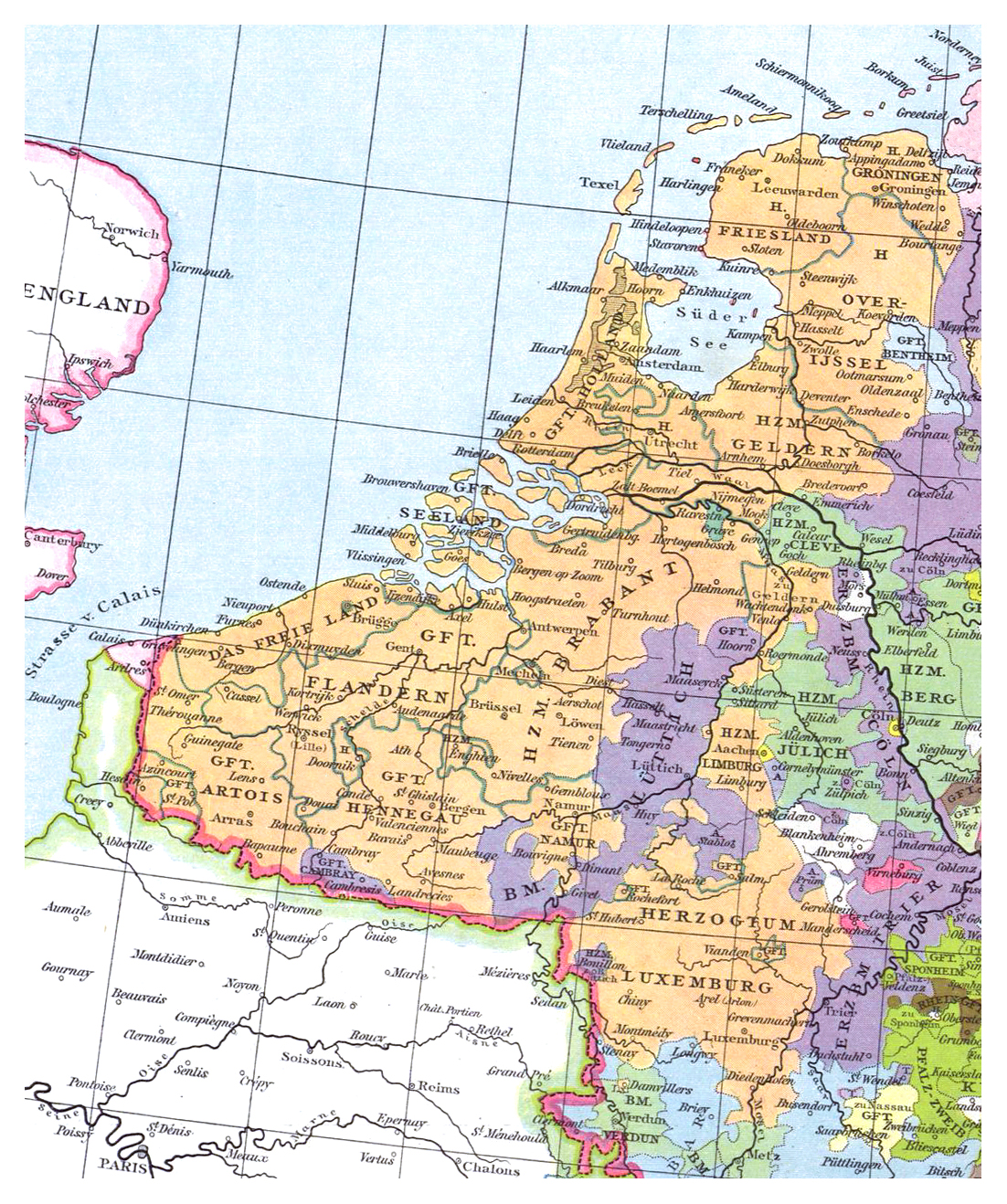
During the medieval period, cities like Ghent and Bruges—later joined by Antwerp under the Duchy of Brabant—transformed this region into one of the most prosperous and densely urbanised zones in all of Europe. The engine of that wealth was the textile trade: Flemish merchants and weavers processed the wool of surrounding lands into finished cloth destined for both local markets and export. The economic surplus funded a remarkably sophisticated cultural life, producing achievements in the arts and architecture that contemporaries compared favourably to those of northern Italy. When the Counts of Flanders, who also held the title of Duke of Burgundy, consolidated their power into what historians call the Burgundian Netherlands, the name Flanders alongside the Latin Belgium became the earliest common labels for the entire southern Low Countries block.
A Tangle of Definitions: Region, Community, and Capital
One of the most persistent sources of confusion surrounding Flanders is the sheer number of overlapping meanings the name carries. In modern Belgian discourse, Flanders can refer to the Flemish Community—the social, cultural, linguistic, and educational body of roughly 6.5 million Dutch-speaking Belgians, including many residents of Brussels—or to the Flemish Region, a federal entity competent mainly in economic affairs that deliberately excludes the Brussels-Capital Region. These two entities were merged into a single operative structure: the Flemish Government and the Flemish Parliament. Yet the official capital of the Flemish Region is Brussels, a city whose majority population speaks French and which sits in its own separate capital region. The Flemish Government's authority there is confined largely to Flemish-language culture and education. The demonym is Fleming, and the adjective Flemish doubles as the name for the collective of Dutch dialects spoken in the area or, more broadly, the Belgian variant of Standard Dutch.
From Industrial Laggard to European Wealth Leader
A notable irony in Flanders' economic story is that the nineteenth-century Industrial Revolution, which reshaped much of Europe, took hold primarily in the French-speaking south of Belgium—Wallonia—rather than in the Flemish provinces. For well over a century, Wallonia held the industrial advantage. That balance shifted dramatically in the second half of the twentieth century, when the Belgian state poured massive investments into port infrastructure along the Flemish coast. The result was a rapid modernisation of the regional economy. Today, Flanders and Brussels rank among the wealthiest regions not only in Europe but globally, far outpacing Wallonia in per-capita terms. This transformation was accompanied by late-twentieth-century Belgian state reforms that formally split Flanders into two political entities—the Flemish Region and the Flemish Community—each with distinct mandates, though in practice they operate as a unified governance structure. The shift from a region that trailed its southern neighbour to one that leads the continent economically remains one of the most striking economic reversals in modern European history.
Gallery

More in Other European Regions 1-23
Spotted an error? Know more?
This is a living reference — every entry is fact-audited, and reader corrections feed straight into our audit queue. Suggest an edit · See this site's audit record