
Epirus (region)
Northwestern Greek region, rugged and mountainous, with ancient roots.

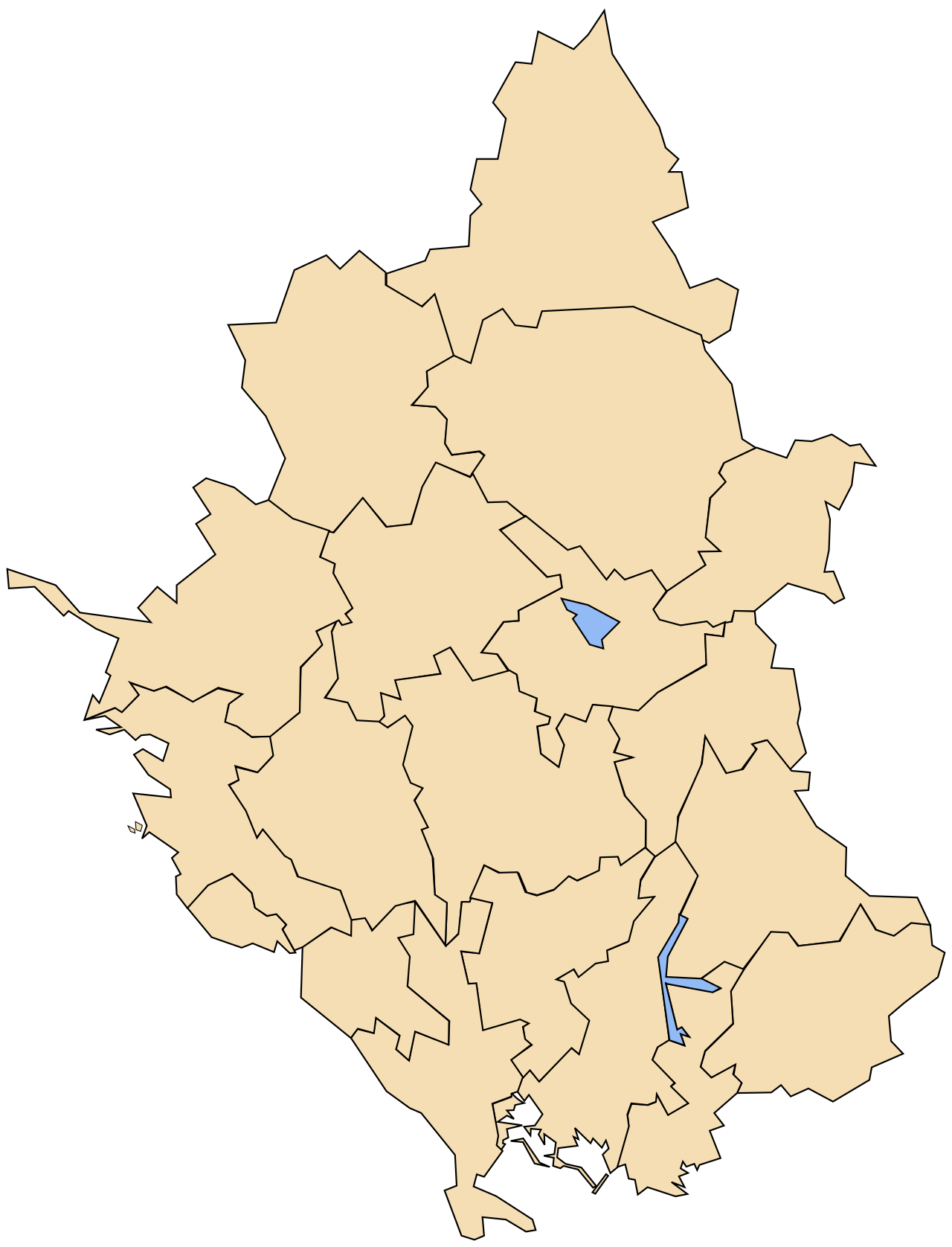
Alexikoua · CC BY-SA 4.0
Epirus is a traditional geographic and modern administrative region in northwestern Greece. It is part of the wider historical region of Epirus, which overlaps modern Albania and Greece but lies mostly within Greek territory. The region is rugged and mountainous, comprising the land of the ancient Molossians and Thesprotians, and a small part of the land of the Chaonians.
The landscape is dominated by mountainous ridges belonging to the Dinaric Alps, with Mount Smolikas as the highest point. To the east, the Pindus Mountains separate Epirus from Macedonia and Thessaly. Because most of Epirus lies on the windward side of the Pindus, it receives more rainfall from the Ionian Sea than any other part of Greece. The climate is mainly alpine, and the vegetation consists largely of coniferous species. The Vikos-Aoos and Pindus National Parks, located in the Ioannina Prefecture, host a wide range of fauna, including bears, wolves, foxes, deer, and lynxes.
The current administrative region of Epirus was established in 1987 and originally divided into prefectures, which were further subdivided into municipalities. Local government reforms in 2011 replaced the prefectures with four regional units: Thesprotia, Ioannina, Arta, and Preveza. The region's governor since 1 January 2011 is Alexandros Kachrimanis, elected under the New Democracy and Popular Orthodox Rally parties and re-elected in 2014 and 2019.
The region's economy relies on sheep and goat pastoralism, which supplies more than 45% of Greece's meat, though this activity has declined in recent years. Tobacco is grown around Ioannina, and some farming and fishing occur, but most food is imported. Epirus is known for its dairy products, including feta cheese. Tourism, especially eco-tourism, is also important, drawing visitors to the natural environment and traditional villages. In 2018, the region's GDP was €4.1 billion, accounting for 2.2% of Greek output. GDP per capita adjusted for purchasing power was €14,700, or 49% of the EU27 average, and GDP per employee was 63% of the EU average. Epirus has the third lowest GDP per capita in Greece and is among the poorest regions in the EU.
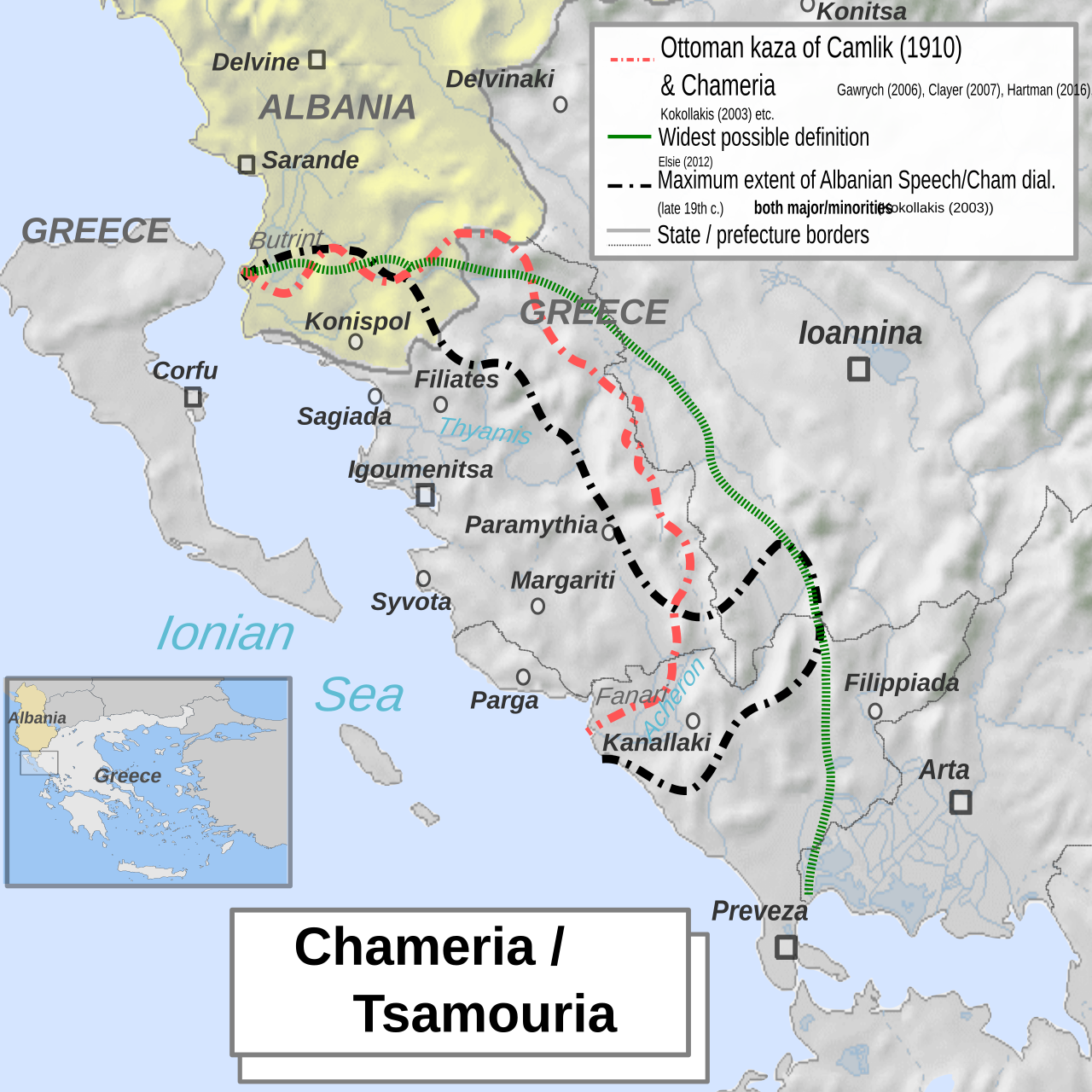
Around 320,000 people live in Epirus, the lowest population of Greece's 13 regions according to the 2001 census. This is partly due to 20th-century wars and mass emigration driven by economic hardship. The capital and largest city is Ioannina, home to nearly a third of the population. The majority are Greeks, along with Aromanians and Arvanites. Between 2011 and 2021, the population shrank by 17,313 people, a loss of 5.1%. The 1913 border between Greece and Albania left some Albanian-populated villages on the Greek side and Greek-populated areas in present-day Albania. In the past, the coastal region of Thesprotia was home to a Cham Albanian minority, numbering no more than 25,000 in the 1940s. After their expulsion, the 1951 Greek census counted 127 Muslim Albanian Chams in Epirus, and 44 were counted in 1986 in Thesprotia.
Notable archaeological sites in the region include Dodona, Passaron, Nicopolis, the Church of the Parigoritissa, Ioannina Castle, and Parga Castle.
- capital
- Ioannina
Lore & Background
Epirus is a rugged and mountainous region in northwestern Greece, bordered by Western Macedonia and Thessaly to the east, West Greece to the south, the Ionian Sea and Ionian Islands to the west, and Albania to the north. Its landscape is dominated by mountainous ridges that are part of the Dinaric Alps, with the highest peak being Mount Smolikas. The Pindus Mountains form the eastern boundary, separating Epirus from Macedonia and Thessaly. Because most of Epirus lies on the windward side of the Pindus, it receives more rainfall than any other part of Greece, thanks to winds from the Ionian Sea. The climate is mainly alpine, and the vegetation consists largely of coniferous species. The region is home to Vikos-Aoos and Pindus National Parks, which host a wide range of fauna and flora, including bears, wolves, foxes, deer, and lynxes. Historically, Epirus comprises the land of the ancient Molossians and Thesprotians, along with a small part of the land of the Chaonians, whose greater territory lies in modern southern Albania. The region is part of the wider historical area of Epirus, which overlaps modern Albania and Greece but lies mostly within Greek territory.
Reader's Guide
Its rugged, mountainous terrain, part of the Dinaric Alps and dominated by the Pindus range, creates an alpine climate that is the rainiest in Greece, as the region lies on the windward side of the mountains. This environment supports a rich fauna including bears, wolves, foxes, deer, and lynxes, with coniferous forests dominating the vegetation. The Vikos-Aoos and Pindus National Parks, both within the Ioannina Prefecture, are notable for their biodiversity. Historically, this area was the land of the ancient Molossians and Thesprotians, with a small portion belonging to the Chaonians. The region’s ruggedness makes agriculture difficult, but sheep and goat pastoralism has long been vital, supplying over 45% of Greece’s meat, though this has declined. Tobacco is grown near Ioannina, and tourism, especially eco-tourism, is economically important, drawing visitors to the traditional villages and natural environment. Despite this, Epirus has the third lowest GDP per capita in Greece and is one of the poorest regions in the EU, with a population of around 320,000 that has shrunk by over 5% between 2011 and 2021 due to war and economic emigration. The capital, Ioannina, houses nearly a third of the population. The region’s delineation from Albania in 1913 left some Albanian-populated villages on the Greek side, while a Cham Albanian minority, numbering under 25,000 in the 1940s, was largely absent after the war.
Did You Know?
- Epirus provides around 5-10% of meat to the Greek market.
- The Vikos-Aoos National Park is located in the Ioannina regional unit, while the Pindus National Park is located in the Grevena and Ioannina regional units.
Rugged Terrain and Alpine Wilderness
Epirus is a land defined by its dramatic topography. Because most of the territory sits on the windward side of the Pindus, it receives more rainfall than any other part of Greece, nurturing an alpine climate and dense coniferous forests. Two protected areas, the Vikos-Aoos and Pindus National Parks, both located within the Ioannina Prefecture, shelter a remarkable diversity of flora and fauna. Among the wildlife that thrives here are bears, wolves, foxes, deer, and lynxes. The landscape also carries deep historical roots, encompassing the ancestral lands of the ancient Molossians, Thesprotians, and a portion of the Chaonian territory.
Pastoral Heritage and Economic Challenges
The economy of Epirus has long been shaped by its harsh terrain and limited natural resources. The rugged landscape makes large-scale agriculture impractical, so pastoralism—particularly sheep and goat herding—has been the backbone of local livelihoods for generations. At its peak, the region supplied more than 45 percent of the meat consumed across the Greek market, though this sector has been in gradual decline in recent years. Around Ioannina, tobacco cultivation provides another agricultural thread, and some farming and fishing persist, yet the majority of the area's food still must be imported from more fertile parts of Greece. Epirus is nonetheless home to several of the country's most recognized dairy brands, known for producing feta cheese and other products. Tourism, and especially eco-tourism, has become an increasingly vital economic pillar, drawing visitors to the region's natural environment, traditional villages, and distinctive way of life.
Population, Identity, and the Weight of History
The region's capital and largest city, Ioannina, holds nearly a third of that total. The population has been shaped by the upheavals of the twentieth century, including repeated wars and waves of emigration driven by difficult economic conditions. The ethnic fabric is predominantly Greek, with significant Aromanian and Arvanite communities adding to the cultural mosaic.
Administrative Structure and Governance
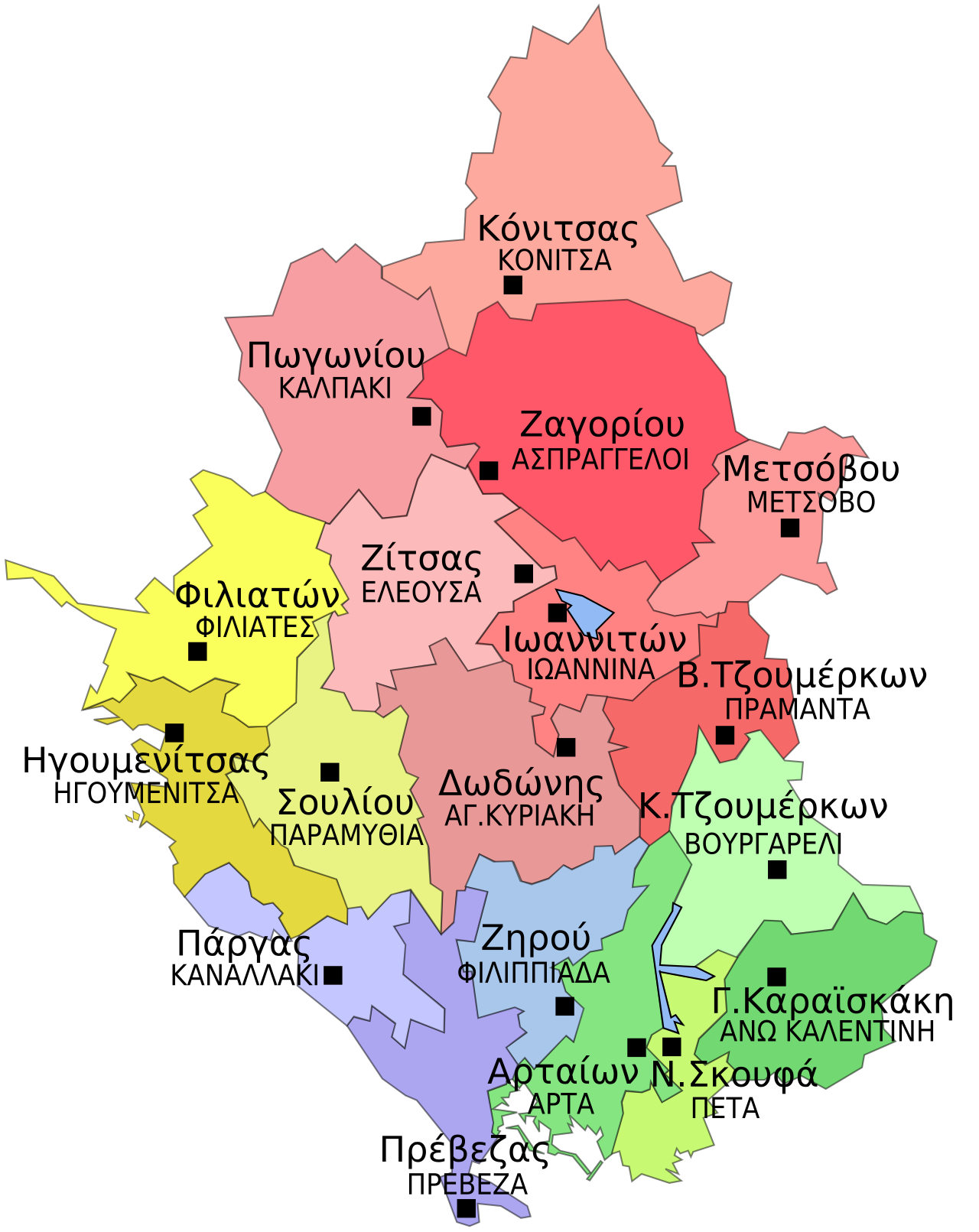
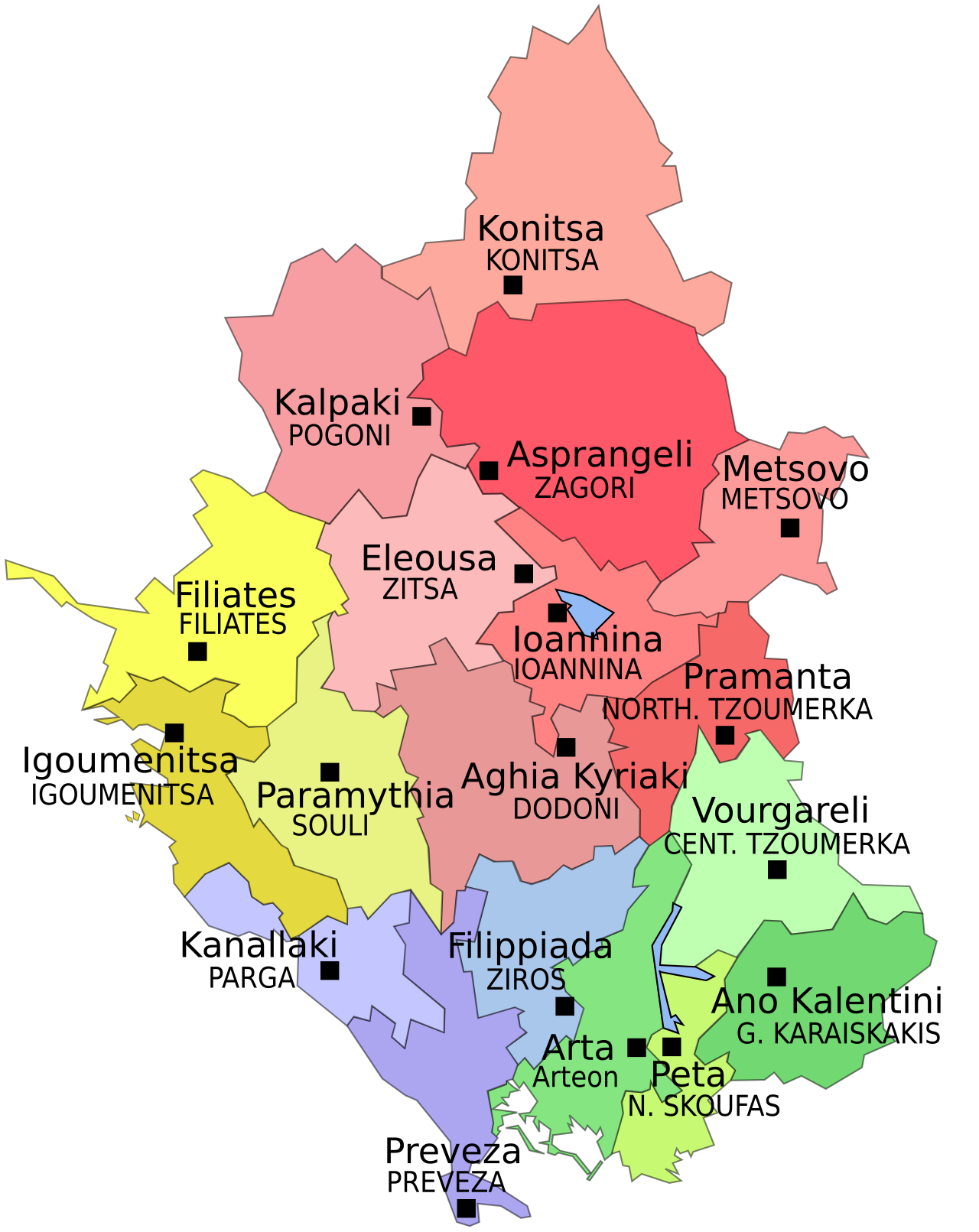
Today, the region is divided into four regional units: Thesprotia, Ioannina, Arta, and Preveza. The municipalities that make up Epirus include Arta, Dodoni, Filiates, Igoumenitsa, Ioannina, Konitsa, Metsovo, Parga, Pogoni, Preveza, Zagori, and Zitsa, alongside municipal units such as Athamania, Filippiada, Paramythia, Kompoti, Perdika, Peta, Pramanta, Syvota, and Tetrafylia.
Gallery
More in Other European Regions 1-23
Spotted an error? Know more?
This is a living reference — every entry is fact-audited, and reader corrections feed straight into our audit queue. Suggest an edit · See this site's audit record