Pecos National Historical Park
Preserving Pueblo ruins, a Spanish mission, and a Civil War battlefield.
Last updated
Where it is
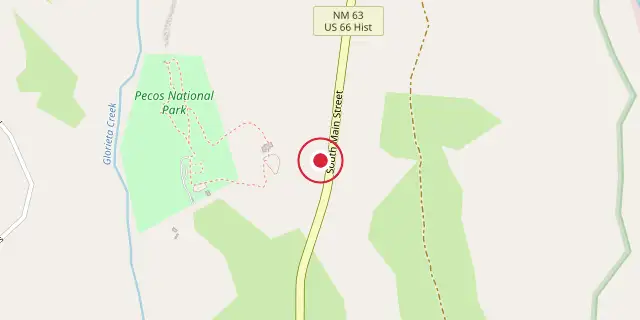
Coordinates: 35°33′00″N 105°41′02″W (35.5500, -105.6840) · Open in OpenStreetMap
Coordinates and connected clubs: the infobox of Wikipedia: Pecos National Historical Park (CC BY-SA 4.0). Map: drawn by Codexery from OpenStreetMap tiles.
Pecos National Historical Park is a United States National Historical Park in San Miguel County, New Mexico, operated by the National Park Service. It preserves thousands of acres of landscape containing prehistoric archaeological ruins, a 19th-century ranch, and a Civil War battlefield. Its largest feature is Pecos Pueblo, also known as Cicuye Pueblo, a Native American community abandoned in 1838.
Features
Just south of Pecos and about 17 miles east of Santa Fe, the main section of Pecos National Historical Park sits in western San Miguel County. This area holds the remains of Pecos Pueblo, once called Cicuye (or Ciquique) and known as the “village of 500 warriors.” Around AD 1100, during the Pueblo II Era, the first pueblo was one of roughly two dozen rock-and-mud villages in the valley. Over the next 350 years, during the Pueblo IV Era, the village expanded into a five-story complex housing more than 2,000 people.
The residents spoke Towa and had a vibrant culture with inventive architecture, fine crafts, and a complex religious life. Evidence of this includes over 20 underground kivas, some 40 feet wide and 10 feet deep, entered by wooden ladders. They grew beans, corn, and squash, and their location and power made them a key trade hub linking Pueblo groups with Plains peoples like the Comanche. Seven distinct periods of occupation began with Preceramic Period Ancestral Puebloan Paleo-Indians (11,500 B.C.E. to 600 C.E.).
The site declined due to emigration, Hispanic settlement, smallpox outbreaks, and conflicts with Plains Indians. In 1838, the last 17 or 20 inhabitants left for Jemez Pueblo, the only other Towa-speaking community. The Pecos people made, used, or traded seven ceramic types: Rio Grande Greyware (plain and corrugated), Pajarito White Ware, Rio Grande Glaze Ware, Historic polychromes, Historic plain ware, White Mountain Red Ware, and Plains Apache Ware, often decorated with black, red, or polychrome designs.
The park also protects the ruins of Mission Nuestra Señora de los Ángeles de Porciúncula de los Pecos, a Spanish mission built in the early 1600s. A 1.25-mile self-guided trail starts at the visitor center and loops through the pueblo and mission remains.
Did You Know?
- The hottest temperature recorded in the park was 100°F on June 26, 1994, and July 18, 2023.
- The coldest temperature recorded was -29°F on February 1, 1951.
- The park's climate is classified as oceanic (Cfb) under the Köppen system.
More in National Historical Parks of the United States
Sources
Compiled from Wikipedia and the sources listed below. Text from Wikipedia is available under CC BY-SA 4.0; this entry is adapted from it.
- Wikipedia: Pecos National Historical Park (CC BY-SA 4.0).
Spotted an error? Know more?
Reader corrections go straight into our review queue. Suggest an edit · How this site is sourced