Gettysburg National Military Park
Preserves the site of the pivotal 1863 Civil War battle.
Last updated
Where it is
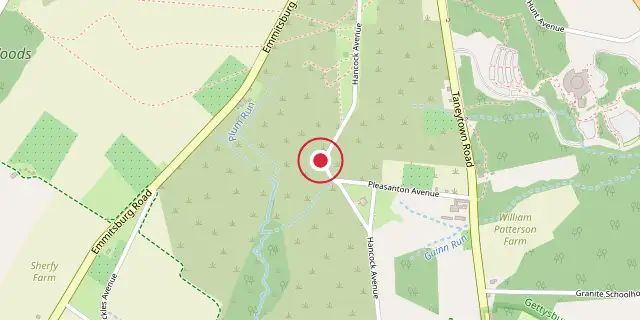
Coordinates: 39°48′32″N 77°14′13″W (39.8090, -77.2370) · Open in OpenStreetMap
Coordinates and connected clubs: the infobox of Wikipedia: Gettysburg National Military Park (CC BY-SA 4.0). Map: drawn by Codexery from OpenStreetMap tiles.
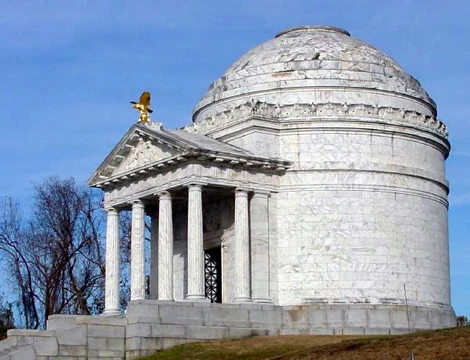
Gettysburg National Military Park, managed by the National Park Service, covers 3,785 acres, mostly in Cumberland Township, Pennsylvania. It preserves the site of the three-day Battle of Gettysburg (July 1–3, 1863) and includes the Soldiers' National Cemetery, where Abraham Lincoln gave the Gettysburg Address on November 19, 1863. The park also holds support areas and a collection of 43,000 Civil War artifacts.
Federal land acquisition
The park’s origins trace back to 1864, when the Gettysburg Battlefield Memorial Association and later veterans’ groups bought land for monuments and preservation. Federal land acquisition started on June 7, 1893, with nine small monument tracts of 625 square feet each, a tenth lot of 1.2 acres from the Association, and 0.275 acres from Samuel M. Bushman. The government also used eminent domain in 1917 to take the Gettysburg Electric Railway right-of-ways.
Donations added 160 acres from the 1959 Gettysburg Battlefield Preservation Association and 264 acres from the W. Alton Jones Foundation. The park officially came under federal control on February 11, 1895, through an act transferring the deed from the Gettysburg Battlefield Memorial National Park Association to the Secretary of War. Today, the Gettysburg Foundation, a 501(c)(3) nonprofit, partners with the National Park Service to preserve the park and the Eisenhower National Historic Site.
The Foundation funded and built the new Museum and Visitor Center, which opened in 2008, and secured money for a cannon shop that maintains nearly 400 cannons representing historical artillery lines. Since 2009, the Foundation has provided about $20 million in direct support to the Park Service. In February 2009, the David Wills House, where Lincoln finished his Gettysburg Address, was added to the park. A 2010 effort to expand federally-owned park land failed in Congress.
Memorials and remembrance
The park has been a highly symbolic venue for memorials and remembrance. On November 19, 1963, a parade and ceremony commemorated the centennial of Lincoln's Gettysburg Address. Attendance was lower than the 20,000 to 30,000 who attended the original address.
Thousands of photographers attended, and U.S. Air Force aircraft passed overhead. The 28th Division of the Pennsylvania National Guard, the U.S. Marine Band, and the 3rd Infantry Regiment also participated. Confederate memorials were not included until the installation of a monument to General Lee in 1917, which first took the form of individual monuments symbolizing a specific Confederate state.
Ecological challenges
Gettysburg National Military Park has faced ecological changes from its popularity and natural causes. Wooded areas, thickets, and wetlands have been stressed by traffic pollution and invasive species. Vandalism also challenges the park's integrity; in August 2024, spray paint and graffiti damaged the War Department Observation Tower and a large rock, though park staff cleaned and restored both objects.
More in National Battlefields and Military Parks of the United States
Sources
Compiled from Wikipedia and the sources listed below. Text from Wikipedia is available under CC BY-SA 4.0; this entry is adapted from it.
- Wikipedia: Gettysburg National Military Park (CC BY-SA 4.0).
Spotted an error? Know more?
Reader corrections go straight into our review queue. Suggest an edit · How this site is sourced