
Chione (daughter of Daedalion)
Mortal maiden who bore sons to Apollo and Hermes.

d'Udekem d'Acoz, C., Verheye, M.L. 2017. Epimeria of the Southern Ocean with not · CC BY 3.0
Chione (Ancient Greek: Χιόνη, romanized: Khiónē, lit. 'snowy'), also known in some authors as Philonis, is a figure from ancient Greek and Roman mythology. She is the beautiful daughter of Daedalion, desired by many, including the Olympian gods Apollo and Hermes, and is notable for bearing each god a son. Her story is a rare example of a mortal girl with more than one divine lover, and her hubris led to her death at the hands of Artemis.
- Also known as
- Philonis
- Parents
- Daedalion (father); mother unnamed; in other accounts, Eosphoros and Cleoboea or Deion
- Children
- Philammon (by Apollo), Autolycus (by Hermes)
- Field
- Greek and Roman mythology
- Known for
- Excessive beauty, bearing sons to two gods, hubris against Artemis
- Death
- Slain by Artemis with an arrow after insulting the goddess
Lore & Background
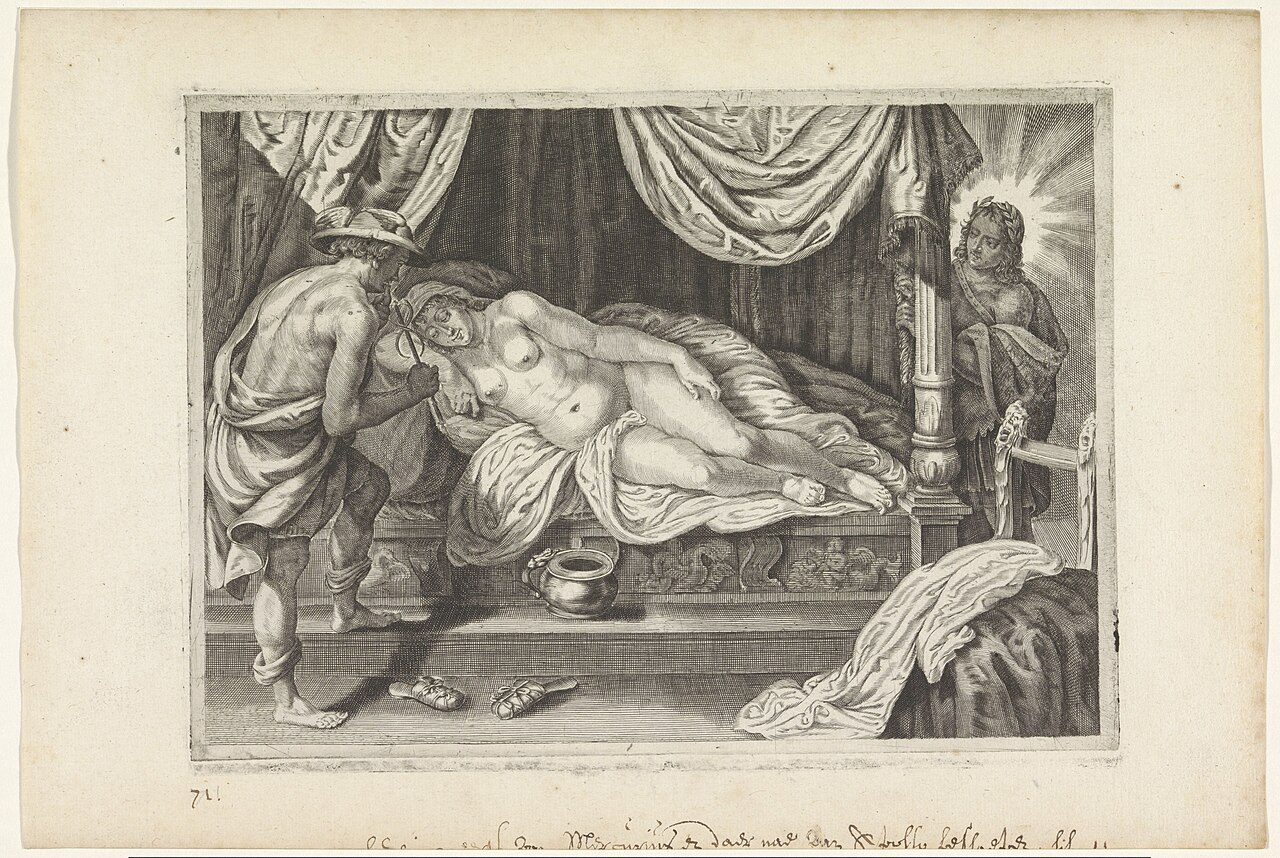
Chione was the daughter of Daedalion by an unnamed mother, though in other accounts she is called Philonis with parents variously given as Eosphoros and Cleoboea or Deion. Upon turning fourteen, her excessive beauty attracted many mortal and divine suitors, including the gods Apollo and Hermes, who both saw her at the same time while descending from Delphi and Mount Cyllene respectively. Hermes, impatient, sent Chione into a deep sleep and raped her while unconscious; Apollo waited until dusk, transformed into an old woman, and consorted with her in her chambers. Having lain with both gods, she bore two sons: Autolycus (crafty and deceitful) to Hermes, and Philammon (a talented singer and musician) to Apollo. The timeline of these events is ambiguous in the primary source, and the sons are not described as twins.
Reader's Guide
Chione's significance lies in her role as a rare mythological figure who consorted with two different gods, bearing each a son, and in her exemplification of the dangers of hubris against the gods. Her story, particularly as recorded by Ovid, introduces the metamorphosis of her father Daedalion into a hawk, an element likely drawn from earlier Greek sources such as Boios' Ornithogonia. The etymology of her name, derived from the Greek word for snow (χιών), and her alternative names (Philonis, Leuconoe, Telauge) suggest possible connections to weather and seasonal cults, as offerings were made to Philonis at Thorikos during the month of Mounichion. Scholar Graham Anderson has proposed that the German fairytale of Snow White has ancient roots in Chione's myth, noting parallels such as her name meaning 'snowy', her supernatural sleep induced by Hermes, and Apollo's approach in the form of an old crone. Chione thus represents a convergence of divine interaction, hubristic punishment, and potential folkloric influence.
Did You Know?
- Chione's name is derived from the ancient Greek word for snow, χιών.
- She bore two sons to two different gods: Autolycus to Hermes and Philammon to Apollo.
- Artemis killed Chione with an arrow after Chione compared her beauty to the goddess's.
- Her father Daedalion was turned into a hawk by Apollo after attempting suicide.
The Divine Suitors and the Birth of Twins
Chione, the extraordinarily beautiful daughter of Daedalion, captured the attention of both mortal and divine admirers the moment she reached her fourteenth year. Two Olympian gods—Apollo and Hermes—each caught sight of her simultaneously as they descended from their respective sacred sites, Delphi and Mount Cyllene, and were struck by her beauty in an instant. Their approaches, however, could not have been more different. Hermes, driven by impatience, cast Chione into a deep slumber and took her while she lay unconscious. Apollo, by contrast, exercised patience, waiting until dusk before gaining entry to her chambers through a transformation into an elderly woman. The result of this single day's double encounter was the birth of twin sons: Autolycus, fathered by Hermes and destined for a reputation of cunning and deceit, and Philammon, fathered by Apollo and gifted with exceptional musical and vocal talent. Chione thus stands as a rare figure in Greek myth—a mortal woman who bore children to more than one god.
Hubris, the Arrows of Artemis, and a Father's Grief
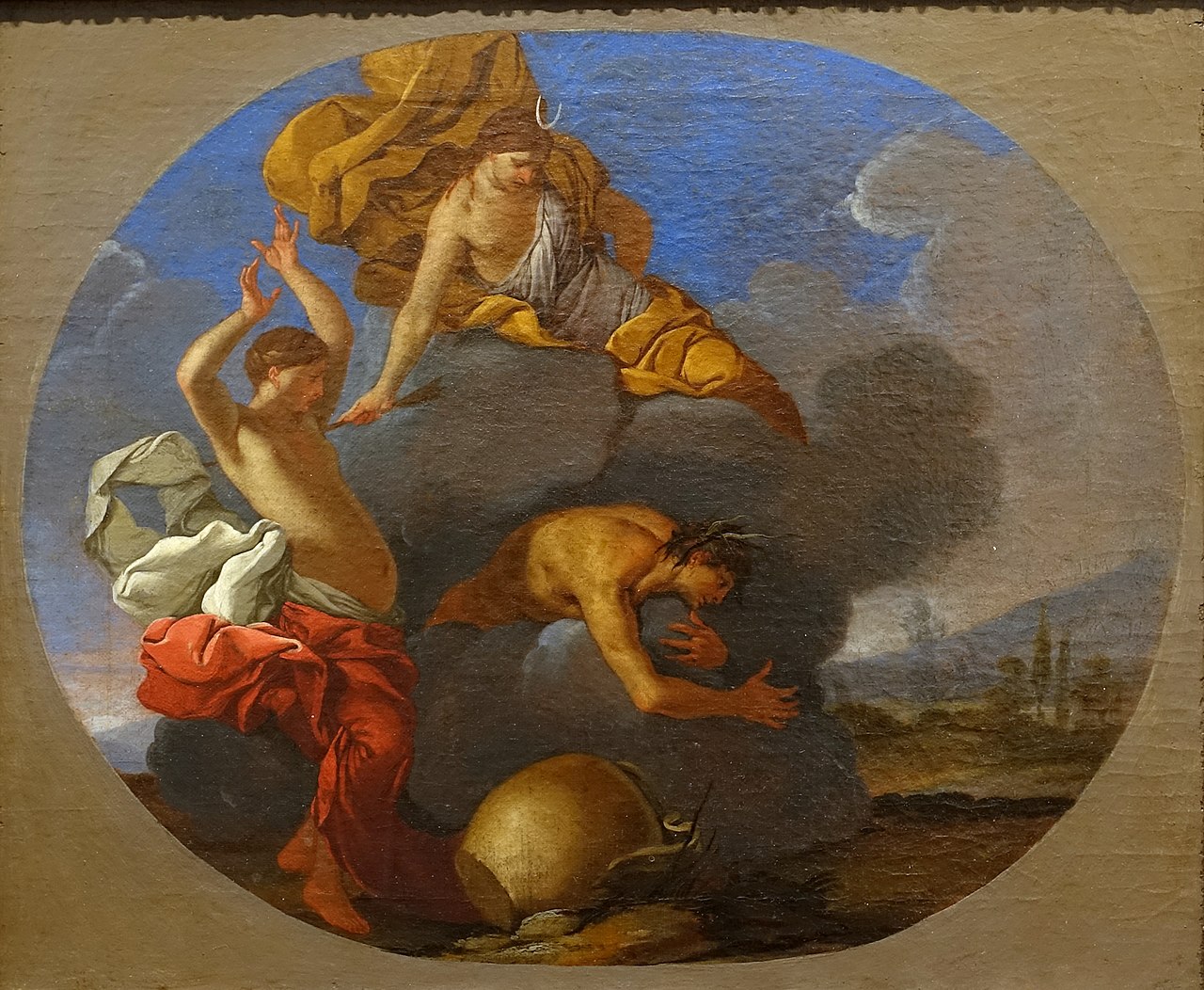
Chione's fatal flaw was her arrogance. In her vanity, she spoke with haughty disdain toward Artemis, the goddess of the hunt, and dared to measure her own beauty against that of the divine. Artemis, who tolerated no such presumption, responded with lethal swiftness: she pierced the maiden's tongue with her arrows, and Chione bled to death in agony. The aftermath of her killing was equally devastating. Her father Daedalion was consumed by grief and, in a desperate act, attempted to throw himself onto her funeral pyre. Though others restrained him from that immediate act, his sorrow proved unyielding. He ultimately hurled himself from a cliff in an attempt to follow his daughter into death. Yet even in his final moment, the gods intervened—Apollo, moved by compassion for the bereaved father, transformed Daedalion into a hawk, sparing him from a violent end while still granting him a form that could soar above the earth. Chione's story thus mirrors a broader pattern in Greek myth, where mortals who boast of surpassing the divine—like Cassiopeia, Arachne, or Niobe—meet ruinous consequences.
A Name Written in Snow and Season
The name Chione derives from the ancient Greek word chiṓn, meaning snow, a term itself inherited from the Indo-European root *ǵʰéyōm. It is cognate with other Greek words for snow and winter, such as kheîma and kheimṓn, embedding the maiden's identity in the imagery of cold and season. In classical antiquity, however, Chione also served as a generic term applied to prostitutes, a usage that some scholars have linked to her mythological role. She is additionally known by several alternative names—Philonis, Leuconoe, and Telauge—depending on the source. The meteorological and astronomical connotations carried by both her name and her father Daedalion's have led researchers to speculate that the Chione-Daedalion narrative may have been tied to weather or seasonal cults, particularly at the site of Thorikos, where Philonis received offerings during the month of Mounichion. Scholar Graham Anderson has even proposed that the German fairy tale of Snow White carries ancient roots in this myth: a woman named for snow, described as the most beautiful in the land, put to sleep by supernatural means, and approached by a figure in disguise.
A Myth in Constant Revision
The story of Chione did not arrive fully formed but evolved across centuries of Greek and Roman literary tradition. In the earliest sources—Hesiod and Pherecydes—the mother of Autolycus and Philammon is called Philonis, not Chione, and the name Chione first surfaces in Ovid's retelling. Homer's Odyssey, meanwhile, places Autolycus firmly outside the lineage of Hermes. The figure of Daedalion and his metamorphosis into a hawk appears to be a later addition, possibly drawn from the earlier Greek writer Boios, author of the Ornithogonia, or from Nicander. It remains uncertain precisely why Ovid introduced the father and his transformation, though he was known to draw heavily on Boios. What is clear is that the core narrative of a beautiful mortal woman seduced by multiple gods and punished for her pride predates any single author. The myth's fluidity across sources—shifting parentage, changing names, and evolving details—makes Chione a case study in how Greek mythology was never a fixed canon but a living, contested tradition shaped by each generation's tellers.
Gallery
More in Mythological rape victims 1-24
Spotted an error? Know more?
Reader corrections go straight into our review queue. Suggest an edit · How this site is sourced