
Callisto (mythology)
Nymph turned bear, then constellation Ursa Major.

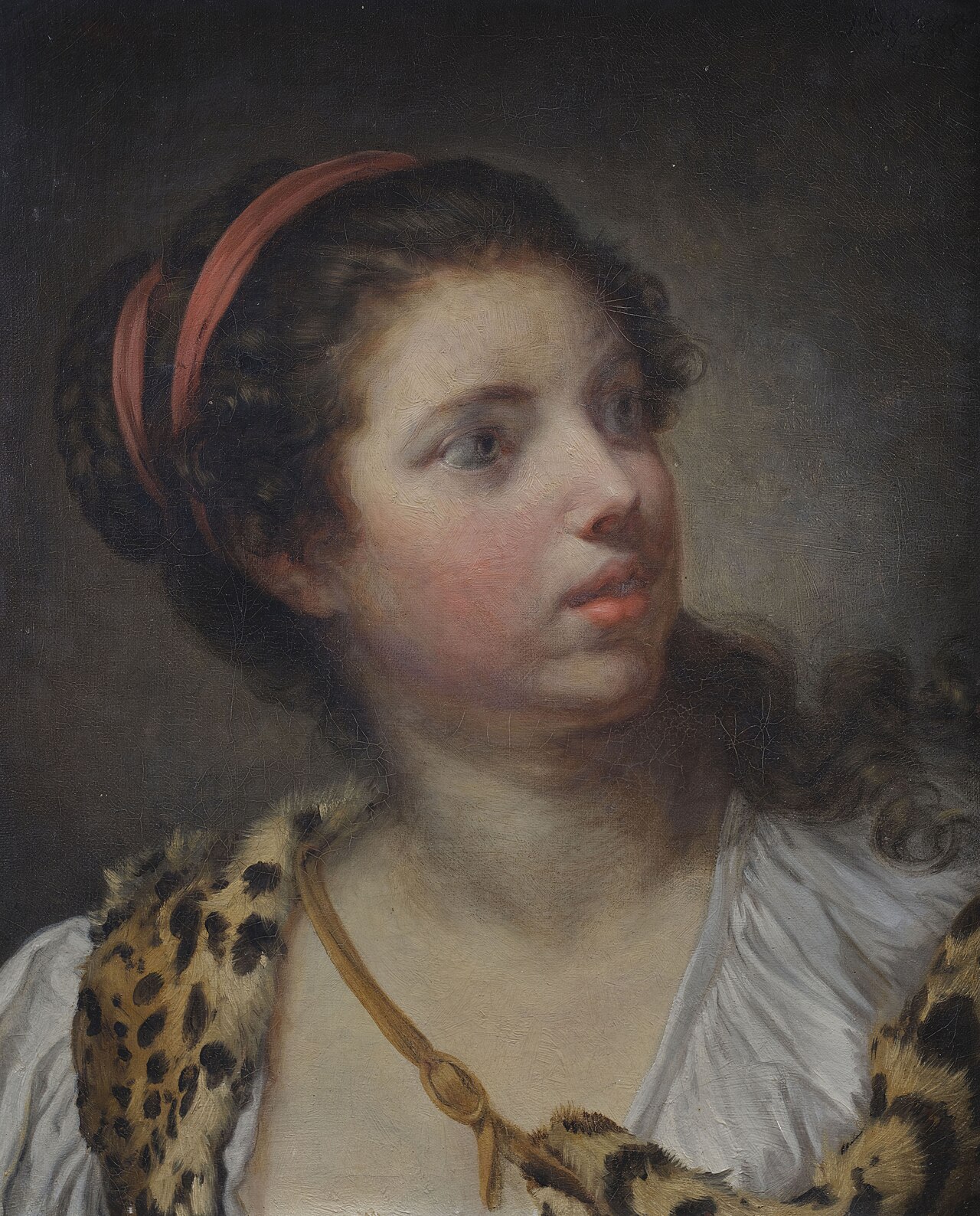
Jean-Baptiste GREUZE · Public domain
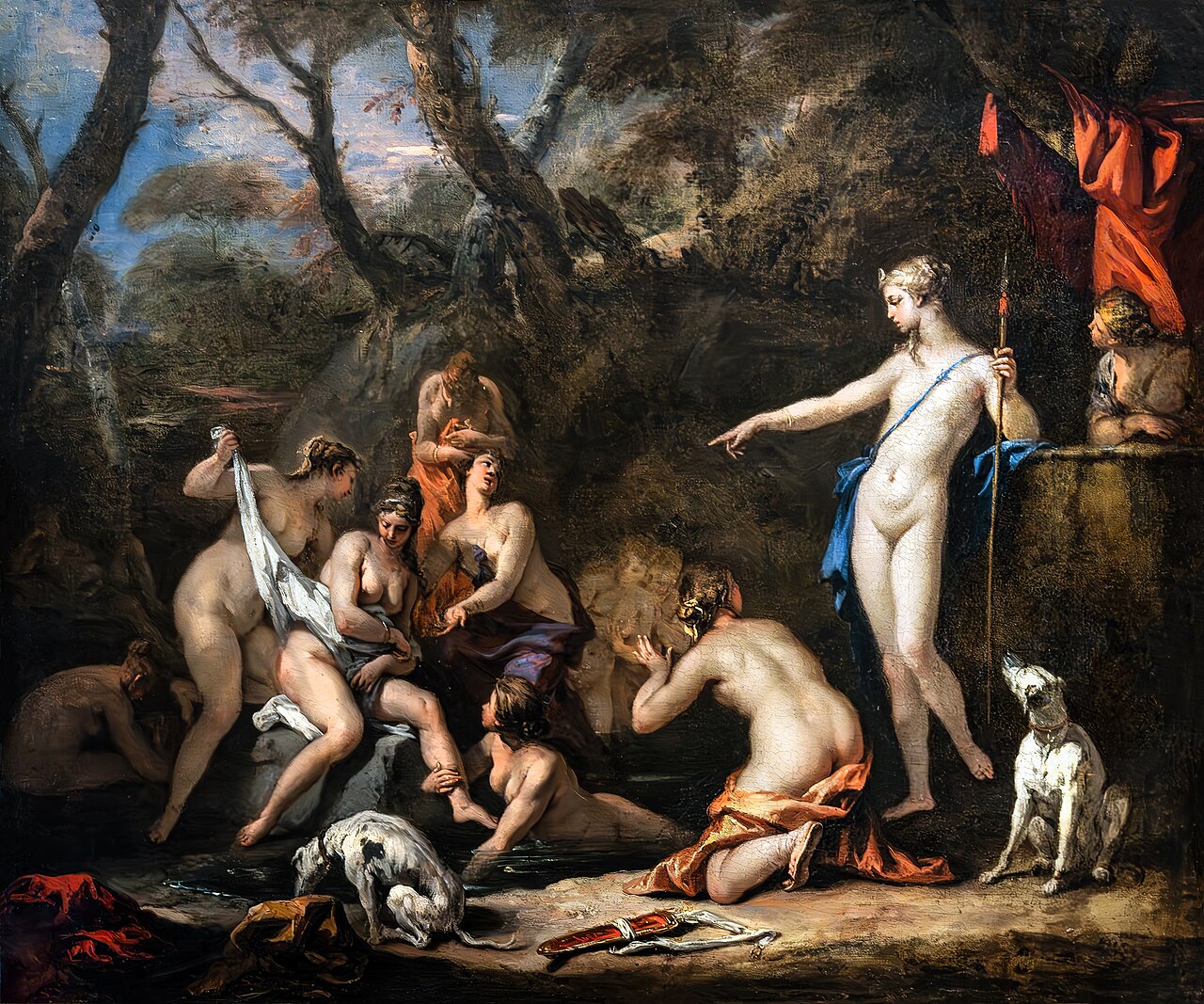
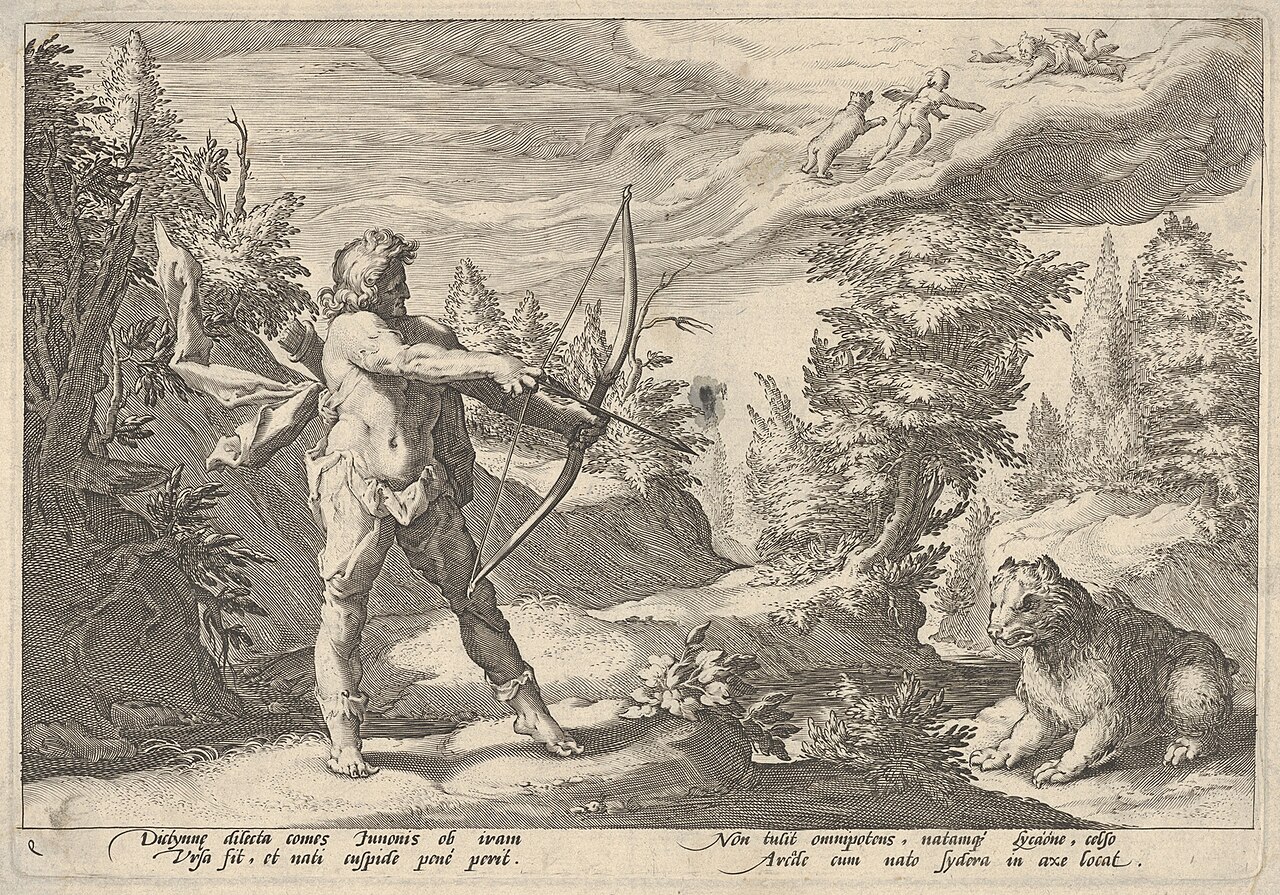
Callisto (Ancient Greek: Καλλιστώ, meaning "most beautiful") appears in Greek mythology as either an Arcadian mountain nymph (an Oread) or the daughter of King Lycaon, depending on the version. She was a follower of Artemis (known as Diana to the Romans) and, like all the nymphs of Artemis, took a vow of virginity. Zeus pursued her, and in many accounts, he disguised himself as Artemis to get close to her; she slept with him believing he was the goddess. After she became pregnant, her condition was discovered while she was bathing with Artemis and the other nymphs. Artemis expelled her from the group in anger. In some versions, Hera, Zeus's wife, transformed Callisto into a bear out of fury; in others, Zeus himself gave her an ursine form. Later, as a bear, Callisto was nearly killed by her son Arcas while he was hunting. Zeus intervened and placed her among the stars as the constellation Ursa Major (the Great Bear), and sometimes placed Arcas as Ursa Minor. She was considered the bear-mother of the Arcadians through her son Arcas by Zeus.
Other accounts name the mother of Arcas as Megisto (daughter of Ceteus, son of Lycaon) or Themisto (daughter of Inachus). The mythographer Hesiod wrote that Callisto, daughter of Lycaon, was seduced by Zeus and, after her pregnancy was discovered while bathing, Hera (or Zeus) turned her into a bear. She gave birth to Arcas, was later hunted by goat-herds, and eventually entered a forbidden precinct of Zeus, where she was nearly killed by her son and the Arcadians; Zeus saved her and placed her among the stars. Eratosthenes mentions a variant where the transformed companion was named Phoenice and became Ursa Minor. Ovid's version has Jupiter (Zeus) take the form of Diana (Artemis) to avoid detection by Juno (Hera); he forced himself on Callisto, who fought but was overpowered. When the real Diana arrived, Callisto fled in fear. Her pregnancy was discovered months later while bathing, and Diana expelled her. Juno then turned her into a bear. Sixteen years later, as a bear, she encountered Arcas hunting; Jupiter averted the tragedy by placing them both in the sky as Ursa Major and Minor. Juno, enraged, asked Tethys to prevent the constellations from ever setting into the ocean, explaining their circumpolar position.
- Mythological role
- Nymph or daughter of King Lycaon
- Known for
- Transformation into a bear and constellation Ursa Major
- Parents
- Lycaon (in some accounts)
- Children
- Arcas (by Zeus)
- Associated deities
- Artemis, Zeus, Hera
- Celestial namesake
- Fourth Galilean moon of Jupiter and a main belt asteroid
Lore & Background
Callisto was a follower of Artemis who took a vow of virginity. According to Hesiod, she was seduced by Zeus and remained undetected until she was seen bathing while pregnant by Artemis, who then expelled her. Hera or Zeus changed her into a bear. She gave birth to a son named Arcas. Later, while hunting, she was nearly killed by her own son Arcas, but Zeus delivered her and placed her among the stars as the Bear.
In Ovid's version, Jupiter took the form of Diana to evade his wife Juno and forced himself upon Callisto. Her pregnancy was discovered while bathing with Diana, who expelled her. Juno then transformed Callisto into a bear. In Apollodorus, Zeus disguised himself as Artemis, not Apollo, and Hera turned Callisto into a bear; Artemis later shot the bear at Hera's request. Nonnus does not refer to Callisto as a 'female paramour' entering a woman's bed.
Reader's Guide
Callisto's myth is significant for its multiple variations and its connection to the constellations Ursa Major and Ursa Minor. The story reflects themes of divine pursuit, punishment, and transformation, with different authors assigning blame to Zeus, Hera, or Artemis. The name Kalliste ('most beautiful') may have been an epithet of Artemis herself, and the bearlike character of Artemis was a feature of the Brauronia cult. The myth may derive from the observation that a set of constellations appear close together in the sky, including Ursa Major, Ursa Minor, Boötes, and Virgo. The constellation Boötes was identified as Arcas, the 'Bear-warden.' The story has been depicted in classical art and Renaissance paintings, often showing the moment of discovery of Callisto's pregnancy. The fourth Galilean moon of Jupiter and a main belt asteroid are named after Callisto, cementing her legacy in astronomy.
Did You Know?
- Callisto was believed to be one of the followers of Artemis who was pursued by Zeus.
- According to some writers, Zeus transformed himself into the figure of Artemis to pursue Callisto.
- In one version recorded by Hyginus, it was Zeus who turned Callisto into a bear to conceal her from Juno.
The Pursuit by Zeus
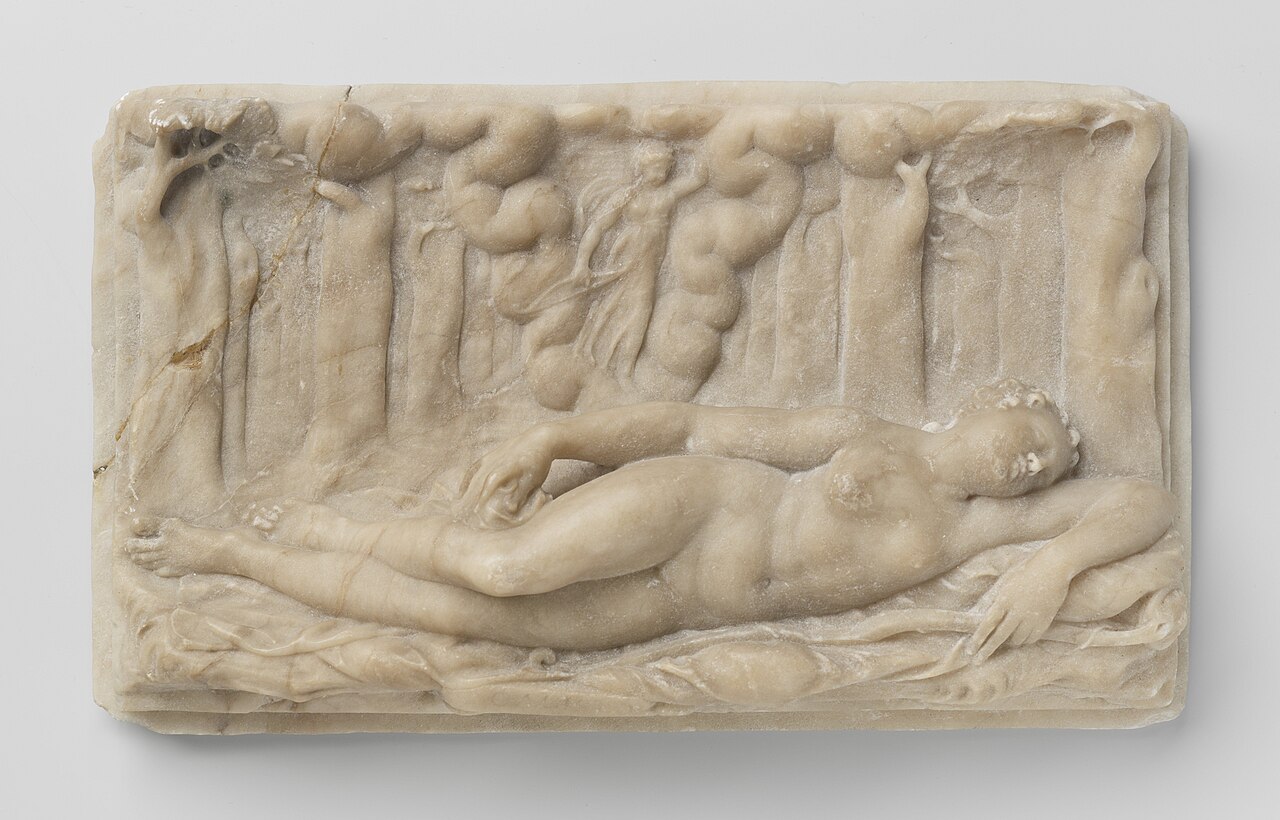
Across the surviving mythological accounts, the manner in which Zeus approached Callisto varies considerably, yet the core event remains consistent: a sworn virgin of Artemis was seduced or forced into a union with the king of the gods. In Hesiod's telling, Zeus simply seduced her while she occupied herself among wild beasts in the mountains, and the deception went undetected for some time. Ovid offers a more dramatic and troubling version: Jupiter assumed Diana's form to slip past Juno's watchful eye, and though Callisto sensed something was amiss the instant he offered what she recognized as non-virginal kisses, she was overpowered before she could escape. Apollodorus adds that Zeus may have disguised himself as Apollo rather than Artemis, a detail unique to that source. Hyginus traces the lesbian-tinged disguise to a lost Attic comedy by the comedian Amphis, in which Callisto, questioned about her pregnancy, blamed Artemis herself. Nonnus, meanwhile, records the blunt phrasing that a female paramour entered a woman's bed.
Discovery and the Bear's Curse
The revelation of Callisto's pregnancy shattered her place among Artemis's companions. In most versions, the truth came to light during a communal bathing scene, and Artemis's fury was immediate: the nymph was cast out from the goddess's retinue. What followed depended heavily on the source. In Ovid's account, Juno seized the moment to avenge her wounded pride and reshaped the expelled nymph into a bear. Hesiod attributes the transformation directly to Artemis, who, enraged at the broken vow of virginity, changed Callisto into a beast on the spot. Apollodorus complicates matters further, suggesting Zeus himself turned her into a bear to conceal her from Hera, only for Hera to then command Artemis to shoot the animal. Hyginus preserves yet another variant in which Zeus performed the transformation to hide Callisto from Juno, who then directed Diana to slay the creature with her arrows. In every telling, the result was the same: a once-pure mountain nymph reduced to a wandering bear, stripped of her identity and her community.
The Hunt, the Javelin, and the Stars
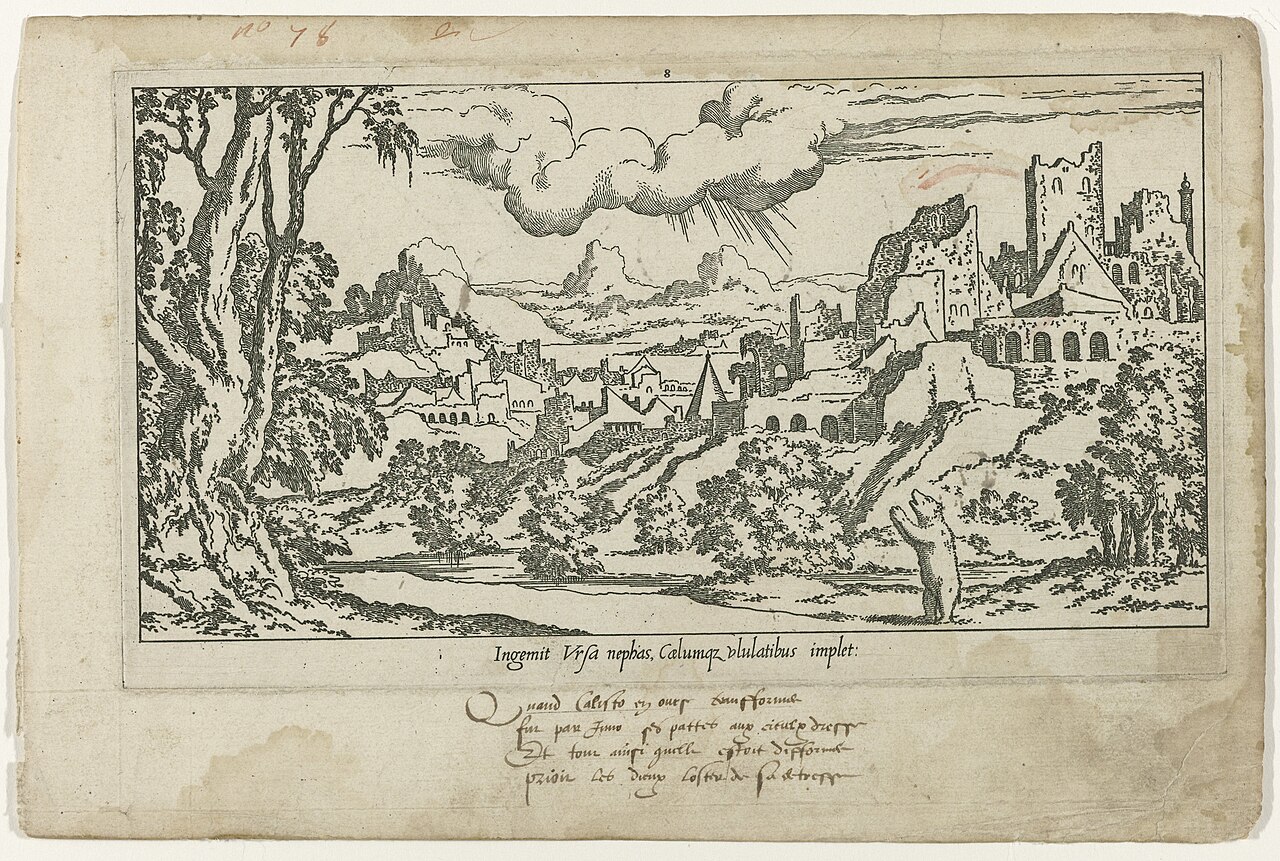
Callisto's existence as a bear was marked by repeated danger. In Hesiod's narrative, goat-herds hunted her in the mountains and delivered her, still carrying her infant son Arcas, to her father Lycaon. Later, while wandering into the forbidden precinct of Zeus, she was pursued by Arcas and the Arcadians, who were about to kill her when Zeus intervened. Ovid sets the climactic scene sixteen years after the transformation: Arcas, now a young hunter, spots the bear in the forest and raises his javelin. At the very moment the weapon was about to strike, Jupiter averted the tragedy by lifting both mother and son into the sky, placing them as the constellations Ursa Major and Ursa Minor. Juno, furious that her retribution had been undone, appealed to Tethys, the personification of the ocean, demanding that the two bears never meet her waters. This divine curse provided ancient astronomers with a poetic explanation for why these two constellations remain circumpolar, never dipping below the horizon.
Bear-Mother, Constellation, and Cosmic Namesake
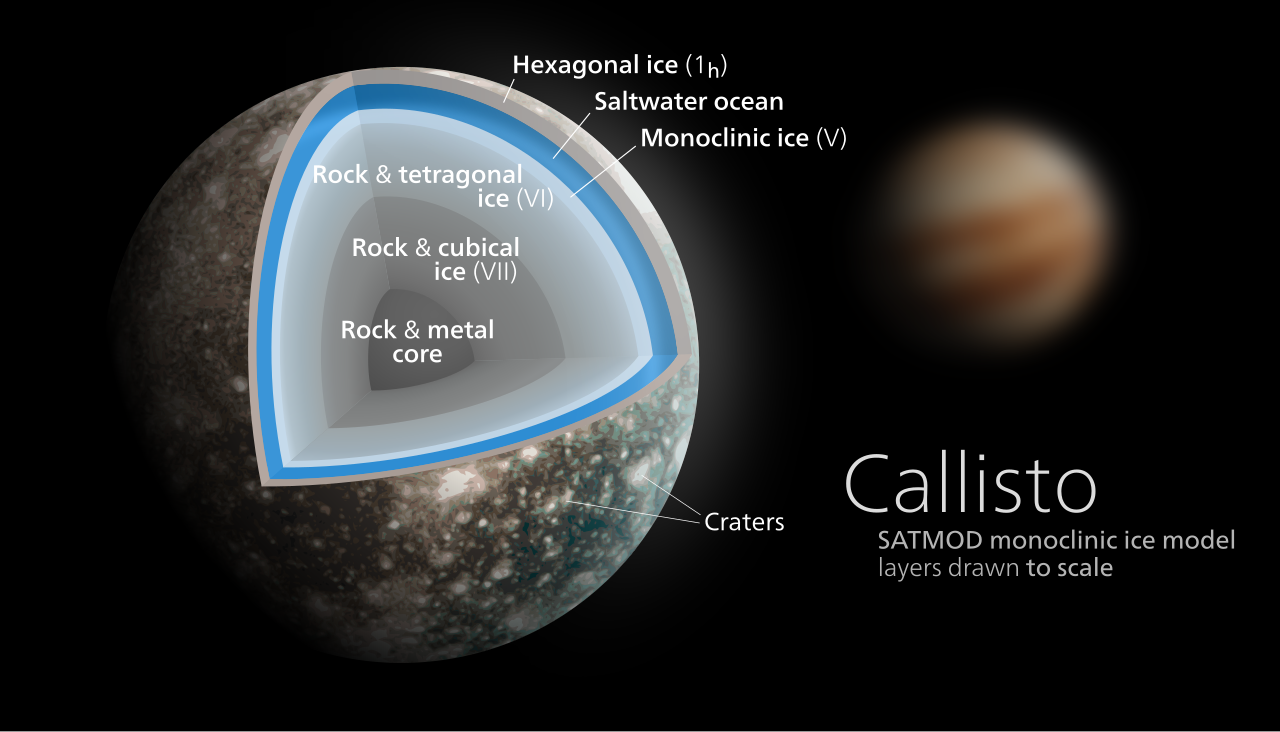
Beyond the narrative itself, Callisto's myth left a layered imprint on Greek cultural and religious life. She was revered as the bear-mother of the Arcadians through her son Arcas, the eponymous ancestor of Arcadia, though some sources name Megisto, daughter of Ceteus, or Themisto, daughter of Inachus, as Arcas's true birth mother instead. John Tzetzes records that Charon of Lampsacus attributed Arcas's paternity to Apollo rather than Zeus. The constellation Ursa Major, known to Greeks as Arktos, carried additional mythological weight: in one tradition it was called Helice, and in that guise it advised Demeter to consult Helios regarding Persephone's abduction. The legacy extends into modern science as well. The fourth Galilean moon of Jupiter bears her name, as does a main-belt asteroid, ensuring that the most beautiful nymph of Arcadia continues to orbit through the cosmos.
Gallery
More in Mythological rape victims 1-24
Spotted an error? Know more?
Reader corrections go straight into our review queue. Suggest an edit · How this site is sourced