
Aura (mythology)
Minor wind goddess whose name means 'breeze' in Greek.

Maksim Sokolov (maxergon.com) · CC BY-SA 4.0
Aura (Ancient Greek: Αὔρα, meaning 'breeze') is a minor wind goddess in Greek and Roman mythology, whose name signifies a cool breeze. The plural form, Aurae, sometimes describes a group of breeze nymphs associated with Boreas, the north wind. Aura is best known from the late antique poet Nonnus, who recounts her as the daughter of the Titan Lelantos and the mother, by Dionysus, of twin sons—one named Iacchus, a minor deity linked to the Eleusinian Mysteries, and another unnamed child.
- Field
- Greek and Roman mythology
- Known for
- Minor wind goddess; mother of twin sons by Dionysus (including Iacchus); subject of Nonnus' Dionysiaca
- Mythological parents
- Lelantos (father); mother not named in Nonnus
- Associated deities
- Artemis, Dionysus, Nemesis, Eros, Boreas
- Notable offspring
- Twin sons by Dionysus (one named Iacchus, the other unnamed)
Lore & Background
The most detailed account of Aura's myth comes from Nonnus in the fifth century AD. In his epic Dionysiaca, Aura is a tall, fast, manlike virgin huntress and companion of Artemis. After teasing Artemis about her breasts, Artemis enlists Nemesis to punish Aura. Nemesis has Eros make Dionysus mad with desire; Dionysus drugs Aura with wine, ties her up, and rapes her while unconscious. When Aura awakes, enraged, she attacks herdsmen and later gives birth to twin boys. She tries to feed them to a lioness, which refuses, then seizes one, flings it into the air, and eats it. Artemis saves the other child (some interpretations identify this saved child as Iacchus, but the text does not explicitly confirm this). Aura drowns herself in the river Sangarios, where Zeus turns her into a spring.
Reader's Guide
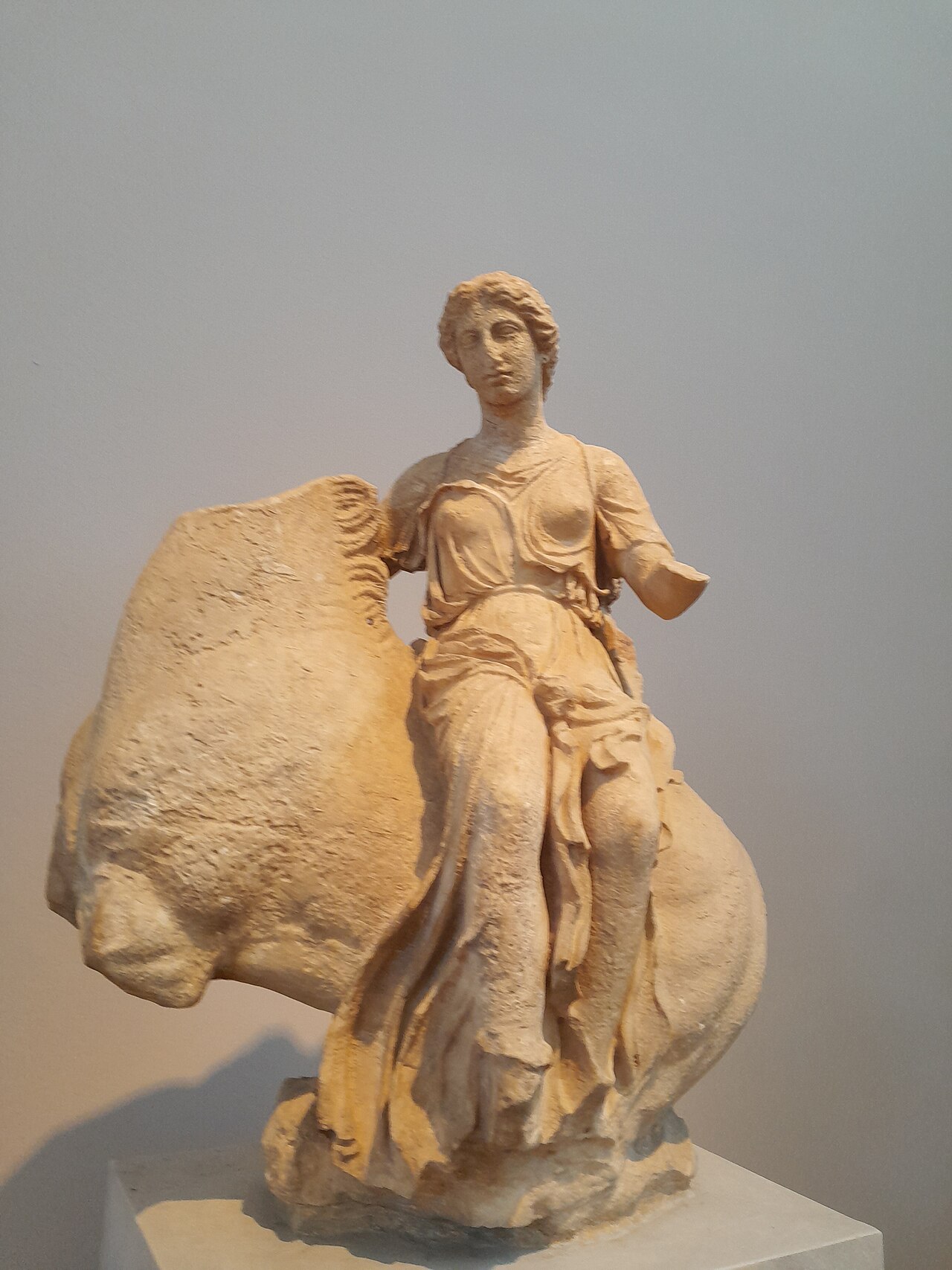
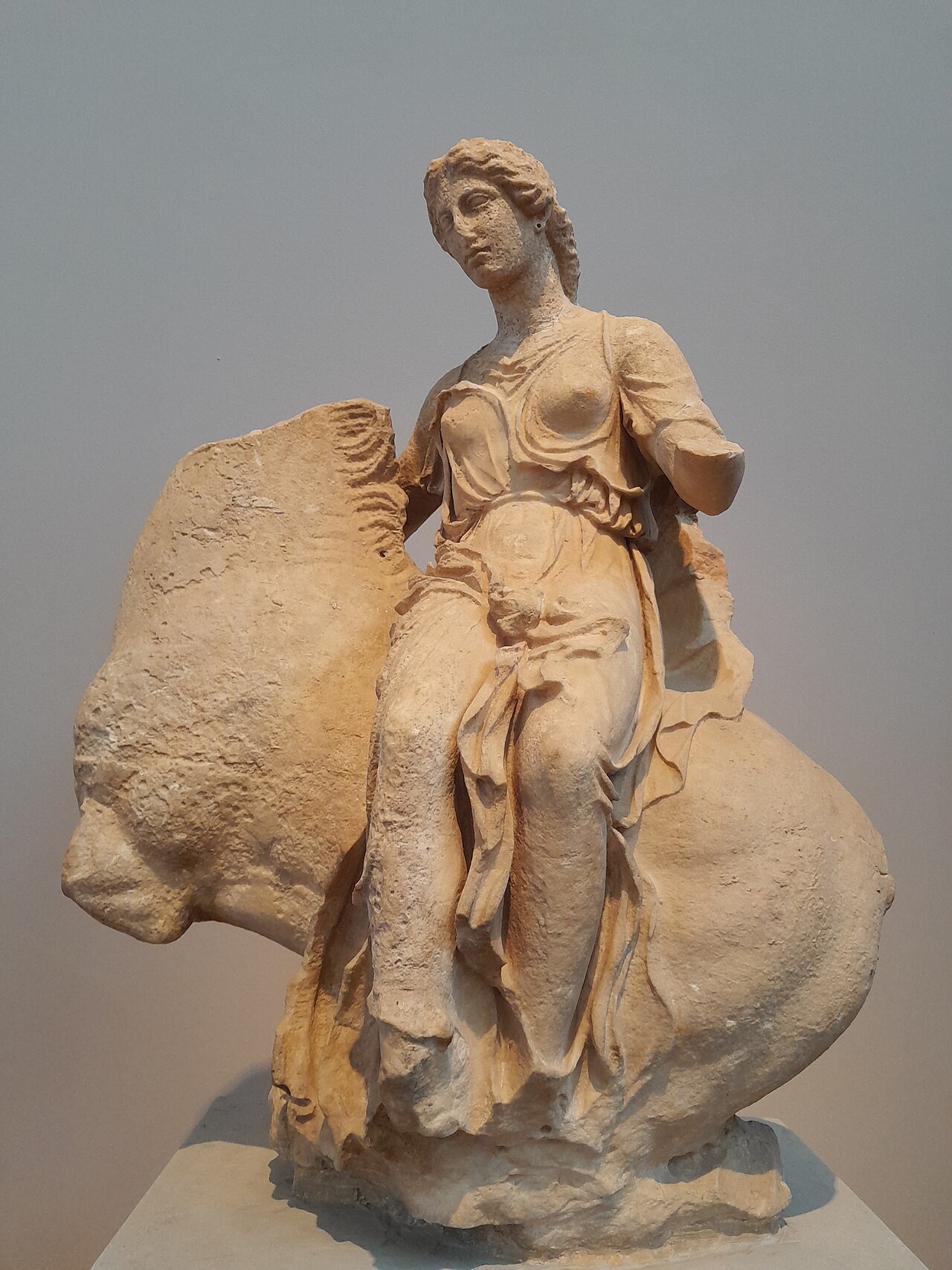
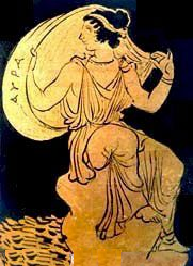
Aura's significance lies in her role as a minor deity whose myth illustrates themes of virginity, divine punishment, and transformation. Nonnus' account is the only detailed lineage, making her a rare figure in late antique literature. Her story also appears in Ovid's Metamorphoses, where her name is confused with Aurora, leading to the tragic misunderstanding between Cephalus and Procris. Iconographically, Aura is rarely depicted; only two inscribed images survive from antiquity, and she may appear on the Ara Pacis Augustae and in Botticelli's The Birth of Venus. Her legacy includes the lost play Aurae by Metagenes and her connection to the Eleusinian Mysteries through her son Iacchus.
Did You Know?
- Aura's name is cognate with the Greek word ἀήρ, meaning air or morning mist.
- Nonnus is the only ancient author to provide a lineage for Aura, making her the daughter of the Titan Lelantos.
- In Ovid's Metamorphoses, Cephalus' calls to Aura are misinterpreted as an affair, leading to his wife Procris' death.
- Only two ancient artifacts with inscriptions identifying Aura are known: a skyphos from Taranto and a volute-krater in the British Museum.
The Parthenos and the Huntress
Aura occupied a specific place within the broader tradition of parthenoi myths, those narratives centered on holy maidens dedicated to Athena. As a parthenos, she embodied the archetype of the anumpheutos woman—one who, by her own choice, remained unmarried and stepped outside the domestic sphere of the oikos. Rather than submitting to the conventional feminine role, she aligned herself with Artemis, the goddess of the hunt, and devoted herself to the wilderness. This choice, however, carried a paradox: while it freed her from male control, it simultaneously stripped her of male protection. In the mythic logic of Greek tradition, such women, existing outside the structures that governed ordinary life, became targets of divine sexual pursuit. Aura's particular distinction among these huntresses was her extraordinary speed. She was noted specifically for running, a physical gift that would define both her brief triumph and the terms of her ultimate defeat. Her identity as a swift, independent maiden set the stage for a confrontation with a god who would ultimately outwit her rather than outpace her.
The Chase and the Trick
Dionysus, the god of wine and ecstasy, set his desire upon Aura and pursued her. What distinguished Aura's story from many other parthenoi narratives was that she initially succeeded in her flight. Her legendary speed allowed her to outrun the god entirely, a rare victory in a mythic tradition where the pursued maiden typically escapes only through death or metamorphosis. For a time, Aura proved that physical swiftness could be a genuine shield against divine assault. Yet the god's strategy shifted from pursuit to deception. Rather than confronting her directly, Dionysus altered the very water she drank, transforming it into wine. The result was intoxication, and in her drunken sleep, Aura lost the agency that her running had preserved. The assault occurred not in a chase but in a moment of vulnerability she did not choose. This narrative structure—escape through speed, followed by betrayal through altered sustenance—marks Aura's myth as a particular variant within the broader pattern of parthenoi stories, where the maiden's one advantage is systematically undermined by divine cunning.
The Birth and the Breaking
The consequences of the assault followed the pattern established in Greek myth: a woman who survived sexual violence by a god became pregnant and produced a hero child. Aura bore twins, and the aftermath of that birth shattered what remained of her composure. In an act of desperate violence, she killed one of her children and consumed it. She then turned toward the surviving twin with the same intent, only for Artemis to intervene and stop her. The goddess's intercession spared the second child but could not restore Aura to her former self. The irrevocable change that the parthenoi tradition prescribed had already taken hold. The shift in status following rape or attempted rape, as the mythic framework dictates, is permanent and absolute. Aura's identity as a free, swift huntress was gone, replaced by the trauma of violation, the horror of infanticide, and the loss of the child she nearly destroyed. The twins themselves became a mark of the god's claim upon her body, a living reminder that her autonomy had been overridden by divine desire.
The Stream: Metamorphosis as Final Escape
In the parthenoi tradition, the consequence of fleeing sexual violence is another force upon the body: the loss of human form. Daphne became a laurel tree; Aura's ending followed the same logic. After Artemis prevented her from consuming her second twin, Aura threw herself into a river and was transformed into a stream. This metamorphosis was not a peaceful departure but the final act of a woman whose every avenue of self-determination had been closed. She had outrun Dionysus, only to be undone by his trick. She had given birth, only to be driven to violence against her own children. The river became her body, her speed now expressed as the endless flow of water rather than the sprint of a huntress. In the broader context of Greek myth, such transformations served as the only available escape for women who could not simply die. Aura's stream persists as a landscape feature, a permanent reminder that the parthenos who defied the gods was not destroyed but rendered inhuman, her identity dissolved into the natural world she had once roamed as a free runner.
Gallery

More in Mythological rape victims 1-24
Spotted an error? Know more?
Reader corrections go straight into our review queue. Suggest an edit · How this site is sourced