
Caeneus
Lapith hero transformed from woman to invulnerable man.

Daderot · Public domain
Caeneus was a Lapith hero, ruler of Thessaly, and the father of the Argonaut Coronus. In Greek mythology, he is notable for having been born a girl named Caenis, the daughter of Elatus, and transformed into an invulnerable man by the sea-god Poseidon after the god had sex with her. Caeneus participated in the Centauromachy, the battle between the Lapiths and the Centaurs, where he met his demise by being pounded into the ground alive.
- Born
- Thessaly (as Caenis, daughter of Elatus)
- Died
- Centauromachy, pounded into the ground by Centaurs
- Field
- Greek mythology, Lapith hero
- Nationality
- Thessalian (Lapith)
- Known for
- Transformation from woman to invulnerable man; participation in the Centauromachy; king of the Lapiths
Lore & Background
Caeneus was originally a woman named Caenis, daughter of the Lapith king Elatus from Gyrton in Thessaly. After Poseidon had sex with Caenis, she was transformed by him into an invulnerable man. According to the mythographer Acusilaus, Caenis did not want to have a child by Poseidon due to an unspecified vow or prohibition, so Poseidon transformed her into an invulnerable man stronger than any other. In the usual version, Poseidon promised to do whatever Caenis wanted, and she asked to be transformed into an invulnerable man. Caeneus became king of the Lapiths and was the strongest warrior of his day.
Reader's Guide
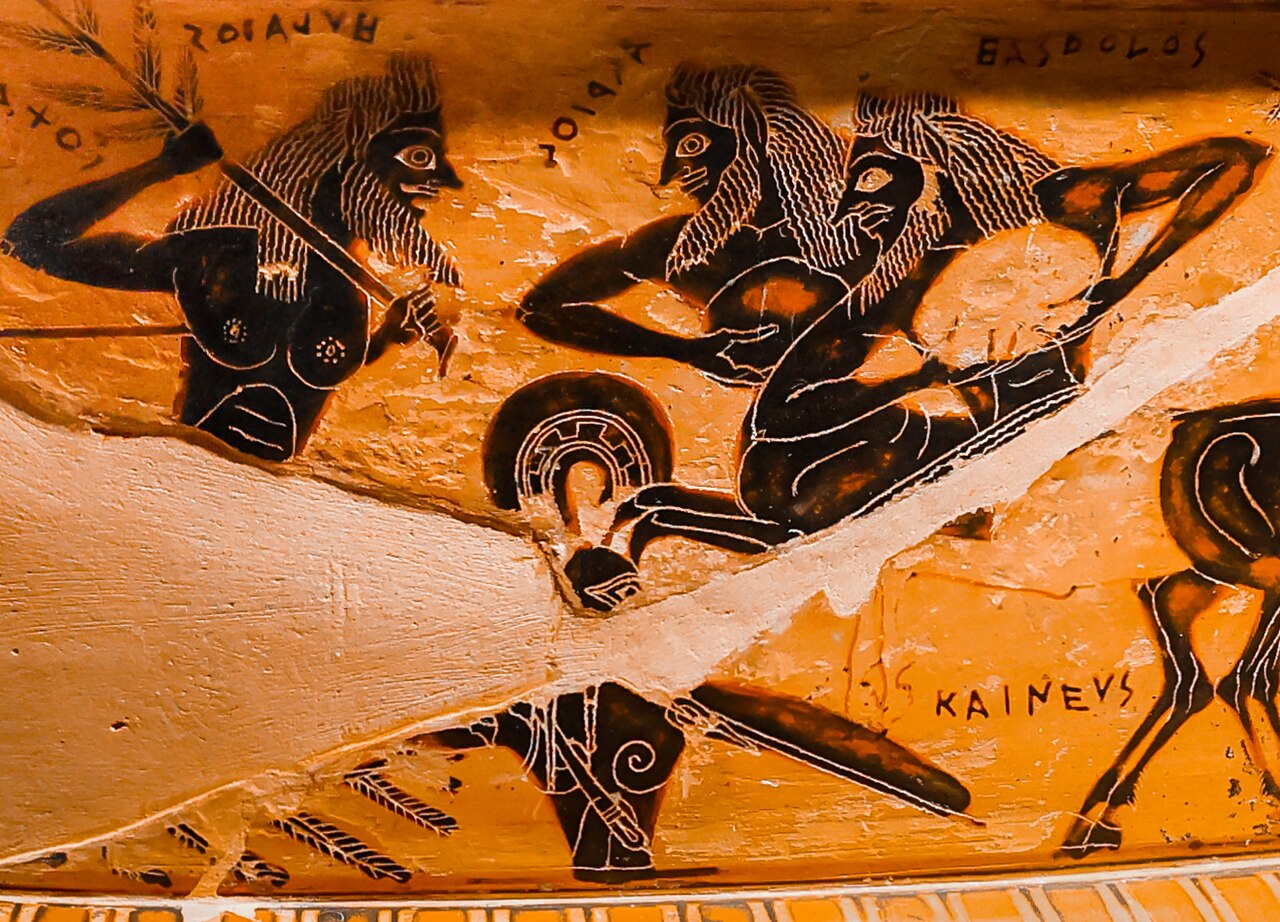
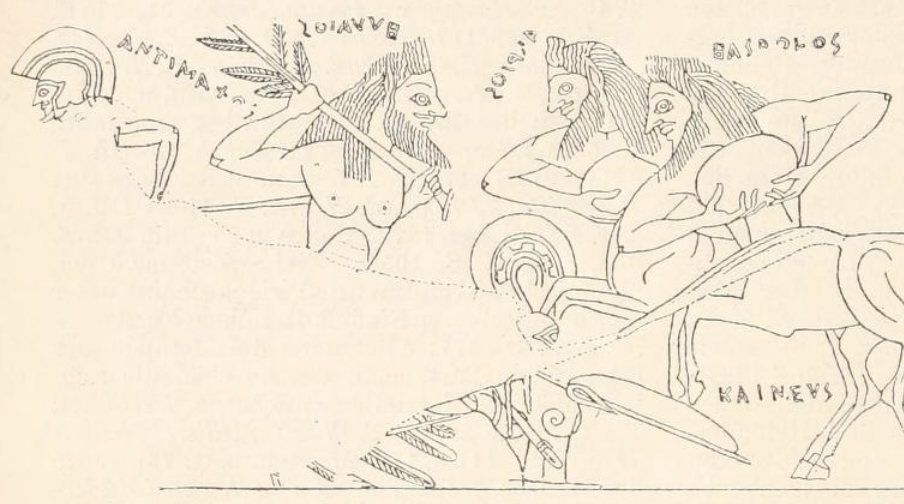
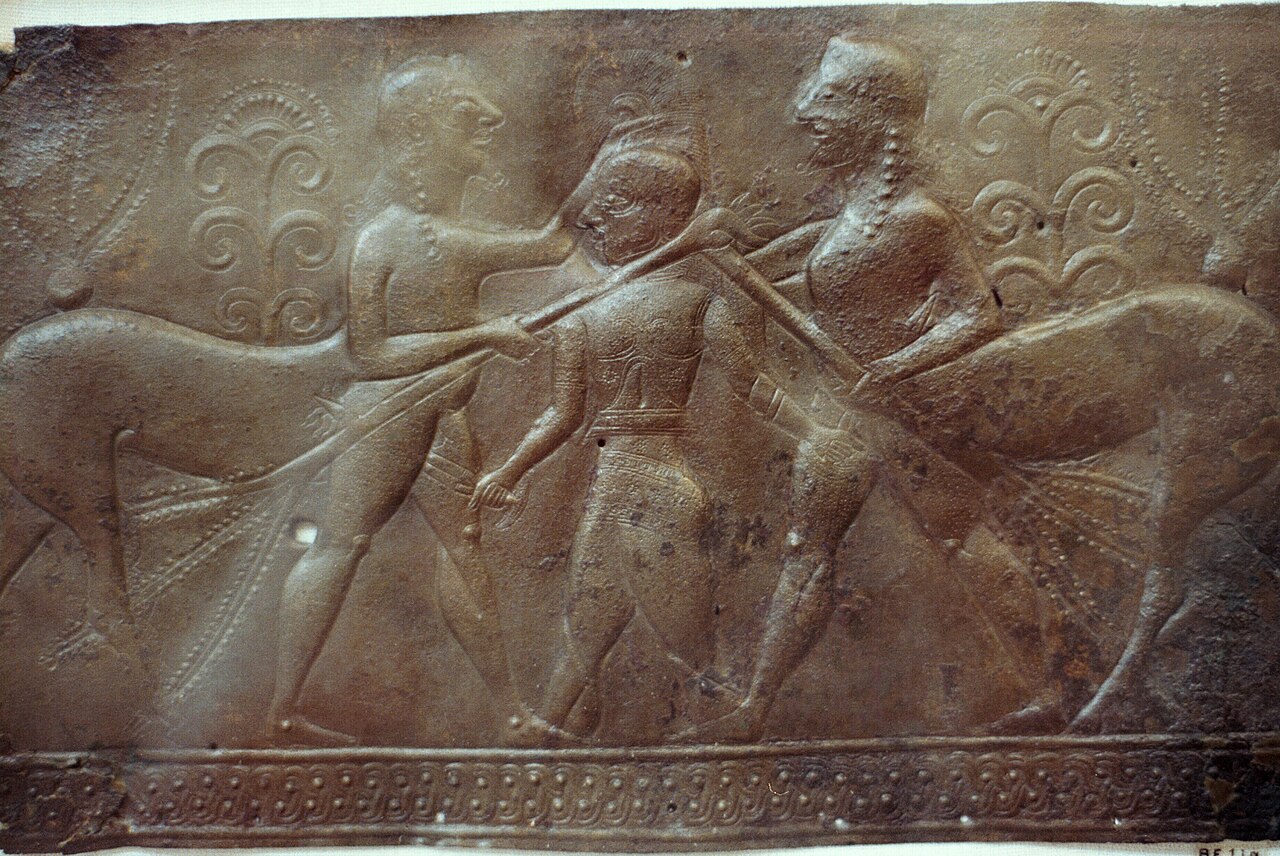
Caeneus's significance lies in his unique transformation story and his role in the Centauromachy, a foundational myth of the Lapiths. His invulnerability, granted by Poseidon, made him a formidable warrior but also led to his unusual death: because no weapons could harm him, the Centaurs hammered him into the ground with tree trunks and boulders, restraining him alive. This motif appears in Greek art as early as the mid-seventh century BC, such as on a bronze relief from Olympia and the François Vase. The story also explores themes of gender transformation and impiety: Caeneus angered the gods by setting up his spear for worship, leading Zeus to send the Centaurs against him. Later Roman authors, including Ovid and Virgil, elaborated on the tale, with Virgil depicting Caeneus in the Underworld as a woman again. Caeneus's legacy endures as a symbol of invulnerability overcome by brute force and as a rare mythological example of a transgender figure.
Did You Know?
- Caeneus was originally a woman named Caenis, transformed into an invulnerable man by Poseidon after he had sex with her.
- Caeneus was pounded into the ground alive by Centaurs during the Centauromachy because no weapons could harm him.
- The earliest depiction of Caeneus is a mid-seventh-century BC bronze relief from Olympia showing two Centaurs hammering him with tree trunks.
- According to Virgil's Aeneid, Caeneus's shade in the Underworld had been turned back into a woman by Fate.
The Transformation from Caenis to Caeneus
Caeneus's origin story is one of the most striking gender transformations in Greek myth. Born a girl named Caenis, daughter of the Lapith king Elatus of Gyrton in Thessaly, she was transformed into an invulnerable man by the sea-god Poseidon following a sexual encounter. The oldest secure literary reference to this metamorphosis comes from the mythographer Acusilaus, writing in the sixth or fifth century BC, though the motif may stretch back as far as the Hesiodic Catalogue of Women. In Acusilaus's telling, the young woman—called Caene in that source—had made a vow or was bound by a prohibition against bearing children, and Poseidon's transformation was his way of honoring that constraint. The more familiar version holds that after their encounter, Poseidon offered to grant any wish, and Caenis chose to become a man of unmatched strength. Either way, the result was the same: a warrior of extraordinary power who would go on to rule the Lapiths and feature in some of the most celebrated episodes of Greek heroic tradition.
Kingship, Impiety, and the Spear
Once transformed, Caeneus rose to become the strongest warrior of his era and assumed the kingship of the Lapiths. Yet his reign was marked by a grave act of impiety that drew divine retribution. Accounts differ on the precise nature of the offense: one Iliad scholiast reports that Caeneus planted his spear in the public square and commanded his people to worship it, while a scholiast on Apollonius of Rhodes' Argonautica claims Caeneus directed his own devotion toward the spear rather than toward the gods. In either telling, the transgression was severe enough that Zeus dispatched the Centaurs against him, per Acusilaus. The Oxyrhynchus Papyrus preserving Acusilaus's fragment adds a philosophical dimension: Theophrastos cited Caeneus as a cautionary example of a ruler who governed by the 'spear'—raw force—rather than the 'scepter' of legitimate authority. Beyond the Centauromachy, Caeneus also appears among the participants in the Calydonian boar hunt, a connection attested by the lyric poet Stesichorus, Ovid, and Hyginus, though none of these sources elaborates on his specific role in that episode.
The Centauromachy and a Death Defying All Weapons
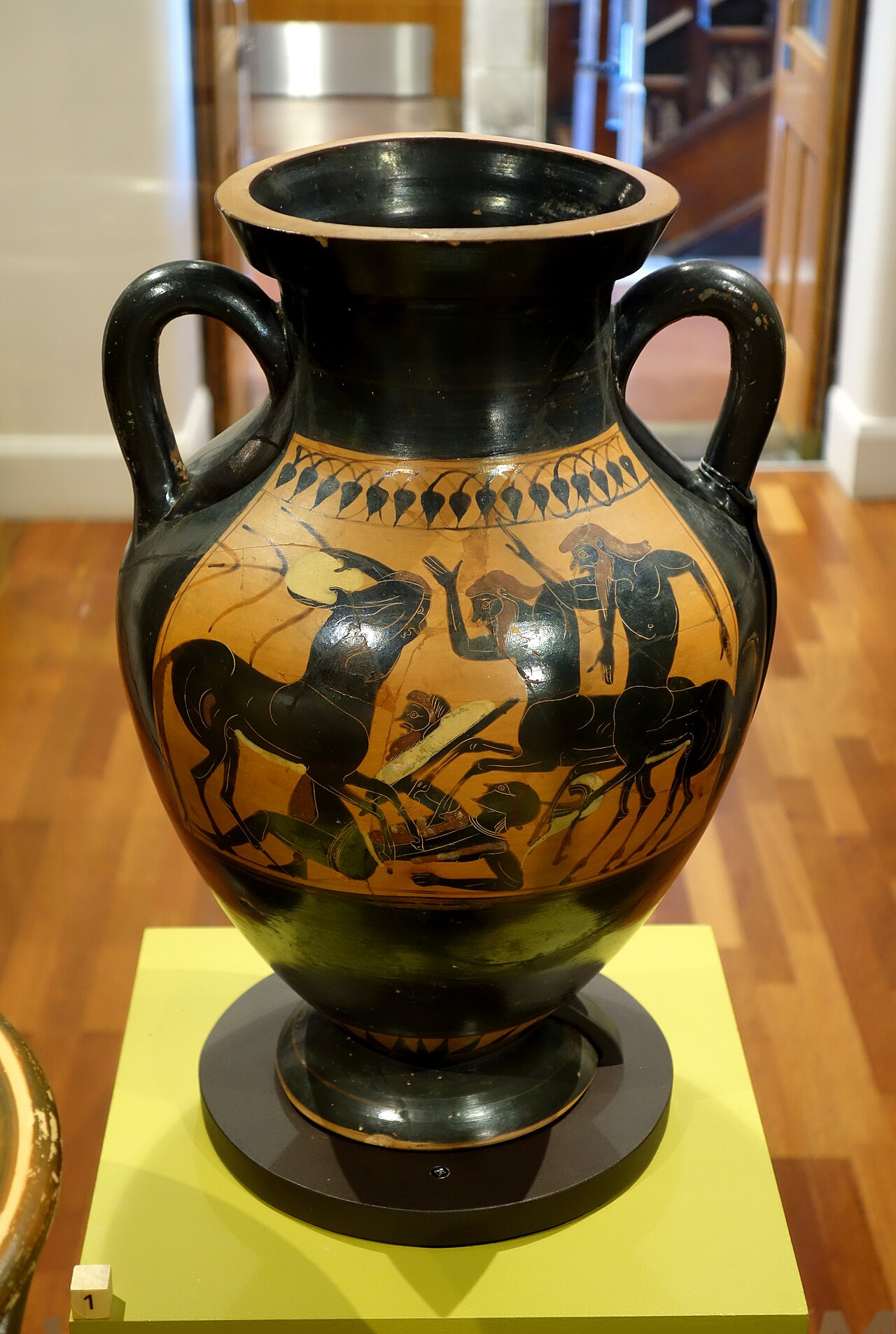
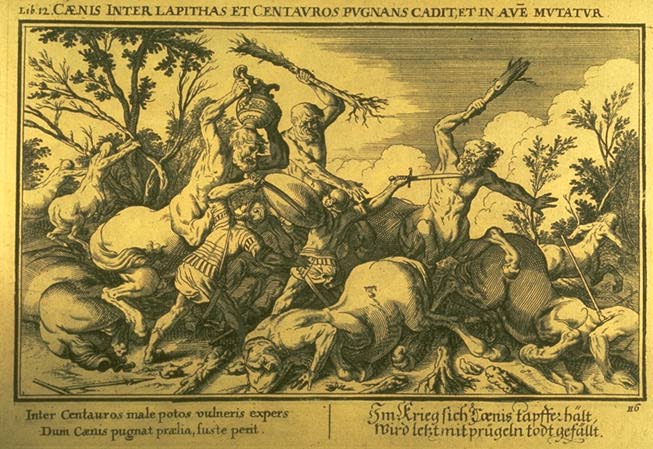
The battle at Pirithous's wedding feast, where the Lapiths clashed with the Centaurs, is the earliest narrative associated with Caeneus and the episode that defined his end. Because his divine invulnerability rendered the Centaurs' weapons useless against him, they resorted to a brutal alternative: they drove him into the earth using massive tree trunks and boulders, pinning him alive beneath the ground. Acusilaus describes the Centaurs beating him 'upright' into the soil and sealing him with a stone, while Pindar similarly emphasizes his vertical descent. Apollonius of Rhodes, in his third-century BC Argonautica, paints a more dramatic picture—Caeneus standing alone, having routed the Centaurs, only to be overwhelmed as they piled pine trunks upon him until he sank beneath the earth, still breathing. Ovid records competing afterlives: some believed he was thrust straight into Tartarus, while the seer Mopsus insisted he became a bird. The Orphic Argonautica stresses that he endured the pounding without bending a knee, descending among the dead yet never truly dying.
Caeneus Across the Ages: From Homer to the François Vase
Caeneus occupies a remarkable position in the transmission of Greek myth, appearing across literary and visual media spanning centuries. His earliest known mention is in Homer's Iliad, where Nestor lists him among the mightiest warriors who defeated the Centaurs, alongside Pirithous, Dryas, Exadius, Polyphemus, and Theseus. The Hesiodic Shield of Heracles, composed in the early sixth century BC, depicts 'the spear-bearing Lapiths around Caeneus their king' engaged in combat with Centaurs wielding fir trees. Notably, neither Homer nor the Shield references his invulnerability or the distinctive manner of his death. Yet visual evidence shows the pounding scene was already well established by the seventh century BC: a bronze relief from Olympia depicts two Centaurs driving tree trunks into Caeneus's body, and the François Vase, painted around 570–560 BC, shows him half-buried while three Centaurs strike him with boulders and a trunk. Later authors—Stesichorus, Pindar, Apollonius, Ovid, Hyginus, and Virgil—each added layers, ensuring Caeneus remained a fixture of the heroic imagination from archaic Greece through the Roman imperial period.
Gallery

More in Mythological rape victims 1-24
Spotted an error? Know more?
Reader corrections go straight into our review queue. Suggest an edit · How this site is sourced