
Chelidon (sister of Aëdon)
Anatolian swallow-maiden, sister of Aëdon, victim of Polytechnus.

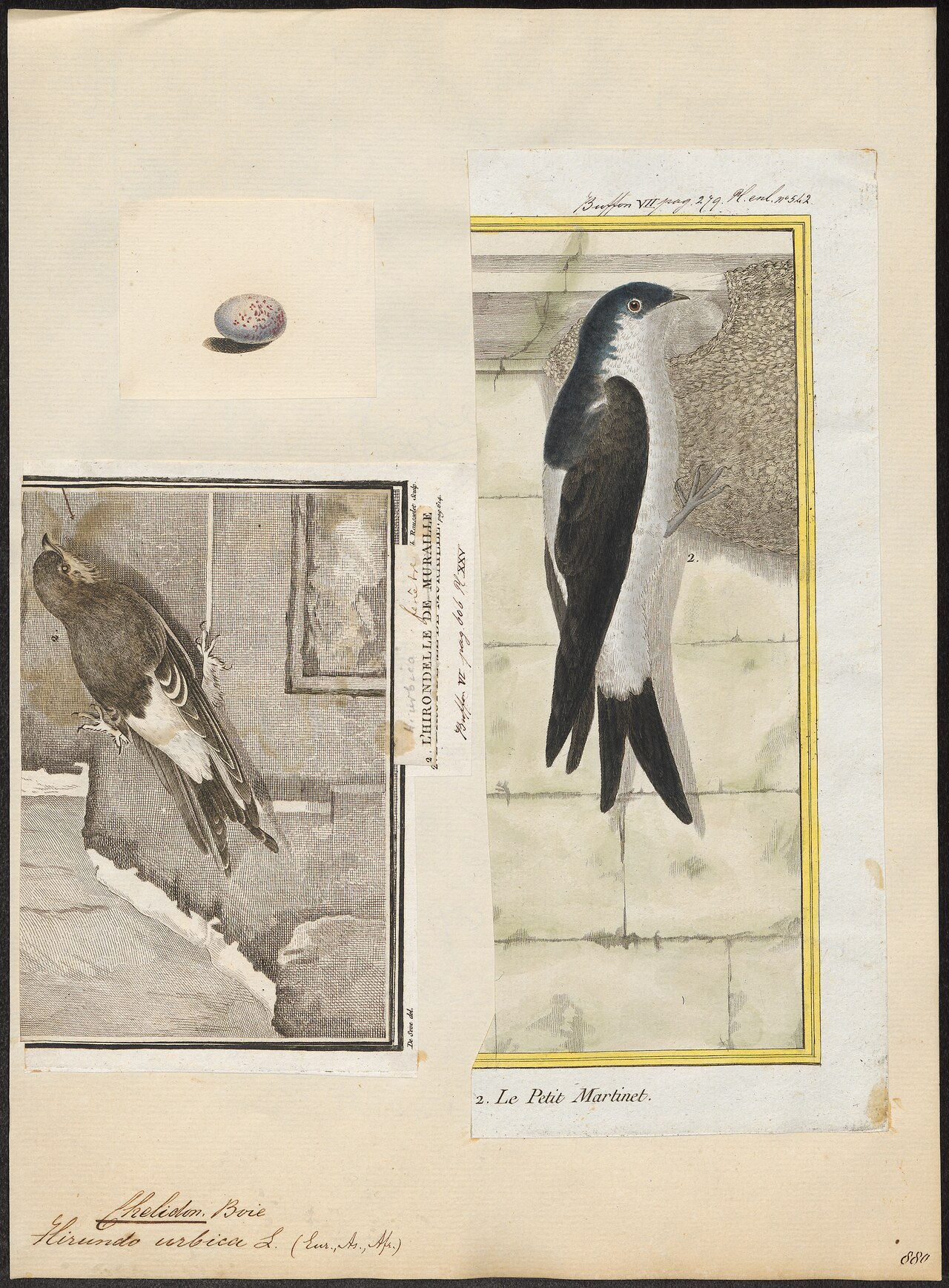
Jacques Christophe Werner / Pierre Langlumé · Public domain
Chelidon (Ancient Greek: Χελιδών, meaning "swallow"), also called Chelidonis, appears in Greek mythology as a minor noblewoman from either Miletus or Ephesus, cities on Asia Minor's western coast. A daughter of Pandareus, she is described as a virgin who suffers abuse and rape at the hands of her brother-in-law Polytechnus. Afterward, she is forced into slavery under her older sister Aëdon, eventually revealing her identity and undergoing a transformation into a swallow. This tale serves as an Anatolian version of the Philomela story, but Chelidon, unlike Philomela, is not mutilated.
According to Antoninus Liberalis, Chelidon was born to Pandareus and his unnamed wife, with a sister named Aëdon and an unnamed brother. Eustathius of Thessalonica names Pandareus's wife as Harmothoë, though he does not list Chelidon among their daughters (Aëdon, Cleothera, and Merope) and mentions no brother. Pausanias instead gives the two other sisters as Cameiro and Clytia. The Miletus associated with Chelidon is sometimes identified not with the well-known Anatolian city but with one in Crete, as some myths about her father are set there. Celoria, however, considers the Cretan Pandareus and the Pandareus in Chelidon's story to be separate figures. Both Hesiod and Sappho wrote that the swallow is the daughter of the Athenian king Pandion I, who is also the father of Philomela—but they refer to Procne, not Chelidon.
The myth begins when Aëdon wins a bet against her husband Polytechnus, forcing him to find her a female slave as promised. He travels to his father-in-law Pandareus, claiming Aëdon wishes to see her sister. Chelidon leaves with Polytechnus to visit Aëdon, but on the journey he rapes her while she cries out to Artemis for help. He then cuts her hair short, dresses her as a slave, and threatens her into silence. He presents her to Aëdon as a slave, and for a time Chelidon suffers in silence under the heavy workload her unsuspecting sister gives her. Eventually, Aëdon overhears Chelidon lamenting her cruel fate. Enraged, Aëdon decides to avenge her. The two sisters kill Itys, Aëdon's son by Polytechnus, and feed him to his unwitting father before fleeing to their own home. Polytechnus quickly realizes what happened and pursues them, but Pandareus protects his daughters, ties up Polytechnus, smears him with honey, and leaves him to be attacked by flies.
- Mythological origin
- Greek mythology
- Family
- Daughter of Pandareus; sister of Aëdon and an unnamed brother
- Known for
- Transformation into a swallow after being raped by her brother-in-law
- Associated locations
- Miletus or Ephesus (Asia Minor); possibly Crete
- Bird transformation
- Swallow
Lore & Background
According to Antoninus Liberalis, Chelidon was the daughter of Pandareus by his unnamed wife and sister to Aëdon and an unnamed brother. Eustathius of Thessalonica wrote that Pandareus's wife was Harmothoë, though he does not list Chelidon among their daughters. Pausanias names the two other sisters Cameiro and Clytia. Sometimes the Miletus Chelidon was from was identified with a city in Crete, since some of her father's myths are set there, though Celoria thinks the Pandareus from Crete and the Pandareus from Chelidon's tale were different figures. Both Hesiod and Sappho wrote that the swallow is the daughter of the Athenian king Pandion I, the father of Philomela—but they refer to Procne, not Chelidon.
After her sister Aëdon won a bet against her husband Polyte
Reader's Guide
Chelidon's story is significant as an Anatolian variety of the more famous myth of Procne and Philomela, in which Chelidon supplants Philomela as the unmarried sister abused by her brother-in-law. Unlike Philomela, Chelidon is not mutilated; her tongue is not cut, and she does not weave a tapestry to inform her sister. The tale preserves an earlier or parallel tradition in which the swallow and nightingale transformations are directly tied to the sisters' names (Chelidon meaning 'swallow', Aëdon meaning 'nightingale'). Both Chelidon and Aëdon appear to individually predate the myth of Procne and Philomela, which was shaped by Sophocles in his lost play Tereus. Earlier writers Hesiod and Sappho knew Chelidon as the daughter of Pandion, not Pandareus, suggesting the story crossed the Aegean from Asia Minor and merged with Athenian mythos. The mutilation of the swallow was probably introduced by Sophocles, along with the change of names to Procne and Philomela. The two distinct versions remained popular until Sophocles' play premiered, after which mentions of the Homeric version drop except in scholiasts. Iconographic evidence includes a sixth-century BC metope from Apollo's temple at Thermos depicting Chelidon and Aëdon plotting together, and some vases possibly showing the murder of Itys.
Did You Know?
- Chelidon is not mutilated, unlike Philomela, whose tongue is cut by Tereus.
- The story of Chelidon is an Anatolian variant of the myth of Procne and Philomela.
The Betrayal and the Sisters' Retribution
When Aëdon won a wager against her husband Polytechnus, he was bound to furnish her with a female servant. He traveled to his father-in-law Pandareus under the pretense that Aëdon wished to see her sister. Chelidon, a virgin, set out with him, but along the way the brother-in-law raped her. As she wept and prayed to Artemis, Polytechnus cut her hair short, dressed her in servile garments, and terrified her into silence. He then handed her to Aëdon as the promised slave. For a while Chelidon bore the heavy workload her unsuspecting sister imposed, keeping her agony hidden. The silence shattered when Aëdon overheard her sister lamenting her fate. Enraged, the married woman resolved to avenge Chelidon. Together the sisters slew Itys, the son Aëdon bore of Polytechnus, and served the infant to the unsuspecting father. Polytechnus soon deduced the crime and pursued them, but Pandareus shielded his daughters, having the rapist bound and coated in honey, then abandoned to swarms of flies. Aëdon, pitying her husband, kept the insects at bay. Pandareus, his wife, and their son, reading her mercy as betrayal, attacked her; Zeus then transformed the whole family into birds.
Tangled Lineage and Regional Disputes
The genealogical record surrounding Chelidon is remarkably inconsistent across ancient sources. Antoninus Liberalis identifies her as a daughter of Pandareus and his unnamed wife, with Aëdon and an unnamed brother as siblings. Eustathius of Thessalonica names the mother Harmothoë yet lists only Aëdon, Cleothera, and Merope as daughters, omitting Chelidon and any brother entirely. Pausanias offers yet another pair of sisters, Cameiro and Clytia. The city of origin compounds the confusion: while Chelidon is typically placed in Miletus on the Anatolian coast, some traditions locate her in a Miletus on Crete, a connection likely drawn from other Pandareus myths set on that island. The scholar Celoria, however, argued that the Cretan and Anatolian Pandareus figures were meant to be distinct individuals. Adding further complexity, both Hesiod and Sappho attributed the swallow to the Athenian king Pandion I, the father of Procne and Philomela, rather than to Pandareus at all, suggesting the figure may have originally belonged to the Attic mythic cycle before being absorbed into the Ionian variant.
The Philomela Shadow and Sophoclean Reshaping
Chelidon's tale is best understood as an Anatolian offshoot of the far more widely known myth of Procne and Philomela, in which the unmarried sister is violated by her brother-in-law. The critical distinction is that Chelidon is never mutilated; she retains her voice and eventually laments aloud, whereas Philomela has her tongue severed and must communicate through a woven tapestry. Yet both sisters in the Chelidon story appear to predate the combined Procne-and-Philomela narrative, which scholars credit to Sophocles' lost tragedy Tereus, staged in the mid-to-late fifth century BC. Fontenrose proposed that the sexually transgressive sister figure may have evolved from Aëdon's original rival, Niobe, in an earlier Attic tale. Artistic evidence from the seventh and sixth centuries BC already shows two women conspiring over the infant Itys, and the testimonies of Hesiod and Sappho indicate they knew a swallow-transformation story tied to the Pandion family. The Homeric version, however, contains no swallow at all, leaving the precise mechanism by which the two bird-myths merged still debated.
The Swallow's Call and the Nightingale's Lament
The avian transformation that closes the Chelidon myth carries deep symbolic weight. Chelidon becomes a swallow, a bird whose call is rendered as a tuneless twitter, while Aëdon becomes a nightingale, celebrated for her mellifluous, mournful song. This contrast encodes the sisters' fates: the nightingale's beautiful lament mirrors Aëdon's grief over her slain son, while the swallow's inarticulate chatter reflects Chelidon's silenced suffering. Artemis, the goddess to whom Chelidon had prayed in her moment of violation, decreed that in her new form the swallow would always dwell near human dwellings, binding her to the world of the people she once served. The etymological link between the Greek name for swallow and the character's identity was later severed when Sophocles and subsequent writers renamed the sisters Procne and Philomela. In late retellings the transformations were even swapped, with the mother becoming the swallow and the aunt the nightingale, a reversal that undermines the original symbolic logic of song and silence.
Gallery
More in Mythological rape victims 1-24
Spotted an error? Know more?
Reader corrections go straight into our review queue. Suggest an edit · How this site is sourced