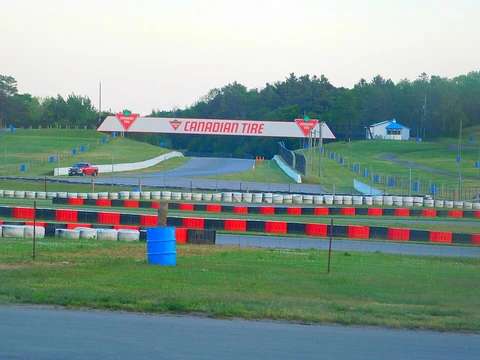
Atlantic Motorsport Park
Volunteer-built and operated motorsports track in Nova Scotia.

Begulabeluga12 · CC0
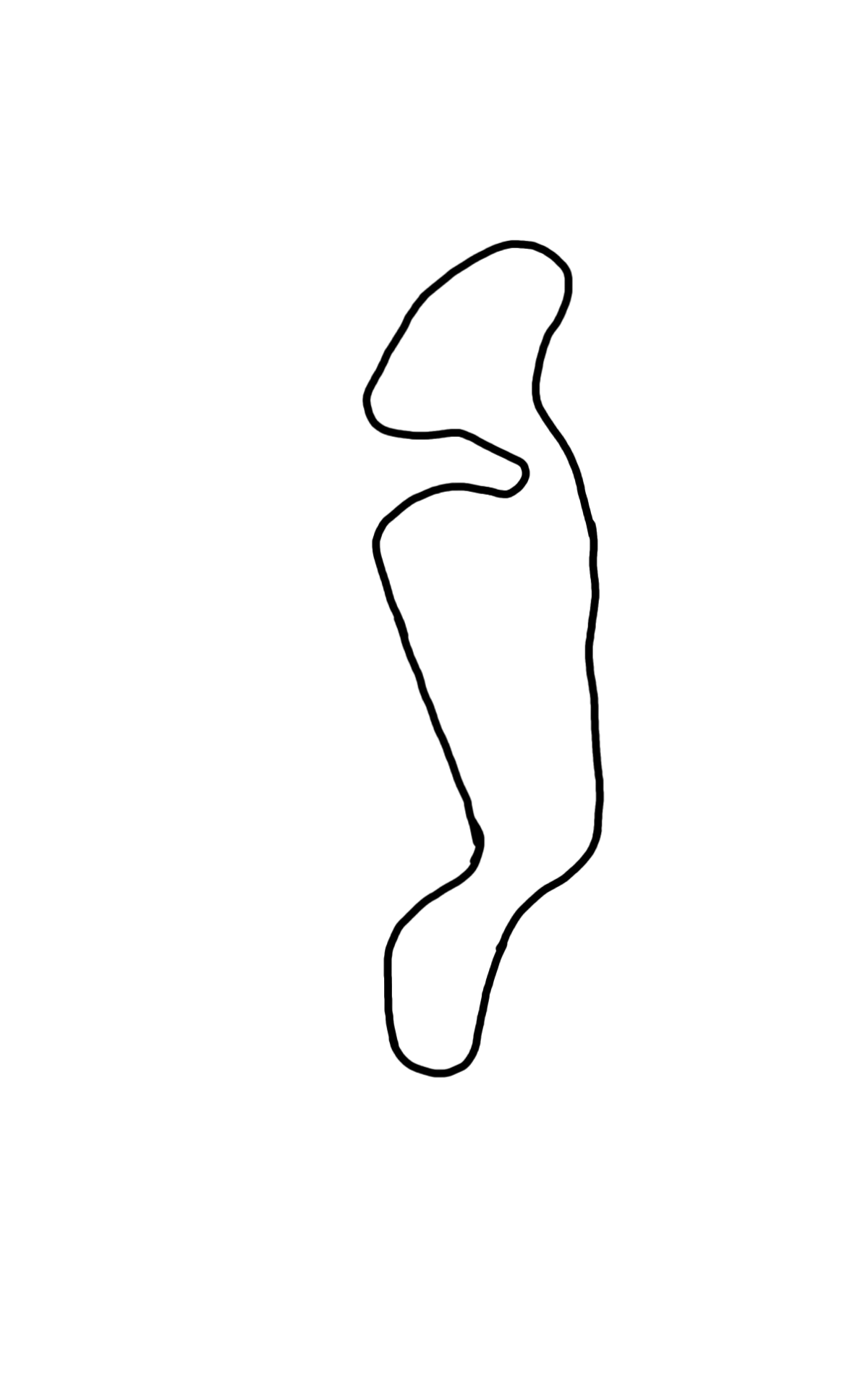
Atlantic Motorsport Park (AMP) is an all-purpose motorsports facility located near Shubenacadie, Nova Scotia. Opened in August 1974, the 11-turn road course is situated on a 116.56-hectare (1.2 km²) site. It is notable for being designed, built, and operated since its opening by a volunteer group of motorsport enthusiasts from automobile, snowmobile, and motorcycle racing groups, and remains completely owned by its membership club.
Quick Facts
- Location
- Shubenacadie, Nova Scotia, Canada
- Opened
- 1974 · 08
- Events
- Current: / Canadian Superbike Championship / (1987–2019, 2022–present) / Former: / Atlantic Championship (1974–1977, 1979)
- Layout
- Full Circuit (1974–present)
- Surface
- Asphalt
- Miles First
- True
- Length Km
- 2.575
- Length Mi
- 1.600
- Turns
- 11
- Record Time
- 1:01.489
- Record Driver
- USA Howdy Holmes
- Record Car
- March 79B
Facts from the source article.
Lore & Background
Atlantic Motorsport Park was conceived and brought to life by a coalition of local motorsport enthusiasts from car, snowmobile, and motorcycle clubs. Since its opening in August 1974, the track has been entirely volunteer-run, a notable achievement for a venue hosting national series competition. The facility has also hosted a Country and Western Festival, reflecting its multipurpose use beyond racing.
The track quickly attracted major racing series, including Formula Atlantic. It hosted the CASC Player's Challenge Series (Atlantic Championship) from 1974 to 1977 and again in 1979. In 1975, Canadian racing legend Gilles Villeneuve set an unofficial lap record of 1:00.00 seconds during a Formula Atlantic event. The circuit also featured the Canadian Honda Civic challenge in the 1980s.
Today, AMP hosts an annual round of the Canadian Superbike Championship. From May through October, the track is active with local motorcycle and car clubs, including the Atlantic Roadracing League, the Atlantic Region Motor Sports Club (ARMS), and the Atlantic Sports Car Club (ASCC). Several advanced performance driving and race schools operate throughout the season.
Reader's Guide
Atlantic Motorsport Park holds a singular place in North American motorsport as a track that has been entirely volunteer-designed, built, and operated since its 1974 opening. It is believed to be the only track on the continent that hosts a national series competition while remaining volunteer-run and fully owned by its membership club. This grassroots model has allowed the facility to endure for decades without corporate ownership, relying on the dedication of enthusiasts from car, snowmobile, and motorcycle communities.
The track's significance is underscored by its early hosting of major series such as Formula Atlantic and NASCAR in the 1970s, as well as the CASC Player's Challenge Series. The unofficial lap record set by Gilles Villeneuve in 1975 adds to its historical cachet. In the present day, AMP continues as a vital venue for the Canadian Superbike Championship and numerous local racing clubs, serving as a hub for motorsport in Atlantic Canada. Its legacy demonstrates that a dedicated volunteer community can sustain a professional-level racing facility.
Did You Know?
- Atlantic Motorsport Park was designed, built, and operated since August 1974 by a volunteer group of motorsport enthusiasts.
- The unofficial lap record of 1:00.00 seconds was set in a Formula Atlantic Event in 1975 by Canadian racing legend Gilles Villeneuve.
- The track has hosted a Country and Western Festival in addition to motorsports.
Origins & The Birth of a Name
Canadian Tire Motorsport Park traces its roots to the late 1950s, when it was constructed as Canada's second purpose-built road racing circuit, after only Westwood Motorsport Park in British Columbia. Prior to its arrival, Ontario's racing community depended on repurposed airport strips at Edenvale, Port Albert, Green Acres, and Harewood Acres. The venue's name is a portmanteau of "Motor" and "Sport," coined by the enterprise that built the track. That naming has spawned a persistent mix-up, as many fans still refer to the facility as "Mossport." The circuit's first event was a small local race put on by the Oakville Light Car Club in June 1961. On June 25 of that year, the venue hosted its first major contest, the Player's 200, a sports car race that lured drivers from around the world to rural Ontario. Stirling Moss claimed the win in a Lotus 19, with Joakim Bonnier and Olivier Gendebien finishing second and third. Moss personally recommended expanding a planned hairpin into two distinct corners to add challenge and spectator interest. The section was named Moss Corner in his honour, and the track's layout has remained largely unchanged from that original 1961 configuration ever since.
A Stage for International Glory
Few circuits in North American motorsport can claim the breadth of international competition that this Ontario venue attracted over the decades. In the 1960s, the track hosted a celebrated series of international sports car races billed as the "Canadian Grand Prix," a title conventionally reserved for Formula One events. These races drew enormous crowds, shattering Canadian sports attendance records with each successive edition, and their commercial success is widely credited as a key catalyst in the founding of the Can-Am Series. When Can-Am arrived for its inaugural season in 1966, it made the circuit a regular stop, returning every year of the series' existence except 1968. The track's crowning moment arguably came in 1967, Canada's centennial year, when it simultaneously hosted a Formula One race, a USAC event, and a 500cc Motorcycle Grand Prix. The Grand Prix of Canada remained on the schedule here through 1977 before relocating to Montreal. Over its long history, the circuit has also staged World Sportscar Championship rounds, Formula 5000, and a wide array of open-wheel, sports car, and motorcycle disciplines, making it one of the most versatile venues in the sport.
Preserving Character While Evolving
A defining philosophy at this venue has been the careful balance between modern safety standards and the preservation of the track's original character. When the entire circuit was repaved in 2001 to satisfy FIA specifications, the new surface was widened to 13 metres, yet drivers were actively consulted throughout the process to ensure the familiar racing lines and the feel of the "old" track survived the upgrade. This commitment to continuity extends to the facility's driver education programs. In the spring of 2000, the Driver Development Centre opened, a 1.7-kilometre, 12-turn training circuit designed by the owners and instructors of the Bridgestone Racing Academy. The course was deliberately built with fewer guard rails, minimal walls, and very few blind corners to suit both driver and mechanic training. By fall 2013, heavy scheduling demand on the main Grand Prix circuit prompted the academy track to be reconstructed and lengthened into a full racing facility, offering a 2.2-kilometre intermediate layout and a 2.9-kilometre advanced configuration, complete with a skid pad, pit lane, and a multi-storey event centre. The Bridgestone Racing Academy operated at the venue from 2000 to 2019, running corporate programs, racing schools, and a dedicated Mechanics Training Program.
Ownership, Partnership & Hard Lessons
The ownership history of this facility reflects the turbulent yet passionate world of motorsport. Since the original public company that built the track, the venue has passed through several hands. Two earlier owners, Norm Namerow, who held the circuit through his publishing company CanTrack until his death, and Harvey Hudes, were both inducted into the Canadian Motorsport Hall of Fame for their contributions to the sport. In 1998, Panoz Motorsports acquired the facility, and the following year the newly formed American Le Mans Series made its debut here. Canadian Motorsports Ventures Ltd., a partnership including Orlando Corp. chairman Carlo Fidani and Canadian road racer Ron Fellows, purchased the venue in June 2011. Just over a year later, a naming partnership with Canadian Tire was announced, giving the track its current identity. The venue's history is not without tragedy. German Formula One driver Manfred Winkelhock lost his life in 1985 when his Porsche 962C struck a concrete wall. In 2008, veteran vintage racer Dino Crescentini was killed in a 1977 Wolf Dallara previously driven by Gilles Villeneuve, and in 2018, former Pro Mazda driver Jeff Green died after spearing into a barrier at turn 8.
Gallery
Frequently Asked Questions
What is Atlantic Motorsport Park?
AMP is a multi-purpose motorsports venue featuring an 11-turn road course spread across roughly 116 hectares of land. It opened in August 1974 and has served as a racing destination in Nova Scotia ever since.
Where is Atlantic Motorsport Park located?
The facility sits near Shubenacadie, Nova Scotia, in Canada's Atlantic provinces. Its 1.2-square-kilometre site accommodates the full 11-turn circuit and supporting infrastructure.
What makes Atlantic Motorsport Park different from other Canadian tracks?
Unlike most Canadian circuits, AMP was conceived, constructed, and has been run entirely by a grassroots volunteer collective drawn from car, motorcycle, and snowmobile racing communities. That same membership club still holds full ownership of the property today.
What major racing series have competed at Atlantic Motorsport Park?
The track has hosted events for Formula Atlantic and the Canadian Superbike Championship among others. Its all-purpose design allows it to support multiple disciplines beyond those two headline series.
How long has Atlantic Motorsport Park been in operation?
The venue has been running continuously since its August 1974 opening, making it one of the longer-serving volunteer-operated circuits in Canada. Over five decades of operation have been managed by its member-owners without corporate backing.
More in Motorsport in Canada 1-24
Spotted an error? Know more?
Reader corrections go straight into our review queue. Suggest an edit · How this site is sourced