American Canadian Tour
Independent stock car racing series in New England and Quebec.

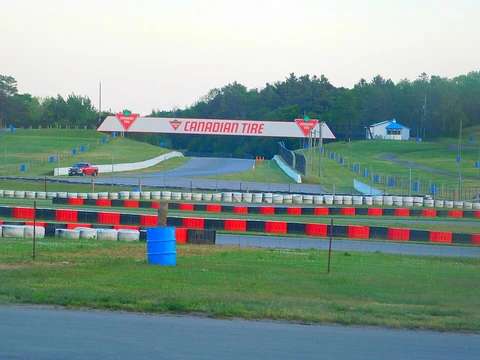
Photograph by Erin Cazes; The Come Up Show · CC BY 2.0
The American-Canadian Tour (ACT) is an independent regional stock car racing series operating in the northeastern United States and Eastern Canada. It was founded in 1986 and runs professionally organized stock car events throughout New England and Quebec.
The series traces its roots to 1979 when journalist Ken Squier and business partner Tom Curley created the NASCAR-sanctioned North Tour for Late Model Sportsman cars. Notable early drivers included New Englanders Beaver and Bobby Dragon, Dave Dion, and Dick McCabe; Canadians Jean-Paul Cabana and Claude Leclerc; and out-of-town competitors Robbie Crouch and Chuck Bown. Sponsors such as Coors, Molson, Skoal, STP, Valvoline, and General Motors supported the tour, which raced at venues like Thunder Road in Vermont, Oxford Plains Speedway in Maine, Stafford Springs and Thompson in Connecticut, Sanair Super Speedway near Montreal, Jukasa Motor Speedway in Ontario, and Dover Motor Speedway in Delaware. Southern stars Butch Lindley, Bill Dennis, Harry Gant, and Tommy Ellis frequently appeared, alongside national figures Bobby Allison, Buddy Baker, and Dale Earnhardt.
When the NASCAR sanction ended after 1985, Curley formed the independent American-Canadian Tour in 1986 and switched from Late Model Sportsman cars to Pro Stock vehicles. In 1987, ACT aligned with the American Speed Association and the All-Pro Series to create the Stock Car Connection, which visited tracks in Cincinnati, Milwaukee, Nazareth, and Nashville. Visitors included Darrell Waltrip, Mark Martin, Bobby and Davey Allison, Rusty and Kenny Wallace, and short track legends Dick Trickle, Butch Miller, Mike Eddy, Bob Senneker, Steve Grissom, and Bobby Gill.
General Motors increased its commitment in 1989, leading to the GM Motorsport National Stock Car Series in Canada, which offered large purses, point funds, and coast-to-coast television coverage. Budweiser created the Bud Triple Crown within that series, paying Junior Hanley over $50,000 in 1991 and again in 1992 for sweeping it. During his ACT championship years from 1991 to 1993, Hanley earned more than $700,000 in winnings.
ACT Late Models follow a standardized racing program introduced in 1992, which became the tour’s primary division in 1996. This format introduced structural concepts later adopted by other North American short track series.
Quick Facts
- Category
- Stock car racing
- Country/Region
- New England and New York, United States / Quebec, New Brunswick, and Nova Scotia, Canada
- Inaugural
- 1979
- Home Track
- Thunder Road International Speedbowl
- Champion Driver
- American-Canadian Tour – Gabe Brown (2024) / Série ACT Quebec – Raphaël Lessard (2024)
Facts from the source article.
Lore & Background
The American-Canadian Tour was formed in 1986 as an independent series, following the end of the NASCAR sanction for the North Tour. The NASCAR North Tour itself had begun in 1979, created by television journalist Ken Squier and business partner Tom Curley for Late Model Sportsman cars. Early stars included New England drivers Beaver and Bobby Dragon, Dave Dion, and Dick McCabe; Canada’s Jean-Paul Cabana and Claude Leclerc; and invaders Robbie Crouch and Chuck Bown. The series visited iconic short tracks such as Vermont’s Thunder Road, Maine’s Oxford Plains Speedway, and Connecticut’s Stafford Springs and Thompson, as well as Sanair Super Speedway near Montreal and Jukasa Motor Speedway in Ontario. Southern stars like Butch Lindley, Harry Gant, and Tommy Ellis, along with national icons Bobby Allison, Buddy Baker, and Dale Earnhardt, frequently competed.
After the NASCAR sanction ended, Curley launched the independent ACT in 1986, switching to Pro Stock cars. In 2000, ACT introduced one of the first spec engine programs, a move that helped level the playing field and reduce costs for competitors.
Reader's Guide
The American-Canadian Tour holds significance as a pioneering independent stock car series that bridged the United States and Canada, fostering cross-border competition and developing cost-control measures later adopted by other short track series. Its standardized Late Model program, introduced in 1992 and made the primary division in 1996, emphasized affordability and competitive parity. The spec engine program, launched in 1999, became a model for regional racing. ACT’s alignment with the ASA and All-Pro Series in the Stock Car Connection brought national attention to its events, attracting stars like Darrell Waltrip, Mark Martin, and Bobby Allison. The tour’s resilience is evident in its ownership change in 2017 and continued operation into its 46th consecutive year in 2024, with events at historic tracks and the revival of Série ACT Quebec in 2023. ACT’s legacy includes influencing the structure of modern short track racing while maintaining a focus on grassroots competition.
Did You Know?
- The American-Canadian Tour was founded in 1979 by Ken Squier and Tom Curley as the NASCAR North Tour.
- Junior Hanley earned over $700,000 in winnings during his ACT Championship years from 1991–93.
- ACT developed one of the first 'spec' engine programs in 1999 to reduce costs for racers.
- The tour changed ownership in November 2017 for the first time in its history, to Cris Michaud and Pat Malone.
Founding & The NASCAR North Tour Era
In 1979, television and radio journalist Ken Squier teamed up with business partner Tom Curley to launch the North Tour, a NASCAR-sanctioned series built around Late Model Sportsman-type cars. The new circuit quickly attracted a roster of regional stars including New England drivers Beaver and Bobby Dragon, Dave Dion, and Dick McCabe, alongside Canadian competitors Jean-Paul Cabana and Claude Leclerc. The tour also drew attention from well outside the region, with Robbie Crouch from Tampa, Florida, and Chuck Bown from Portland, Oregon, making regular appearances. Corporate backing from Coors, Molson, Skoal, STP, Valvoline, and General Motors helped the series establish itself across the short track landscape of the northeastern U.S. and Eastern Canada. Venues included Vermont's Thunder Road, Maine's Oxford Plains Speedway, Connecticut's Stafford Springs and Thompson, Sanair Super Speedway near Montreal, Jukasa Motor Speedway in Ontario, and Dover Motor Speedway in Delaware. The North Tour's presence at these showplaces made it a destination for national icons like Bobby Allison, Buddy Baker, and Dale Earnhardt, as well as southern stars Butch Lindley, Bill Dennis, Harry Gant, and Tommy Ellis, who frequently traveled north to compete.
Independence & The Stock Car Connection
When NASCAR's sanction over the North Tour expired at the close of 1985, Tom Curley made a decisive pivot. In 1986, he incorporated his existing team roster into a fully independent entity—the American-Canadian Tour—and shifted the entire field from NASCAR Late Model Sportsman cars to the Pro Stock machines that dominated circuits across the country. The following year marked an even bolder strategic move. Curley aligned the ACT with Rex Robbins' American Speed Association in the Midwest and Bob Harmon's All-Pro Series in the southeast, creating the Stock Car Connection. This tri-regional alliance brought the series to high-profile tracks in Cincinnati, Milwaukee, Nazareth, Pennsylvania, and Nashville. The elevated profile drew a constellation of national talent: Darrell Waltrip, Mark Martin, both Bobby and Davey Allison, and the Wallace brothers Rusty and Kenny all made appearances. Short track legends Dick Trickle, Butch Miller, Mike Eddy, Bob Senneker, Steve Grissom, and Bobby Gill also graced the SCC grid, cementing the tour's reputation as a serious competitive platform.
The GM Era & Structural Innovation
General Motors deepened its commitment to the ACT in 1989, giving birth to the GM Motorsport National Stock Car Series in Canada. The program offered substantial purses, generous point funds, and coast-to-coast television coverage, elevating the series' financial and media profile. Budweiser further boosted the spectacle by creating the Bud Triple Crown, a bonus program that paid Junior Hanley more than $50,000 each in 1991 and 1992 for sweeping the series. During his championship run from 1991 through 1993, the Ontario driver banked over $700,000 in total winnings. Beyond the financial windfall, the ACT became a laboratory for cost-controlling innovation. In 1992, the tour introduced a standardized racing program for its Late Models, which became the primary division in 1996 and later influenced structural concepts adopted by other North American short track series. A spec engine program debuted in 1999, expanded with a Ford option in 2010 and the GM '602' in 2018, while uniform Koni and QA1 shock absorbers and Hoosier Racing Tires further leveled the competitive field.
Legacy, Loss & the Modern Chapter
The ACT's two founding figures received the highest honors in the sport before their passing. Both Ken Squier and Tom Curley were inducted into the New England Auto Racers Hall of Fame and the Vermont Sports Hall of Fame. In 2004, more than 1,000 race promoters across the continent voted Curley the Auto Racing Promoter of the Year. Squier's contributions earned him a ceremonial induction into the NASCAR Hall of Fame in Charlotte, North Carolina, in 2018. Tragedy struck in May 2017 when Curley succumbed to a decades-long battle with COPD, and in November 2023, Squier died after years of multiple health problems. The tour itself endured. In November 2017, former racer Cris Michaud and Vermont businessman Pat Malone purchased the sanctioning body, its first ownership change in the series' history. The pair had earlier acquired Vermont's Thunder Road and added New Hampshire's White Mountain Motorsports Park in 2019. By 2023, the ACT fielded an average of 33.3 cars per event with a season-high 49 teams qualifying for the Waterford Speedbowl finale, while the 2024 season marked its 46th consecutive year with thirteen point-counting events across New England and Quebec.
Gallery


Frequently Asked Questions
What is the American-Canadian Tour?
The American-Canadian Tour (ACT) is an independent, regionally focused stock car racing series that has been operating since 1986. It stages professionally organized events across New England and the province of Quebec.
How did the American-Canadian Tour get its start?
The series' lineage goes back to 1979, when journalist Ken Squier and business partner Tom Curley launched the NASCAR-sanctioned North Tour for Late Model Sportsman cars. The independent ACT that exists today was formally established in 1986 by Tom Curley.
What type of cars compete in the American-Canadian Tour?
Late Models have served as the series' primary competitive division since 1996. The 1979 predecessor North Tour also featured Late Model Sportsman cars, so the class has been central to the series' identity from the very beginning.
Who are some of the most remembered ACT champions and early drivers?
Junior Hanley is one of the series' most celebrated winners, capturing the title in three consecutive seasons from 1991 through 1993. Early Canadian competitors such as Jean-Paul Cabana and Claude Leclerc, alongside New Englanders like Bobby Dragon and Dave Dion, helped build the series' following in its formative years.
Who owns and runs the American-Canadian Tour today?
Cris Michaud and Pat Malone have held ownership of the series since taking over in November 2017. They continue to operate the independent tour across its northeastern U.S. and Eastern Canadian footprint.
More in Motorsport in Canada 1-24
Spotted an error? Know more?
Reader corrections go straight into our review queue. Suggest an edit · How this site is sourced