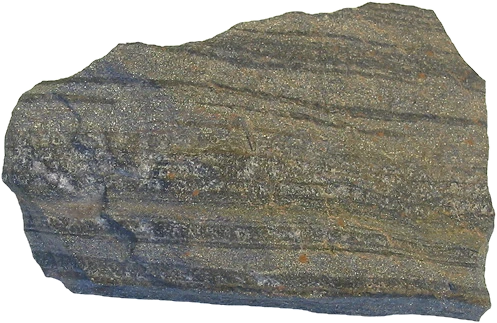
Pollucite
A zeolite mineral and major caesium ore.
Last updated
Pollucite is a zeolite mineral whose chemical makeup is (Cs,Na)2Al2Si4O12·2H2O, often containing iron, calcium, rubidium, and potassium as substitutes. It serves as a major source of caesium and, at times, rubidium. This mineral shares a solid solution relationship with analcime.
It forms in the isometric-hexoctahedral crystal system, appearing as colorless, white, gray, or—rarely—pink and blue masses. Well-shaped crystals are uncommon. Its Mohs hardness is 6.5, its specific gravity is 2.9, it fractures brittly, and it lacks cleavage.
August Breithaupt first described pollucite in 1846 from the island of Elba, Italy. The name comes from Pollux, twin of Castor, because the mineral often occurs with petalite (once called castorite). An initial analysis by Karl Friedrich Plattner in 1848 missed its high caesium content; after caesium’s discovery in 1860, a second analysis in 1864 confirmed the element’s abundance in pollucite.
Pollucite typically appears in lithium-rich granite pegmatites alongside quartz, spodumene, petalite, amblygonite, lepidolite, elbaite, cassiterite, columbite, apatite, eucryptite, muscovite, albite, and microcline. Roughly 82% of the world’s known pollucite reserves lie near Bernic Lake in Manitoba, Canada, where it is mined for its caesium content—used in caesium formate for oil drilling assistance. This ore contains about 23% to 25% caesium by weight.
Lore & Background
Pollucite is a zeolite mineral with the chemical formula (Cs,Na)₂Al₂Si₄O₁₂·2H₂O, though iron, calcium, rubidium, and potassium commonly substitute for caesium. It crystallizes in the isometric-hexoctahedral crystal system, typically forming colorless, white, or gray masses; pink and blue varieties are rare, and well-formed crystals are uncommon. The mineral has a Mohs hardness of 6.5 and a specific gravity of 2.9, with a brittle fracture and no cleavage.
It forms a solid solution series with analcime. First described by August Breithaupt in 1846 from occurrences on the island of Elba, Italy, it was named after Pollux, the twin of Castor, because it is frequently found alongside petalite, which was previously called castorite. An initial analysis by Karl Friedrich Plattner in 1848 missed its high caesium content, but a second analysis in 1864, following the discovery of caesium in 1860, confirmed the element’s abundance.
Pollucite occurs almost exclusively in lithium-rich granite pegmatites, associated with minerals such as quartz, spodumene, petalite, amblygonite, lepidolite, elbaite, cassiterite, columbite, apatite, eucryptite, muscovite, albite, and microcline. It is a significant ore of caesium and sometimes rubidium. Approximately 82% of the world’s known pollucite reserves are located near Bernic Lake in Manitoba, Canada, where it is mined for caesium used in caesium formate for oil drilling assistance; the ore contains about 23% to 25% caesium by weight.
Reader's Guide
Pollucite holds significance as a primary ore of caesium, a metal used in specialized applications such as caesium formate for oil drilling assistance. The mineral's association with lithium-rich pegmatites and its solid solution series with analcime provide insights into geological processes.
Economically, the concentration of global reserves near Bernic Lake, Manitoba, makes this deposit critical for caesium supply. The mineral's physical properties—hardness of 6.5, specific gravity of 2.9, brittle fracture, and lack of cleavage—aid in its identification. Its naming after Pollux, twin of Castor, reflects its common association with petalite (castorite).
More in Minerals & Ore Deposits
Sources
Compiled from Wikipedia and the sources listed below. Text from Wikipedia is available under CC BY-SA 4.0; this entry is adapted from it.
- Wikipedia: Pollucite (CC BY-SA 4.0).
- Word definitions: the Codexery glossary, each quoted from its Wikipedia article.
Spotted an error? Know more?
Reader corrections go straight into our review queue. Suggest an edit · How this site is sourced