Skutterudite
Cobalt arsenide mineral with thermoelectric applications.
Last updated
Skutterudite is a cobalt arsenide mineral, often with nickel and iron replacing some of the cobalt. Its ideal chemical formula is CoAs3, though some sources note the arsenic subscript can range from 2 to 3.
Varieties high in nickel are called nickel-skutterudite, formerly known as chloanthite. This mineral forms in hydrothermal veins at moderate to high temperatures, alongside other nickel-cobalt minerals. It is mined primarily for cobalt and nickel, with arsenic recovered as a byproduct.
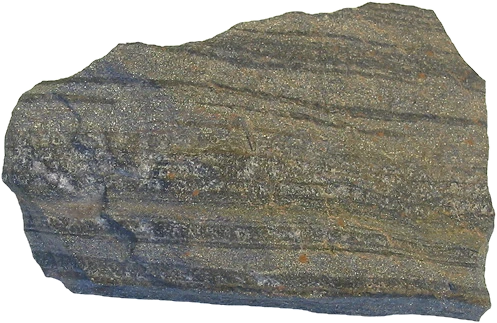
The mineral has a bright metallic luster and appears tin white or light steel gray, with a black streak. Its specific gravity is 6.5, and its hardness ranges from 5.5 to 6.
The crystal structure is isometric, forming cubes and octahedra similar to pyrite. When heated or crushed, the arsenic content produces a distinct garlic odor. Associated minerals include arsenopyrite, native silver, erythrite, annabergite, nickeline, cobaltite, silver sulfosalts, native bismuth, calcite, siderite, barite, and quartz.
Origins
Skutterudite has been known since the Middle Ages, used in the production of smalt. It was identified in 1845 at the Skuterud Mines in Modum, Buskerud, Norway. An alternative name for the mineral is smaltite. Notable occurrences include Cobalt, Ontario, and Franklin, New Jersey, in the United States.
Structure
The crystal structure of skutterudite was determined in 1928 by Oftedahl as cubic, belonging to space group Im 3 (number 204). The unit cell contains 32 atoms arranged in eight smaller cubes of cobalt atoms, which form octahedra with cobalt at their centers.
Six of these cubes are filled with planar square rings of arsenic, each oriented parallel to a unit cell edge. At the 2a Wyckoff position, there are two large structural voids, each about five angstroms in size, which can accommodate impurity atoms. This arrangement is known as the skutterudite structure.
Applications
Materials with this structure are studied as low-cost thermoelectric materials due to their low thermal conductivity. Synthesized skutterudites have achieved a thermoelectric figure of merit (ZT) close to 1 at 800 kelvins. A relatively high dimensionless figure of merit has been observed in polycrystalline skutterudite partially filled with ytterbium ions. The small but heavy ytterbium atoms occupy the voids in the CoSb3 host structure, lowering thermal conductivity while leaving the favorable electronic properties largely intact.
Lore & Background
Skutterudite has been known since the Middle Ages, when it was used in the production of smalt. Smaltite is an alternative name for the mineral.
The unit cell consists of a total of 32 atoms, arranged in eight smaller cubes composed of cobalt atoms, which form octahedra with cobalt at the center. Six of these cubes are filled with planar square rings of arsenic, each oriented parallel to one of the unit cell's edges. At the 2a Wyckoff position, there are two large structural voids—each approximately five angstroms in size—that can be filled with impurity atoms.
Reader's Guide
Skutterudite is significant both as a historical ore mineral and as a model for modern thermoelectric materials. Mined for cobalt and nickel with arsenic as a by-product, it has been used since the Middle Ages in smalt production. The structure features two large voids per unit cell that can accommodate impurity atoms, a property exploited in materials science. Materials with a skutterudite structure are studied as low-cost thermoelectric materials with low thermal conductivity.
A relatively high dimensionless figure of merit has been observed in a polycrystalline skutterudite partially filled with ytterbium ions. The small-diameter but heavy ytterbium atoms partially occupy the voids in the CoSb3 host structure, resulting in low thermal conductivity values while favorable electronic properties are not substantially disrupted. This makes skutterudite a key subject in the search for efficient thermoelectric energy conversion.
More in Minerals & Ore Deposits
Sources
Compiled from Wikipedia and the sources listed below. Text from Wikipedia is available under CC BY-SA 4.0; this entry is adapted from it.
- Wikipedia: Skutterudite (CC BY-SA 4.0).
- Word definitions: the Codexery glossary, each quoted from its Wikipedia article.
Spotted an error? Know more?
Reader corrections go straight into our review queue. Suggest an edit · How this site is sourced